A muzzle is a useful tool for many dog owners. It helps stop dogs from biting, eating things they shouldn’t, licking too much, or doing other risky things. When you visit the vet, meet new people, travel, or train your dog, a good-fitting muzzle keeps everyone safer and calmer.
But not all muzzles work the same. Sometimes, regular muzzles can slip, get loose, or even come off if a dog scratches at them or pulls hard. If a muzzle comes off, the dog could get into trouble, especially if it is nervous, excitable, or in a new place.
That’s why a muzzle that attaches to the dog’s collar can be better. When the muzzle connects to the collar, it stays in place and is much less likely to fall off. This makes things safer and more dependable for both dogs and people.
In this guide, we’ll explain why collar-attached muzzles are usually safer, how they stop escapes, and what to look for when picking the best muzzle for your dog.
What Is a Collar-Attached Dog Muzzle?
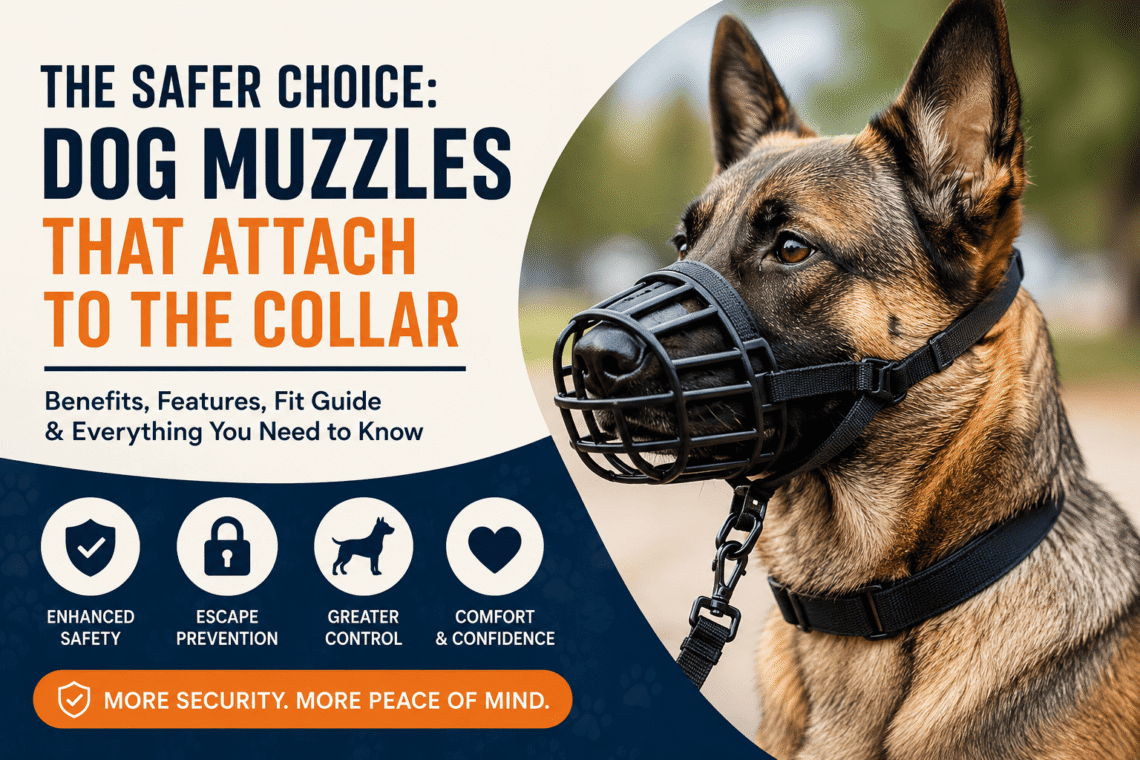
A collar-attached dog muzzle is a type of muzzle that clips or connects to your dog’s collar. Regular muzzles only use straps around the head and neck, but these muzzles use the collar to help hold everything in place. This makes the muzzle fit better and stay more secure.
One big problem with regular muzzles is that they can sometimes slip off, even if they fit well. Dogs might paw at them, rub against things, or pull backwards and get the muzzle off. When the muzzle is attached to the collar, it’s much harder for the dog to take it off by accident.
How Does It Work?
Most collar-attached muzzles have a loop, strap, or clip that connects to the collar. This extra link helps keep the muzzle in the right place and stops it from sliding off the dog’s nose or head.
If the dog moves around or tries to get the muzzle off, the collar holds it steady. So, the straps aren’t doing all the work—the collar helps keep the muzzle where it should be.
- The muzzle stays on better during walks and training
- There’s less chance the dog can escape the muzzle
- It’s easier to control the dog in tough situations
- Owners and handlers can feel more confident
How Is It Different From Regular Muzzles?
Regular muzzles use straps that go behind the ears and around the neck. These can work well if they fit right, but they can loosen or move if the dog is very active.
A collar-attached muzzle gives extra safety without making the dog uncomfortable. It doesn’t replace good fit or training, but helps make sure the muzzle stays put.
This kind of muzzle is a great choice for dogs that are good at getting out of things, dogs that react to strangers, or dogs in training. The extra safety can make a big difference.
Problems With Regular Dog Muzzles
Regular dog muzzles can work well if they fit right and are used properly. But even the best ones have some problems. Knowing these problems helps show why many people are choosing muzzles that attach to the collar for extra safety.
Dogs Can Get Them Off
One big issue is that some dogs can remove regular muzzles. They figure out how to paw at the straps, rub on furniture, or drag the muzzle on the ground until it comes loose.
This is a problem, especially when:- Walking in busy places
- Visiting the vet
- Meeting new people
- Going to new places
- With dogs who get nervous or react strongly
Moving Can Shift the Muzzle
Dogs move their heads a lot when they walk, play, or explore. After a while, regular muzzles can shift out of place.
When this happens, the muzzle can:- Fit less securely
- Press on the dog’s face
- Feel less comfortable
- Be easier for the dog to get off
Stress Makes Escape Attempts More Likely
Dogs that are scared, anxious, or excited might try even harder to take off a muzzle. This happens a lot at the vet, the groomer, while traveling, or in crowds.
In these times, even a good-fitting muzzle can be pulled hard or messed with again and again. If there’s no extra attachment, the straps have to take all that pulling.
Bad Fit Is a Common Problem
A lot of muzzle problems come from the wrong size. If it’s too loose, it can fall off. If it’s too tight, it can hurt and make the dog want to get it off.
- Picking a muzzle just because of the dog’s breed
- Not measuring the dog’s nose the right way
- Leaving the straps too loose
- Not adjusting the fit as the dog grows or gains weight.
Even small fit mistakes can make a regular muzzle not work well.
Owners May Lose Confidence
If owners are worried the muzzle will fall off, they get anxious during walks and training. Dogs can feel this stress, which makes things even harder.
A good, secure muzzle should help owners feel calm. If you’re always checking the muzzle, it might not be safe enough.
These problems don’t mean regular muzzles never work. But they show why many people like collar-attached muzzles better. The extra connection helps solve these issues and makes things safer.
Why Collar-Attached Dog Muzzles Are Safer
Collar-attached muzzles are made to stop dogs from taking them off by accident, while still being comfortable and easy to use. By clipping the muzzle to the collar, you get a second layer of safety that helps it stay in place much better.
Harder for Dogs to Take Off
The best thing about a collar-attached muzzle is that it’s much harder for dogs to get off. Even if a dog scratches or rubs at it, the collar keeps it in place.
- The muzzle won’t slide off the nose
- Straps don’t loosen as easily
- Dogs can’t back out of the muzzle
- It’s less likely to come off when dogs are excited or stressed
For strong, smart, or reactive dogs, this extra protection can make a big difference.
Stays in Place When the Dog Moves
Dogs move around a lot—they run, sniff, shake, and turn their heads. Regular muzzles can shift out of place because they rely only on straps.
A collar-attached muzzle shares the pulling force between the collar and the muzzle. This helps keep it in the right spot, even when the dog is very active.
So, you get:- Less sliding around on the nose
- Less rubbing or moving out of place
- The muzzle works better on walks and during training
Gives Owners More Control
A secure muzzle doesn’t just stop biting or chewing. It also helps owners feel more confident when handling their dogs.
With a collar-attached muzzle, owners often:- Feel less worried on walks
- Control their dog better in crowds or new places
- Manage dogs that react to things more easily
- Trust the muzzle more during training
Feeling in control is extra important if you’re working with a trainer or in a special training program.
Works Better in Stressful Moments
Some places make dogs more stressed, like at the vet, groomer, during travel, or in busy public areas.
At these times, dogs might:- Try to get the muzzle off
- Pull back or fight handling.
- Rub their face on things
A collar-attached muzzle stays on better, even when the dog is stressed or excited. It keeps everyone safe when it matters most.
Best for Strong or Wiggly Dogs
Some dogs are very good at getting out of muzzles—especially big, smart, or nervous dogs. They can sometimes beat regular designs.
For these dogs, having the muzzle attached to the collar is an important backup. It makes it much harder for them to break free.
Overall, collar-attached muzzles are more reliable and give owners peace of mind that their dog will stay safe in any situation.
Key Benefits for Different Dogs
Every dog is different—some are strong, some are anxious, and some are escape artists. That’s why it’s important to pick a muzzle that fits your dog’s needs. A collar-attached muzzle has special benefits for many kinds of dogs, especially when safety and control matter most.
Strong and Powerful Dogs
Large and muscular breeds often have more force when pulling, resisting, or reacting to stimuli. In these cases, even a well-fitted traditional muzzle may face extra strain during walks or training.
A collar-attached muzzle helps by:- Adding extra resistance against pulling force
- Keeping the muzzle aligned during strong head movements
- Reducing the risk of sudden displacement
Dogs Who Slip Out of Gear
Some dogs are experts at slipping out of equipment. They learn quickly how to use pawing, rubbing, or backward movement to loosen a traditional muzzle.
For these dogs, the collar attachment becomes a critical safeguard:- Prevents backward removal over the snout
- Limits the effectiveness of pawing attempts
- Maintains stability even under repeated escape behavior
Nervous or Reactive Dogs
Dogs that are fearful, anxious, or reactive can behave unpredictably in unfamiliar environments. Their stress responses may include sudden lunging, backing away, or frantic attempts to remove restraints.
A collar-attached muzzle helps in these situations by:- Staying secure during sudden movements
- Reducing owner stress and hesitation
- Providing consistent control in high-stimulation environments
Dogs in Training
Muzzles are often used as temporary tools in behavior modification or obedience training programs. In these cases, reliability is essential because training environments can be unpredictable.
A collar-attached muzzle supports training by:- Ensuring consistent positioning during exercises
- Allowing trainers to focus on behavior, not equipment adjustment
- Minimizing interruptions caused by slippage or removal
Dogs in Public Places
For dogs that frequently visit parks, sidewalks, grooming salons, or veterinary clinics, environmental distractions can increase the chance of stress or overexcitement.
In these settings, collar-attached muzzles provide:- More dependable control in crowded areas
- Reduced risk during unexpected encounters
- Greater peace of mind for owners in public spaces
Overall, this type of muzzle adapts well to a wide range of dog personalities and situations, making it a practical choice for owners seeking both safety and reliability.
What to Look for in a Collar-Attached Muzzle
Picking the right collar-attached muzzle isn’t just about the way it clips on. It should also be comfortable, strong, and fit well. Your dog should be able to breathe, pant, and relax while wearing it.
Strong and Safe Collar Connection
The most important thing is how the muzzle connects to the collar. If this part is weak, it won’t keep your dog safe.
Look for these features:- Strong clip or loop mechanisms
- Reinforced stitching around connection points
- Compatibility with standard dog collars
- Minimal risk of slipping or detaching
Adjustable for a Good Fit
Dogs have all kinds of snout shapes and head sizes. You need adjustable straps to make the muzzle fit just right, but not too tight.
A good muzzle should let you:- Fine adjustment around the snout
- Secure fastening behind the ears
- Easy tightening without causing discomfort
- Flexibility for different dog breeds and sizes
Strong and Safe Materials
The material needs to be tough and safe. The muzzle should last, even with pulling, scratching, or being outside.
Good materials are:- High-strength nylon or reinforced fabric straps
- Durable basket structures (for basket-style muzzles)
- Rust-resistant metal components (if applicable)
- Non-toxic, skin-safe materials
Good Airflow and Ventilation
Dogs need to pant to cool down, so the muzzle must let air flow easily. It should never make it hard for your dog to breathe or cause overheating.
Look for ventilation features like:- Open basket design or breathable mesh
- Adequate snout space for panting
- Freedom to drink water when needed
- Minimal obstruction to airflow
Comfort and Soft Padding
How comfortable the muzzle is will affect if your dog will wear it for a long time or during training.
Look for comfort features like:- Soft padding around pressure points
- Smooth edges to prevent rubbing
- Lightweight structure to reduce strain
- Even weight distribution across straps
Easy for Owners to Use
The muzzle should be simple for people to put on, take off, and adjust.
Look for features like:- Simple fastening system
- Quick attachment to collar
- Clear adjustment points
- Minimal setup time
Safety and Freedom for Your Dog
A muzzle is for safety, but your dog should still be able to pant, look around, and interact a bit with the world.
A good muzzle should:- Safe restraint without over-restriction
- Ability to breathe and pant normally
- Reduced stress during use
The best muzzles are safe, comfortable, and let your dog feel more at ease while staying secure.
How to Fit a Collar-Attached Dog Muzzle
Even the best collar-attached muzzle won’t work right if it doesn’t fit well. Getting the fit right keeps your dog safe and comfortable, and stops the muzzle from slipping off.
Measure Your Dog First
Before you buy a muzzle, carefully measure your dog’s snout. This is very important for safety and comfort.
Measure these things:- Length of the snout (from nose tip to just below the eyes)
- Circumference of the snout at its widest point
- Height of the snout when slightly open (for panting space)
Good measurements help make sure the muzzle isn’t too tight or too loose.
Check That the Fit Is Snug but Comfortable
A good muzzle stays in place but lets your dog move naturally.
Look for:- Enough space for the dog to pant comfortably
- No excessive pressure on the nose or cheeks
- Secure positioning that doesn’t shift easily
- Ability to fit one or two fingers (depending on design) between straps and skin
If the muzzle slides or twists, it’s probably too loose.
Attach the Muzzle to the Collar Correctly
The collar connection is what makes these muzzles extra safe, so you need to set it up right.
Check that:- The muzzle clip or loop is firmly connected to a strong, well-fitted collar
- The collar itself is not too loose or overly tight
- The connection point does not twist or loosen during movement
- The attachment remains stable when the dog shakes or pulls
A weak or loose collar means the muzzle may not stay on.
Test for Escapes at Home First
Before using the muzzle outside, do a safety test at home first.
Watch your dog for:- Pawing at the muzzle
- Attempting to rub it off surfaces
- Pulling backward or shaking the head
- Any signs of slipping or loosening
If the muzzle moves a lot, fix the fit before going out.
Help Your Dog Get Used to the Muzzle
Dogs accept muzzles better if you go slow and make it a good experience.
Start with:- Allowing the dog to sniff and inspect the muzzle
- Rewarding calm behavior near the muzzle
- Short initial wearing sessions at home
- Gradually increasing duration over time
This helps your dog feel calmer about wearing the muzzle.
Watch Your Dog for Comfort
Even if you fit the muzzle right, keep an eye on your dog the first few times they wear it.
Look out for:- Excessive pawing or distress
- Difficulty breathing or panting
- Red marks or rubbing on the skin
- Signs of overheating or fatigue
If your dog looks uncomfortable, change the fit right away.
Check the Fit Regularly
Dogs can gain weight, grow, or get haircuts, so check the fit often to make sure it’s still safe.
Check the fit:- Every few weeks for active or young dogs
- After grooming or seasonal coat changes
- If the muzzle begins to shift or loosen
Checking the fit regularly keeps your dog safe and the muzzle working well.
Common Mistakes Dog Owners Make
Even with a good collar-attached muzzle, using it the wrong way can make it less safe. Most problems happen because of simple mistakes when picking, fitting, or using the muzzle.
Picking the Wrong Size or Type
A common mistake is choosing a muzzle based on looks or breed instead of measuring your dog.
Common mistakes:- Buying a muzzle that is too tight for comfort
- Choosing an oversized muzzle that can shift or rotate
- Assuming all dogs of the same breed need the same size
- Using a soft muzzle when a basket-style is more appropriate
Using the Wrong Collar
The collar is a key part of keeping the muzzle safe, so it has to be strong and fit well too.
Common mistakes:- Using a loose or worn-out collar
- Attaching to decorative or weak collars not designed for control
- Failing to adjust the collar before securing the muzzle
- Using retractable or unstable collar systems
Not Training Your Dog to Wear the Muzzle
A muzzle does not replace training. Dogs need time to get used to it.
Common mistakes:- Putting the muzzle on without gradual introduction
- Expecting immediate comfort or acceptance
- Using the muzzle only in stressful situations without conditioning
- Not rewarding calm behavior during use
Leaving the Muzzle On Too Long
Muzzles should only be used for certain times, not all day, unless your vet says so.
Common mistakes:- Leaving the muzzle on for extended periods without breaks
- Using it as a permanent behavior solution instead of training support
- Ignoring signs of discomfort or overheating
- Failing to allow rest periods during long walks or sessions
Not Checking the Fit Regularly
A muzzle that fits at first can become too loose or tight if your dog gains weight or gets a haircut.
People often forget to:- Recheck strap tightness
- Adjust fit after grooming or seasonal changes
- Inspect for wear and tear on straps and clips
- Ensure collar attachment remains secure
Checking the fit often keeps your dog safe.
Missing Early Warning Signs
Dogs give small clues when something is wrong, but owners sometimes miss them.
Look for signs like:- Frequent pawing at the muzzle
- Excessive drooling or distress
- Red marks or rubbing on the snout
- Reluctance to move or walk normally
If you catch these signs early, you can fix small problems before they get worse.
Relying Only on the Equipment
The biggest mistake is thinking the muzzle alone will keep your dog and others completely safe.
- Equipment must be paired with proper training
- Supervision is still required in high-risk situations
- No muzzle replaces responsible handling
The best way to keep everyone safe is to use the right muzzle, train your dog, and always pay attention.
Traditional Muzzles vs. Collar-Attached Muzzles
When picking a muzzle, it’s important to know the difference between traditional muzzles and collar-attached muzzles. Both help stop biting and unwanted behavior, but they keep dogs safe in different ways.
| Feature | Traditional | Collar-Attached |
|---|---|---|
| Security | Single-point security (straps only). Can come off if shifted. | Dual-point security (straps + collar). Highly escape-resistant. |
| Stability | May shift, twist, or slide during active movement. | Stays centered via collar anchor point. |
| Comfort | Pressure relies solely on head straps. | Reduces unwanted friction and shifting. |
| Ease of Use | Quick initial fit; needs regular adjustments. | Slightly more setup; sets securely once fitted. |
| Best For | Calm dogs, short-term wear, low-risk spaces. | Reactive, strong, or escape-prone dogs; vet visits. |
Which Is Safer Overall?
Traditional muzzles work well if used right, but collar-attached muzzles add extra security and lower the risk of coming off by accident.
If you want the safest, most reliable option, collar-attached muzzles are usually the best pick for most situations.
Frequently Asked Questions
Conclusion
Picking the right muzzle isn’t just about stopping bad behavior. It’s about keeping your dog safe, comfortable, and under control in real life. Traditional muzzles can work if they fit well and you watch your dog, but they can still slip off, move around, or come off by accident—especially with strong or nervous dogs.
A muzzle that attaches to the collar solves many of these problems. The extra collar connection keeps the muzzle in place, lowers the chance of escape, and helps owners feel more confident—especially during walks, training, vet visits, or stressful times.
But even the best muzzle only works if you use it right. Make sure it fits, introduce it slowly, and check your dog regularly. The safest choice is to use good equipment and train your dog well.
If you want more control and peace of mind, a collar-attached muzzle is a safer, more practical choice—especially for strong, reactive, or escape-prone dogs.