🐩 Introduction
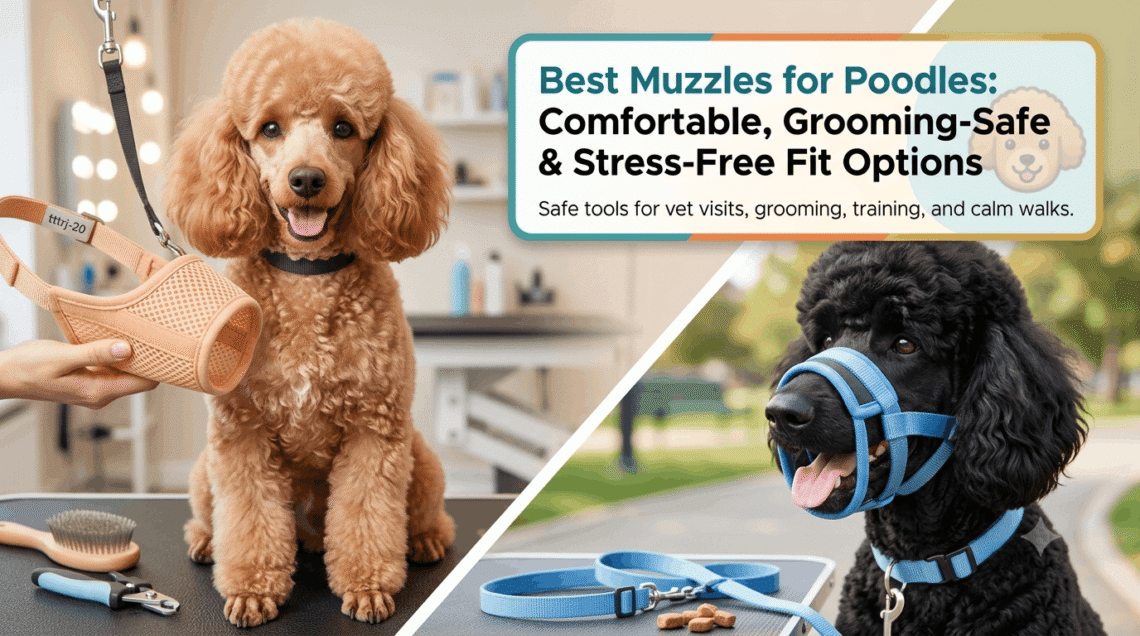
Poodles are smart, friendly, and gentle dogs. But just like any dog, they can get scared or upset in some situations. This often happens during grooming, at the vet, or when they are in new places with loud noises or lots of people. In these times, a muzzle isn’t meant to punish your dog. It’s a safe tool that can help keep both your Poodle and the people around them safe when needed.
It’s important to pick the right muzzle for your Poodle. Poodles have a narrow nose and soft fur, so they need a muzzle that fits well and feels comfortable. The wrong muzzle can hurt your dog or make them stressed. The right one can make grooming, vet visits, and outings much easier and safer for you and your dog.
In this guide, we’ll show you the best muzzles for Poodles. We’ll focus on options that are comfortable, let your dog breathe easily, and help keep your Poodle calm and safe.
📌 Table of Contents
Do Poodles Really Need a Muzzle?
Poodles are usually friendly, smart, and love being around people, so they are not known for being aggressive. But that doesn’t mean a muzzle is never needed. Often, a muzzle is used as a safety tool before any problems happen, not just for dogs with behavior issues.
There are times when a Poodle might need to wear a muzzle. Grooming is a common one—some Poodles get nervous or fidgety during nail trims or haircuts. Even a calm dog can get upset if something hurts or feels scary. A muzzle keeps everyone safe and makes grooming go smoother.
Going to the vet is another example. If a dog is in pain or scared, they might react without meaning to, even if they are usually calm. The right muzzle keeps everyone safe and doesn’t have to make your Poodle more stressed if you introduce it gently.
Muzzles can also help during training or in busy places, especially if your dog gets excited or scared around crowds. Good muzzle training uses treats and praise, so your dog feels comfortable and not afraid.
Remember, a muzzle is not a punishment. When you use it the right way, it helps make grooming and vet visits safer and less stressful for your dog—and for you.
Key Features to Look for in a Poodle Muzzle
When picking a muzzle for your Poodle, comfort and fit come first. Poodles have narrow, sensitive noses, so the wrong muzzle can make them stressed and might even make them dislike being groomed or handled in the future.
- Breathable and Airy Design: Choose a muzzle made with mesh, soft nylon, or a basket design with lots of holes. Your Poodle needs to breathe and pant easily, especially if it’s hot or they’ll wear it for a while.
- Lightweight Construction: A muzzle should be light and barely noticeable. Heavy or big muzzles can make Poodles, especially smaller ones, feel nervous or not want to wear it.
- Adjustable Straps for Secure Fit: Pick a muzzle with straps you can adjust, so it fits snugly but not too tight. This helps keep the muzzle in place and avoids squeezing or hurting your dog’s face or neck.
- Panting and Drinking Ability: A good muzzle lets your Poodle pant and drink a little water. This helps keep them cool and calm.
- Soft Interior Padding: Soft padding is important because Poodles have sensitive skin around their nose. Padding stops the muzzle from rubbing or causing sore spots.
- Grooming-Friendly Structure: For grooming, choose a muzzle that’s easy to put on and take off. This makes short grooming sessions less stressful for you and your dog.
Muzzles with these features help keep your Poodle safe, calm, and comfortable during grooming, vet visits, or other stressful times.
Types of Muzzles Best for Poodles
The best muzzle for your Poodle depends on what you need it for—like grooming, vet visits, walks, or training. Each type is made for a different job, but comfort should always be the most important thing.
Basket Muzzles
Basket muzzles are one of the most practical long-term options. They are made with a structured frame that allows airflow and gives the dog space to pant and even drink water.
- Best for: walks, training, and outdoor use
- Why it works: offers safety without fully restricting natural behavior.
- Important note: must be lightweight and properly fitted for Poodles’ narrow snouts
Soft Nylon Muzzles
Soft nylon muzzles wrap around your dog’s nose and are meant for short periods only.
- Best for: quick grooming or vet visits
- Why: easy to put on fast
- Limitation: your dog can’t pant well, so only use it for a few minutes
Mesh Grooming Muzzles
Mesh muzzles are made for short grooming or vet visits. They are soft and less scary for nervous dogs.
- Best for: nail trims and grooming
- Why: lightweight and gentle
- Limitation: use only for short times, and never leave your dog alone while wearing one
For most daily needs and training, basket muzzles work best. For grooming, soft or mesh muzzles are better because they’re easy to put on and take off. Always choose the right type for your Poodle’s situation so they stay safe and comfortable.
Top Recommended Poodle Muzzles (Amazon Deals)
Based on the essential features for Poodles, here are high-quality matches available on Amazon:
Perfect lightweight basket muzzle allowing your Poodle to safely pant, drink water, and receive training treats during long walks.
An ultra-lightweight mesh muzzle designed specifically for quick, stress-free grooming sessions and nail trimming.
Features soft interior padding and customizable straps. Excellent for short handling scenarios and routine clinic checkups.
Top Situations Where Each Muzzle Type Works Best
There is no one “best muzzle” for Poodles. The right muzzle depends on what you and your dog need at the moment. Picking the right type helps your dog stay calm and comfortable and keeps everyone safe.
🛁 Grooming Sessions
Best choice: Soft nylon or mesh muzzle
Grooming is a common time when Poodles might need a muzzle. During nail trims or haircuts, even calm dogs can get nervous. A soft or mesh muzzle is light and easy to put on for short grooming jobs.
🏥 Vet Visits
Best choice: Soft or mesh muzzle
Going to the vet can be stressful for any dog. Using a soft or mesh muzzle helps keep everyone safe during exams, especially if your Poodle is scared or in pain.
🚶 Outdoor Walks
Best choice: Basket muzzle
For walks, training, or busy places, use a basket muzzle. It lets your dog pant and drink, which is important for longer outings or warm days.
🎓 Training Sessions
Best choice: Lightweight basket muzzle
During training, a lightweight basket muzzle provides control while still allowing your Poodle to take treats and pant. This helps with positive training and keeps your dog comfortable.
Common Mistakes to Avoid
Most muzzle problems for Poodles come from picking the wrong type or using it the wrong way. Avoiding these common mistakes can help your dog feel safe, comfortable, and okay with wearing a muzzle when needed.
A muzzle that is too tight can make it hard for your dog to breathe and can make them anxious. A loose muzzle can fall off or let your dog move their mouth too much. Always measure your dog’s nose before buying a muzzle.
Dogs cool down by panting. If a muzzle doesn’t let your dog pant, especially on walks or for long periods, it can make them too hot and stressed. Make sure the muzzle has lots of space for airflow and panting.
Soft nylon or mesh muzzles are only for short grooming or vet visits. They are not safe for walks or long periods because your dog can’t pant well in them.
Don’t put a muzzle on your Poodle without letting them get used to it. Take it slow, use treats, and make muzzle time positive. This helps your dog accept the muzzle without fear.
If your Poodle whines, paws at their face, freezes, or tries to take the muzzle off, they are uncomfortable. Don’t ignore these signs—check the fit or give more training.
How to Properly Fit a Muzzle on a Poodle
The most important part of using a muzzle is making sure it fits your Poodle correctly. Even the best muzzle won’t work if it doesn’t match your dog’s nose shape and size. A good fit keeps your dog safe, comfortable, and calm during grooming, vet visits, or walks.
- 📏 Step: Measure the Snout Correctly
Start by measuring your Poodle’s:
– Snout length (from the tip of the nose to just below the eyes)
– Snout circumference (around the widest part of the nose area)
Accurate measurements help you choose a muzzle that is neither too tight nor too loose. - 👌 Step: Check for Proper Space
Once the muzzle is on, ensure:
– At least 1–2 finger space between the muzzle and the snout
– Enough room for natural panting
– No pressure on the nose bridge or cheeks
If your Poodle looks squeezed or uncomfortable, the fit is incorrect. - 🔒 Step: Secure the Straps
Tighten the straps so the muzzle stays on but isn’t too tight. You should be able to slide one finger under the strap easily. - 👀 Step: Observe Movement and Behavior
After fitting, watch your dog for a few minutes:
– Can they breathe and pant normally?
– Are they trying to paw it off?
– Do they seem relaxed or stressed?
Early observation helps prevent discomfort before longer use. - ⏱️ Step: Start with Short Sessions
Start with just 1–5 minutes of wearing time. Give treats and praise while your Poodle wears the muzzle. Slowly make each session longer as your dog gets used to it.
Training Your Poodle to Accept a Muzzle
Teaching your Poodle to wear a muzzle takes patience and lots of rewards. Poodles are smart and sensitive, so slow, gentle training works best. If you move too fast or force the muzzle, your dog might become scared or stubborn.
- 🍖 Step: Create Positive Association
Start by simply showing the muzzle to your dog without putting it on. Let your Poodle:
– Sniff the muzzle freely.
– Receive treats every time they approach it.
– Associate the muzzle with something positive.
This builds curiosity instead of fear. - 👃 Step: Introduce Treat Targeting
Place treats inside or near the muzzle opening:
– Encourage your dog to voluntarily place their nose inside.
– Reward immediately after each attempt
– Keep sessions short and fun.
At this stage, the goal is comfort—not full wearing. - 🐾 Step: Short Wearing Sessions
Once your Poodle is comfortable placing their nose inside:
– Gently secure the muzzle for 1–2 minutes.
– Offer treats and calm praise.
– Remove it before any stress appears.
– Repeat multiple times over several days. - ⏱️ Step: Gradually Increase Duration
Slowly extend the wearing time:
– 5 minutes → 10 minutes → longer sessions
– Always monitor comfort and behavior.
– Never rush progress
– Consistency matters more than speed. - 🚶 Step: Practice in Real Environments
Once your Poodle is fully comfortable:
– Try wearing the muzzle during short walks.
– Use it during grooming preparation.
– Reinforce calm behavior with rewards.
This helps your dog generalize the experience beyond training sessions.
Recommended Use Cases Summary Table
To make it easier to choose the right option for Poodles, here’s a simple breakdown of which muzzle type works best in different real-life situations.
| 📊 Situation Context | Recommended Muzzle Type | Why It Works Best |
|---|---|---|
| 🛁 Grooming (nail trimming, clipping, ear cleaning) | Soft Nylon Muzzle / Mesh Grooming Muzzle | Quick to apply, lightweight, ideal for short stress-control sessions |
| 🏥 Vet Visits | Soft Adjustable Muzzle / Mesh Muzzle | Safe for brief procedures, reduces sudden reactions in stressful environments |
| 🚶 Outdoor Walks | Basket Muzzle | Allows panting, drinking, and longer wear with proper airflow |
| 🎓 Training Sessions | Lightweight Basket Muzzle | Supports positive reinforcement while maintaining safety control |
| 🐾 Short Handling at Home | Soft Nylon Muzzle | Fast use for temporary restraint situations |
Final Thoughts
Picking the right muzzle for your Poodle isn’t about holding them back—it’s about making stressful times like grooming, vet visits, or walks easier and safer. When you choose carefully and teach your dog to wear it slowly, a muzzle becomes a helpful tool, not a problem.
The most important things are comfort and fit. A good muzzle lets your dog breathe, pant, and stay calm, but still keeps everyone safe. Teaching your Poodle with slow, positive steps helps them accept the muzzle without fear.
Every Poodle is different. Some only need a muzzle for grooming, while others might use one more often. By picking the right muzzle for each situation and making sure your dog feels okay, you’ll have a much easier and safer time together.