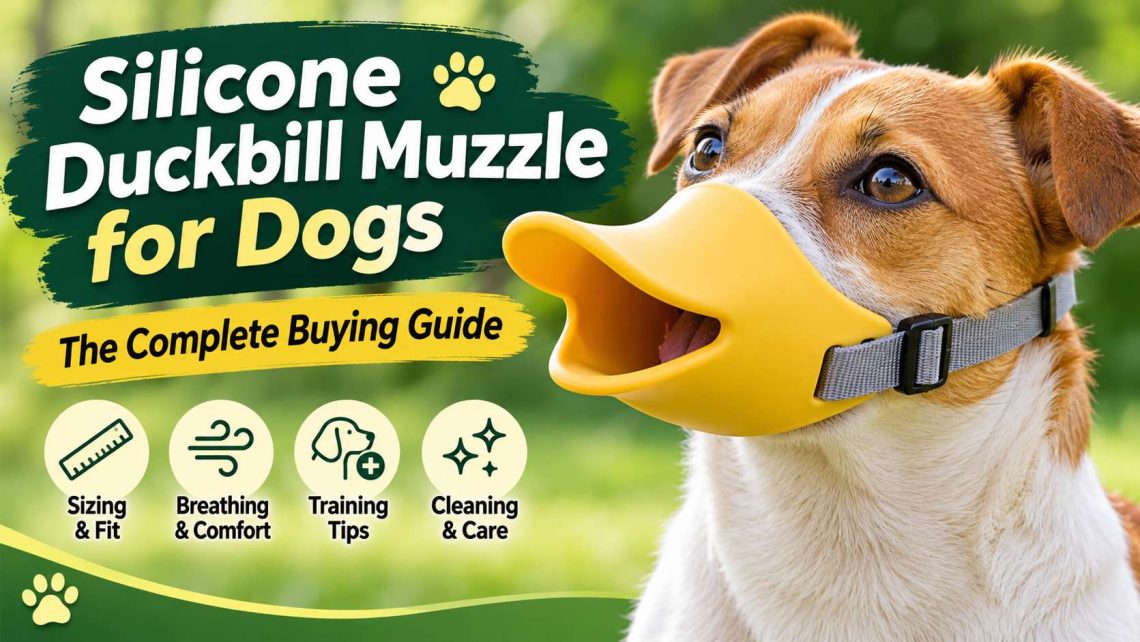
Silicone Duckbill Muzzle for Dogs: Complete Buying Guide
Considering a silicone duckbill muzzle for your dog? Discover how this distinctive muzzle design works, what to check before buying, how to find the right size, and whether it is suitable for your dog’s face shape and intended use.
Duckbill muzzles are designed for specific handling situations. Fit, breathing space, facial anatomy and intended use matter more than appearance or material alone.
Ready to compare available designs? Explore silicone duckbill dog muzzles on Amazon →
Table of Contents
Everything you need to know before choosing a silicone duckbill muzzle for your dog.
A simple guide to the design
What Is a Silicone Duckbill Muzzle for Dogs?
A silicone duckbill muzzle is a type of dog muzzle with a wide, flat front that looks a little like a duck’s bill. It fits over the dog’s mouth and is usually made from soft or flexible silicone.
Unlike a traditional basket muzzle, which has an open cage-like design, a duckbill muzzle has a more covered front. Most models use straps to keep the muzzle in place.
In simple words: A duckbill muzzle covers a dog’s mouth with a wide, bill-shaped front. It is designed to limit access to the mouth, but the fit and level of comfort depend on the individual product and the dog’s face shape.
Why Is It Called a Duckbill Muzzle?
The name comes from its shape. The front part is usually wider and flatter than a dog’s natural muzzle, making it look similar to a duck’s bill.
Some models are made almost entirely from molded silicone. Others have a silicone front with fabric straps or buckles. The design and materials can vary from one brand to another.
How Is It Different from a Basket Muzzle?
The main difference is the design. A basket muzzle has openings around the dog’s nose and mouth. A duckbill muzzle usually has a more covered front.
This matters because dogs need enough room to open their mouths and pant, especially in warm weather. Some duckbill muzzles may limit normal mouth movement, so you should never assume that a particular model is suitable for long periods of wear.
If your dog needs to wear a muzzle regularly or for longer periods, a properly fitted basket muzzle is often a better option. Many basket designs allow more room for panting and drinking.
When Might Someone Consider a Duckbill Muzzle?
Some owners look at duckbill muzzles for short grooming or handling situations. However, not every model is suitable for every dog. A muzzle that fits one breed may be uncomfortable or unsafe for another.
Before buying one, check the manufacturer’s instructions and make sure your dog can breathe comfortably. If you are unsure, ask your vet or a qualified dog trainer to help you choose the right type.
Before you buy: Check the material, size, measurements and breed restrictions. Never leave your dog unattended while wearing a muzzle. A muzzle should also never replace proper training or supervision.
How the design works
How Does a Duckbill Dog Muzzle Work?
A duckbill muzzle fits over the front of a dog’s mouth. Its wide front helps create a barrier, while straps around the head help keep it in position. The exact design depends on the brand and model.
Unlike a basket muzzle, which has an open cage around the mouth, a duckbill muzzle usually covers more of the front area. This means it is important to check how much room your dog has to open its mouth and breathe comfortably.
How Does It Stay on the Dog?
Most duckbill muzzles use adjustable straps. These go around the dog’s head and help stop the muzzle from slipping off. Some models have a buckle or quick-release fastening, while others use a simpler strap system.
What Does a Duckbill Muzzle Actually Do?
Its main purpose is to limit access to the dog’s mouth. Depending on the design and fit, it may help prevent the dog from using its mouth during certain short handling or grooming situations.
However, a muzzle does not change a dog’s behaviour. It does not teach a dog to stop barking, chewing or reacting to other animals. Those behaviours need to be addressed separately with suitable training and, where needed, professional advice.
Important: A muzzle should never stop a dog from panting normally. If your dog cannot open its mouth comfortably, seems distressed or has trouble breathing, remove the muzzle and seek veterinary advice.
What Should You Check Before Using One?
- Make sure the muzzle is the correct size for your dog’s face.
- Check that the front does not press against the nose or eyes.
- Make sure your dog can breathe comfortably.
- Check whether the design allows enough room for normal panting.
- Look for rubbing, redness or signs that the dog is uncomfortable.
- Follow the manufacturer’s instructions and supervise your dog.
Every dog has a different face shape. A muzzle that fits well on one dog may be unsuitable for another, even if they are the same breed. Always judge the fit on your own dog rather than relying only on the size label.
Design, material and fit
Why Are Silicone Duckbill Muzzles Different?
Silicone duckbill muzzles stand out because of their wide, covered front and flexible material. They look quite different from the open basket muzzles many dog owners are familiar with.
However, the shape and material are only part of the story. What really matters is how the muzzle fits your dog and whether it allows normal breathing and panting.
1. The Duckbill Shape
The most noticeable feature is the broad front, which looks similar to a duck’s bill. Instead of having an open cage around the nose and mouth, many duckbill designs cover more of this area.
This gives the muzzle a different fit from a traditional basket style. It may also limit how widely a dog can open its mouth. For this reason, owners should check the product’s design carefully rather than choosing one based on appearance alone.
2. The Silicone Material
Silicone is flexible and can feel softer than hard plastic. This is one reason it is used in some dog muzzle designs.
But soft does not automatically mean comfortable or safe. A poorly fitted silicone muzzle can still press against the nose, rub the skin or restrict normal mouth movement. The thickness and shape of the material also vary between products.
3. How Is It Different from Other Muzzle Materials?
Dog muzzles are available in several materials, including plastic, metal, rubber, fabric and silicone. Each has a different design and purpose. The material alone does not tell you whether a muzzle is suitable for long periods of wear.
| Type | Common features | What to consider |
|---|---|---|
| Silicone duckbill | Flexible material and a wide, covered front. | Check mouth movement, fit and room for panting. |
| Plastic basket | Open cage-like design with different shapes and sizes. | A suitable design can allow panting, drinking and treats. |
| Metal basket | Open structure made from metal bars or wire. | Check the fit, weight and areas that may touch the face. |
| Fabric or sleeve | Soft material that usually holds the mouth more closed. | Restricts panting and should only be used briefly when appropriate. |
4. Does Silicone Make a Muzzle Better?
Not necessarily. Silicone may be a useful material for certain designs, but it does not make every muzzle a good choice. A well-made basket muzzle may be more suitable when a dog needs enough space to pant, drink and take treats.
Before buying a silicone duckbill muzzle, check its size chart, material details and intended use. Also look for clear information about how much the dog can open its mouth while wearing it.
Keep in mind: A muzzle’s shape and material do not prove that it is bite-proof or suitable for every dog. If you need a muzzle for bite prevention, ask a veterinarian or qualified behaviour professional to help choose a suitable design.
What Matters More Than the Material?
A good fit is more important than whether a muzzle is made from silicone, plastic or metal. Your dog should have enough room to breathe comfortably, and the muzzle should not rub against the eyes, nose or skin.
If your dog needs to wear a muzzle for walks or longer periods, look carefully at a properly fitted basket design. Veterinary guidance generally favours basket muzzles for these situations because they can allow normal panting and drinking.
The term “duckbill muzzle” describes a product shape, not one universal design. Different brands may use different materials, measurements and fastening systems. Always check the exact model before buying.
Common situations and uses
What Are Silicone Duckbill Muzzles Used For?
Silicone duckbill muzzles are sometimes used when a dog needs to have limited access to its mouth for a short period. Owners may come across them when looking for equipment for grooming or veterinary visits.
However, not all duckbill muzzles are designed for the same purpose. Some models cover the mouth more than others, so always check the manufacturer’s instructions before considering one for your dog.
1. Short Grooming Sessions
Some dogs feel nervous during grooming, nail care or face cleaning. A nervous dog may try to move away or use its mouth when someone touches an uncomfortable area.
A suitable muzzle may be considered as part of a safe grooming plan. However, a duckbill design must not prevent the dog from breathing comfortably or cooling down by panting. A groomer should also stop if the dog becomes very stressed or uncomfortable.
2. Veterinary Visits
Even a friendly dog may become frightened when visiting a veterinary clinic. Pain, unfamiliar surroundings and handling can make some dogs uncomfortable.
A veterinarian may decide that a muzzle is appropriate for a brief examination or procedure. The type of muzzle should be chosen according to the dog’s condition and the procedure being performed.
3. Handling During Uncomfortable Situations
Some dogs find certain types of handling difficult, especially when they are frightened or in pain. A veterinarian or qualified behaviour professional can help decide whether a muzzle is appropriate and which design is safest.
A muzzle should not be used to force a dog through a stressful situation. The aim should always be to reduce fear and handle the dog as gently as possible.
Are Duckbill Muzzles Suitable for Everyday Walks?
Not automatically. A dog wearing a muzzle on a walk needs enough room to pant, drink water and cool down. Many silicone duckbill designs have a more covered front, which may limit normal mouth movement.
For walks or longer periods of wear, a properly fitted basket muzzle is generally a better option. It should allow the dog to open its mouth fully, pant and drink.
Can You Use a Duckbill Muzzle to Stop Barking?
No. A muzzle is not a proper solution for barking. Barking is a form of communication, and dogs may bark because they are excited, frightened, bored or trying to get attention.
Covering a dog’s mouth does not solve the reason behind the barking. It is better to understand what is causing the behaviour and work on it with positive training.
Important safety point: Never leave a dog alone while wearing a muzzle. A muzzle that restricts panting should not be used for extended periods. If your dog struggles to breathe, becomes distressed or seems too hot, remove the muzzle and seek veterinary help.
When Should You Avoid Using One?
A silicone duckbill muzzle may be unsuitable if:
- Your dog cannot open its mouth enough to pant comfortably.
- The muzzle presses against the nose, eyes or skin.
- Your dog has breathing problems or difficulty staying cool.
- The product does not fit your dog’s face shape.
- Your dog is showing strong signs of fear or distress.
- You need a muzzle for a long walk or extended daily use.
Remember: These are general uses of muzzles, not proof that every silicone duckbill model is suitable for these situations. Veterinary advice and the manufacturer’s instructions should guide your choice.
Things to consider before buying
Silicone Duckbill Muzzle: Pros and Cons
Silicone duckbill muzzles have a different design from traditional basket muzzles. They can be useful in some situations, but they are not the right choice for every dog.
Advantages of Silicone Duckbill Muzzles
- Flexible material: Silicone can bend more easily than hard plastic, depending on the product.
- Lightweight design: Some models are relatively light and easy to handle.
- Simple cleaning: Many silicone designs can be washed with water and mild soap.
- Adjustable straps: Some models have straps that can be adjusted to help keep the muzzle in place.
- Different shape: The wide front may suit certain face shapes better than some traditional designs, although fit must always be checked.
- Limited panting space: Some designs may not give dogs enough room to open their mouths and pant normally.
- Not suitable for every breed: The wide front may not fit dogs with very short, narrow or unusual face shapes.
- Limited size choices: Some brands offer only a small number of sizes.
- Different product quality: Material thickness, straps and overall construction vary between brands.
- Not ideal for long wear: A design that restricts panting or drinking is unsuitable for extended use.
Is a Silicone Duckbill Muzzle Comfortable?
It depends on the dog’s face and the individual product. Flexible silicone may feel softer than hard plastic, but that does not guarantee a comfortable fit.
If the muzzle is too small, it may press against the nose or rub the skin. If it is too loose, it may move around or come off. The straps should also sit comfortably without putting pressure on the face.
Is It a Good Choice for Long Periods?
This is one of the most important points to consider. Dogs cool themselves mainly by panting. They need enough room to open their mouths and move air over their tongues.
If a duckbill muzzle restricts this movement, it should not be used for walks, exercise or extended periods. A properly fitted basket muzzle is generally a better option when a dog needs to wear a muzzle for longer.
Our advice: Do not choose a muzzle simply because it is made from soft silicone. Check whether your dog can breathe comfortably, open its mouth to pant and drink. If the design does not allow these movements, choose a more suitable muzzle.
Who Should Consider This Type of Muzzle?
A silicone duckbill muzzle may be worth discussing with a veterinarian when a particular short-term handling need arises and the exact model is suitable for the dog.
It is generally not the first choice for everyday walks or situations where a dog needs to pant freely. For those needs, look for a properly fitted basket muzzle with enough room for normal mouth movement.
Product features vary. These are general points about silicone-style duckbill designs, not guarantees that every model has the same benefits or limitations. Always check the manufacturer’s instructions and ask your veterinarian if you are unsure.
An important safety check
Can Dogs Breathe, Pant and Drink in a Duckbill Muzzle?
The answer depends on the design and fit. Some duckbill muzzles cover much of the dog’s mouth, which can make it difficult to open the mouth fully. This may limit panting and drinking.
Can a Dog Breathe Normally?
A dog must be able to breathe comfortably while wearing any muzzle. However, normal breathing is not the only thing to consider. The dog also needs enough room to pant, especially when it is warm or after physical activity.
If the muzzle presses against the nose or restricts the dog’s mouth too much, it may cause discomfort. A muzzle should never interfere with normal breathing.
Why Is Panting So Important?
Dogs do not cool themselves in the same way people do. Panting helps them release heat. When a dog pants, moisture evaporates from the tongue and the surfaces inside the mouth, helping the body cool down.
If a muzzle prevents a dog from opening its mouth enough to pant, heat can build up. This is a serious concern during hot weather, exercise or stressful situations.
Remember: A dog needs room to open its mouth and extend its tongue while panting. A muzzle that holds the mouth closed is not suitable for walks, exercise or extended wear.
Can Dogs Drink Water While Wearing One?
Some basket muzzles have enough open space for dogs to drink water. Many more covered designs make drinking difficult or impossible.
Do not assume that a duckbill muzzle allows drinking. Check the manufacturer’s information and consider the actual shape of the product. If the dog cannot drink comfortably, the muzzle is not suitable for situations where it needs to remain on for longer.
Duckbill Muzzle vs Basket Muzzle
What About Hot Weather?
Extra care is needed during hot or humid weather. Dogs can overheat quickly, especially when exercising or spending time in direct sun. A muzzle that limits panting can make this risk worse.
Never use a restrictive duckbill design for a walk or exercise session. If your dog needs a muzzle outdoors, ask your veterinarian about a suitable basket design that allows normal panting.
Safety warning: Heavy panting, unusual drooling, weakness, confusion or difficulty breathing can be signs of overheating. Move the dog to a cooler place, offer water if it can drink safely and contact a veterinarian immediately.
What Should You Look for in a Muzzle?
Before choosing a muzzle, make sure it:
- Does not press against the nose or block the nostrils.
- Allows comfortable breathing.
- Provides enough room for normal panting.
- Does not cause rubbing or pressure around the face.
- Is suitable for the length of time and activity involved.
Final advice: For everyday wear, walks and situations where a dog needs to pant freely, a properly fitted basket muzzle is generally the better choice. Ask your veterinarian before using a more restrictive design.
Safety before buying
Is a Silicone Duckbill Muzzle Safe?
A silicone duckbill muzzle may be suitable for some short-term situations, but it is not the right choice for every dog. Its safety depends on the design, fit and how much it allows the dog to move its mouth.
The biggest concern is panting. Dogs use panting to cool themselves, so a muzzle that holds the mouth too tightly can put their health at risk. This is why choosing the right type matters more than choosing a particular material.
1. Check Whether Your Dog Can Pant
A dog needs enough room to open its mouth and extend its tongue while panting. If a duckbill muzzle prevents this, it should not be used for walks, exercise or extended periods.
Cornell University’s veterinary guidance recommends basket muzzles for longer use because a properly fitted basket design allows dogs to pant and drink. More restrictive muzzle styles are intended only for brief situations, when appropriate.
2. Make Sure the Muzzle Fits Properly
A muzzle that is too tight may rub against the skin or put pressure on the dog’s nose. A muzzle that is too loose may move around or come off.
Check the manufacturer’s sizing instructions and make sure the muzzle does not press against the eyes, block the nostrils or cause discomfort.
3. Watch for Signs of Discomfort
Some dogs need time to get used to wearing a muzzle. However, repeated attempts to remove it, unusual distress or signs of breathing difficulty should never be ignored.
4. Never Leave Your Dog Unsupervised
A dog wearing any type of muzzle should be watched closely. A muzzle can shift, become caught or cause problems if the dog tries to remove it.
Do not leave a muzzled dog alone in a room, garden or vehicle. Remove the muzzle when it is no longer needed, following any instructions from your veterinarian.
5. Be Careful in Hot Weather
Hot and humid weather makes it harder for dogs to stay cool. This is especially important in Bangladesh, where warm conditions can make overheating a concern.
Dogs with short, flat faces, such as Pugs and Bulldogs, may already have difficulty breathing and cooling themselves. A restrictive muzzle can make the problem worse.
Warning: Heavy panting, excessive drooling, weakness, confusion or breathing difficulty can be signs of overheating. Move the dog to a cooler place and contact a veterinarian immediately. Heatstroke is an emergency.
6. Introduce a Muzzle Slowly
Dogs should have time to become comfortable with a muzzle. Forcing one onto a frightened dog can make the experience more stressful.
Veterinary behaviour guidance recommends introducing a suitable muzzle gradually and using positive rewards. If your dog is very frightened or has a history of biting, ask a qualified professional for help.
When Should You Avoid a Silicone Duckbill Muzzle?
A particular model may be unsuitable if:
- It prevents your dog from panting normally.
- It makes breathing or drinking difficult.
- It presses against the nose, eyes or skin.
- It does not fit your dog’s face shape.
- Your dog has breathing problems that could be made worse by the design.
- You need a muzzle for walks, exercise or extended wear.
Our recommendation: For regular use, ask your veterinarian about a properly fitted basket muzzle that allows comfortable panting and drinking. Do not choose a duckbill muzzle simply because it is soft or flexible.
This is general safety information, not a substitute for veterinary advice. Individual duckbill products differ, so always check the exact model and its instructions before considering it for your dog.
Silicone Duckbill Muzzle vs Basket Muzzle
A silicone duckbill muzzle and a traditional basket muzzle may look similar at first, but their shape, internal space and intended use can be quite different. The most important question is not which one looks better—it is whether the design fits your dog and allows comfortable breathing and panting.
A traditional basket muzzle generally provides more open space around the dog’s mouth. A duckbill muzzle has a broader, shaped front section, but the amount of room for panting and drinking depends on the specific model.
1. What is the difference?
Silicone Duckbill Muzzle
A shaped muzzle with a broad, duckbill-like front. Some models use flexible silicone or silicone-based materials with adjustable straps.
- Distinctive duckbill-shaped front
- Often made with flexible materials
- Available in different sizes and colours
- Internal space varies by model
Traditional Basket Muzzle
A cage-like or open basket structure that surrounds the dog’s snout. It is commonly made from rubber, plastic, metal or other materials.
- Open structure around the mouth
- Generally provides more room to pant
- Some designs allow drinking and treats
- Available in several materials and shapes
2. Side-by-side comparison
| Feature | Silicone Duckbill | Basket Muzzle |
|---|---|---|
| Design | Broad, shaped front | Open cage or basket structure |
| Material | Silicone or silicone-based material, depending on model | Rubber, plastic, metal or other materials |
| Internal space | Varies considerably | Generally more open |
| Panting | Must be checked on the individual model | Usually allows more mouth movement when correctly fitted |
| Drinking | Depends on the opening and design | Many models allow drinking |
| Treat access | Depends on the front opening | Often possible through the basket openings |
| Adjustability | Depends on strap design | Depends on head and neck strap system |
| Best consideration | Individual fit and intended use | Room for panting and normal mouth movement |
3. Which muzzle is better for panting?
Panting is an important way dogs regulate their body temperature. A muzzle that prevents a dog from opening its mouth sufficiently can interfere with this natural cooling process.
Traditional basket muzzle
Many traditional basket designs provide enough open space for a dog to open its mouth and pant. However, the fit and basket shape still need to be checked carefully.
Silicone duckbill muzzle
Duckbill models differ in their internal dimensions. A wide front does not automatically mean there is enough space for comfortable panting. Check the manufacturer’s guidance and assess the fit on your dog.
Never use a muzzle that restricts comfortable panting for extended wear. If you cannot confirm that your dog can open its mouth and pant freely, choose a different design and ask a veterinarian for advice.
4. Which muzzle is better for drinking and training?
Basket muzzles often have openings that allow dogs to receive small food rewards and drink water. This can make them useful during gradual muzzle training, provided the particular model is designed for those activities.
Some duckbill muzzles have a more restricted front opening. Whether a dog can drink or accept treats depends on the product’s shape and fit. Do not assume these features are available just because a muzzle is made from silicone.
5. Popular basket muzzle options to compare
Baskerville ULTRA Dog Muzzle
A well-known basket-style option with a thermoplastic design. The manufacturer describes its design as allowing panting and drinking. Check the current size chart and fitting instructions before purchasing.
BARKLESS Silicone Basket Muzzle
A silicone basket-style alternative with adjustable straps. Its product description highlights panting and drinking access. Confirm the exact model, dimensions and fit instructions before ordering.
6. Which one should you choose?
Consider a traditional basket muzzle if:
- Your dog needs room to pant comfortably.
- You want access for treats during training.
- You need a design intended for walks or longer supervised activities.
- You can find a basket shape that fits your dog’s face securely.
Consider a duckbill muzzle only if:
- The manufacturer clearly explains its intended use.
- The model fits your dog’s individual measurements.
- Your dog can open its mouth and pant comfortably.
- The material and strap system suit your dog’s needs.
7. Final verdict: Duckbill or basket muzzle?
Choose based on fit, function and comfort
For many dogs that need a muzzle for walks, training or regular supervised activities, a properly fitted basket muzzle is a practical starting point because its open structure generally provides more room for panting and treats.
A silicone duckbill muzzle may suit a particular dog and purpose, but its appearance alone does not prove that it provides enough room for normal mouth movement. Check the exact model before making a decision.
Whichever design you choose, introduce it gradually with positive reinforcement and supervise your dog whenever it is wearing the muzzle.
Next: Silicone Duckbill Muzzle vs Nylon and Fabric Muzzles →Silicone Duckbill Muzzle vs Nylon and Fabric Muzzles
Silicone duckbill muzzles and nylon or fabric muzzles are designed differently, and they should not be treated as interchangeable. The main differences are their structure, how much they restrict mouth movement and the situations they are intended for. Before buying, consider your dog’s comfort, breathing needs and the purpose of the muzzle.
Soft nylon and fabric sleeve muzzles usually hold the mouth more closed and restrict panting. They are generally intended for brief, supervised procedures. A silicone duckbill design is different, but you must still check whether the specific model allows comfortable panting.
1. Understanding the three muzzle designs
Silicone Duckbill Muzzle
A shaped muzzle with a broad, duckbill-like front. Some models use flexible silicone or silicone-based materials with adjustable straps.
- Distinctive broad front shape
- Flexible material in many models
- Different sizes and strap systems
- Panting space varies by design
Nylon Sleeve Muzzle
A soft sleeve that fits around the dog’s snout and is usually secured with an adjustable strap behind the head.
- Lightweight nylon construction
- Usually holds the mouth more closed
- Often used for brief procedures
- Restricts normal panting and drinking
Mesh and Fabric Muzzle
Usually made from mesh, cloth or another soft material. These designs vary, but many fit closely around the snout.
- Soft, lightweight construction
- May have mesh ventilation panels
- Often used for short procedures
- Ventilation does not guarantee panting room
2. Side-by-side comparison
| Feature | Silicone Duckbill | Nylon Sleeve | Mesh / Fabric |
|---|---|---|---|
| Structure | Shaped, broad front | Snug sleeve | Soft covering |
| Common material | Silicone or silicone-based material | Nylon | Mesh, cloth or fabric |
| Mouth movement | Depends on the model | Usually restricted | Often restricted |
| Panting | Must be verified for each model | Generally restricted | Often restricted |
| Drinking | Depends on front opening | Generally restricted | Generally restricted |
| Typical consideration | Fit and internal space | Brief supervised procedures | Brief supervised procedures |
| Extended wear | Only if the design and fit safely allow it | Not suitable | Not suitable if panting is restricted |
3. Which design allows better panting?
Dogs use panting to regulate body temperature. A muzzle that holds the mouth closed can interfere with this process, even if the material has small ventilation holes.
Silicone duckbill muzzle
Some duckbill models have a shaped front opening, but the available space varies. Check whether your dog can open its mouth and pant comfortably while wearing the exact product.
Nylon and fabric sleeve muzzles
Many sleeve designs hold the mouth more closed. They are not suitable for walks, exercise, warm conditions or extended wear because they restrict panting and drinking.
Do not use a soft sleeve muzzle for prolonged wear. If a dog needs a muzzle for walks or regular activities, ask a veterinarian or qualified muzzle-fitting professional about a properly fitted basket design that allows comfortable panting.
4. When are nylon and fabric muzzles used?
Soft sleeve muzzles may be used by veterinary professionals for brief procedures such as certain examinations or grooming tasks. Their purpose is temporary restraint, not everyday management.
A veterinary professional may use a suitable soft muzzle for a short procedure when necessary.
A professional groomer may use one briefly when appropriate and with close supervision.
Use should be limited to the specific situation and guided by an appropriate professional.
5. What should you check before buying?
Check the exact material and construction.
Review the manufacturer’s sizing chart.
Confirm whether the design allows comfortable panting.
Check the intended use and recommended wearing duration.
Inspect the straps, fasteners and adjustment system.
Read product reviews carefully, but do not rely on reviews instead of fit and safety information.
6. Popular products to compare on Amazon
These Amazon searches can help you compare available styles. Product listings and sizes can change, so check the current description and manufacturer guidance before purchasing.
Silicone Duckbill Dog Muzzles
Compare silicone and silicone-based duckbill designs, including their dimensions, strap adjustments and stated intended uses.
View duckbill muzzle listings →Nylon Sleeve Dog Muzzles
Compare soft sleeve designs intended for brief, supervised procedures. These should not be treated as everyday walking muzzles.
View nylon muzzle listings →Mesh and Fabric Dog Muzzles
Compare mesh and fabric products, paying attention to whether the design restricts mouth movement and panting.
View mesh muzzle listings →7. Final verdict: Which type should you choose?
Choose according to your dog’s needs
A silicone duckbill muzzle and a nylon or fabric sleeve muzzle serve different purposes. A duckbill design needs to be assessed individually for fit and panting space. Soft sleeve muzzles are generally for brief professional procedures and should not be used for walks or extended periods.
If your dog needs a muzzle for regular outdoor activities, a properly fitted basket muzzle is generally a better starting point because it can provide more room for panting, drinking and treats.
Whichever style you consider, prioritize your dog’s comfort, appropriate fit and welfare over price or appearance.
Next: Best Silicone Duckbill Muzzles to Consider →Best Silicone Duckbill Muzzles to Consider
If you’re comparing silicone duckbill muzzles, start with the product’s measurements, material, strap adjustment and intended use. Three products worth examining are the GVP Duckbill Muzzle, Artero Silicone Muzzle and Smart Coat Duck Bill Muzzle. They have different sizing systems and product specifications, so compare them against your dog’s measurements rather than choosing by appearance alone.
A product being described as soft, flexible or comfortable does not automatically mean it allows adequate panting. Check the actual design, manufacturer’s instructions and fit. These products should not be treated as interchangeable.
Three silicone duckbill muzzles worth comparing
GVP Duckbill Muzzle
The GVP Duckbill Muzzle is made from a soft silicone polymer and features a single-pull adjustment system. The manufacturer’s catalogue lists four sizes, from XS to L, with blue and pink options.
GVP states that this product is unsuitable for brachycephalic breeds and large dogs over 25 kg.
You want several size options and a simple single-pull adjustment system.
Artero Silicone Muzzle
Artero’s silicone muzzle has a soft silicone construction, adjustable strap and safety buckle. The official product listing describes it as washable and disinfectable, with brown and yellow colour options.
Artero lists four sizes. Check its current size chart or ask the retailer for the measurements of the exact variant before ordering.
You prefer a silicone model with a safety buckle and washable construction.
Smart Coat Duck Bill Muzzle
The Smart Coat Duck Bill Muzzle is listed by a New Zealand grooming supplier as a soft silicone model with an adjustable cotton strap and clasp. The retailer lists one medium/large version with specific measurements.
These are the measurements published by the retailer for its medium/large listing. Confirm the dimensions with the seller before purchasing.
You are looking for a silicone-front design with an adjustable cotton strap.
How these three products compare
| Product | Material | Size options | Notable feature |
|---|---|---|---|
| GVP Duckbill | Silicone polymer | XS–L | Single-pull adjustment |
| Artero Silicone | Silicone | S–XL | Safety buckle |
| Smart Coat Duck Bill | Soft silicone front | Medium/Large listing | Adjustable cotton strap |
What to check before ordering
Compare your dog’s measurements with the exact product’s size chart.
Check whether the model is suitable for your dog’s face shape and size.
Confirm that your dog can open its mouth and pant comfortably.
Review the strap, buckle and adjustment mechanism.
Check the manufacturer’s intended use and wearing guidance.
Confirm the current seller, price, shipping and return policy.
Which product should you compare first?
GVP provides a clearly published four-size measurement chart, Artero offers four sizes with an adjustable strap and safety buckle, and Smart Coat has a retailer-listed medium/large version with a cotton strap. These specifications make them useful products to compare, but they do not establish that one is safer or more comfortable than another.
Do not select a muzzle solely because it is labelled silicone or duckbill. If the design does not allow comfortable panting, it is not suitable for extended wear. Consult a veterinarian or qualified muzzle-fitting professional if you are unsure about fit or suitability.
Next: Global Veterinary Products Duckbill Muzzle Review →This article contains Amazon affiliate links. If you purchase through these links, MuzzlesShop may earn a commission at no additional cost to you. Product specifications and availability can change; verify current details with the seller before purchasing.
Product review
Global Veterinary Products (GVP) Duckbill Muzzle Review
The GVP Duckbill Muzzle is a silicone-polymer dog muzzle made by Global Veterinary Products. It has a wide front, an adjustable strap and four listed sizes. The manufacturer describes it as a soft muzzle designed for pet handling and veterinary use.
One useful feature is its size chart. Instead of offering only general size labels, GVP provides the length and inside circumference for each size. This gives dog owners more information when checking whether the product may fit.
GVP Duckbill Muzzle: Main Features
According to the manufacturer, the muzzle is made from super-soft silicone polymer. It uses a single-pull adjustment system, which is designed to make fitting quicker.
GVP also describes the surface as easy to clean and lists the product for use in veterinary clinics and pet-handling situations. These are manufacturer claims rather than results from independent product testing.
GVP Duckbill Muzzle Size Chart
The manufacturer lists four sizes. The length is measured along the muzzle, while the circumference refers to the inside opening.
| Size | Length | Inside circumference | Suggested breeds |
|---|---|---|---|
| XS | 6.3 cm | 17 cm | Toy breeds |
| S | 7.2 cm | 19 cm | Dachshund, Jack Russell |
| M | 7.9 cm | 21 cm | Cocker Spaniel, Border Collie |
| L | 8.6 cm | 23 cm | Irish Setter, Cattle Dog |
These breed examples are only a guide. Two dogs of the same breed can have different muzzle sizes, so measure your dog before choosing a size.
Important Breed and Size Restrictions
GVP states that this muzzle is not suitable for brachycephalic breeds, which are dogs with short, flat faces. The manufacturer also excludes large dogs weighing more than 25 kg.
This is an important point to check before ordering. A product may look suitable in a photograph but still be the wrong shape or size for your dog.
Important: Do not use the GVP size chart to choose a muzzle for a flat-faced dog. Follow the manufacturer’s restrictions and ask your veterinarian about a suitable alternative.
What We Like About the GVP Duckbill Muzzle
Its main advantage is the amount of product information provided by the manufacturer. The four sizes, published measurements and single-pull adjustment system make it easier to compare the product with other duckbill designs.
The silicone-polymer construction and easy-clean design may also be useful in settings where the product needs to be cleaned between uses.
What Should Buyers Be Careful About?
The size range is limited compared with some basket muzzle ranges. The manufacturer also lists clear breed and weight restrictions.
Another important point is panting. The GVP product page lists the material, sizes and adjustment features, but it does not provide detailed measurements of how far a dog can open its mouth while wearing the muzzle.
Some retailers describe the product as allowing panting. However, this should not replace checking the actual fit or asking a veterinarian whether it is suitable for your dog.
Where Can You Find the GVP Duckbill Muzzle?
GVP lists the product on its official website. Its website explains that veterinary products are supplied through veterinary wholesalers in Australia and New Zealand.
Buyers outside these markets should check with the manufacturer or a local veterinary supplier about availability and shipping.
Visit the official GVP product page →
Our verdict: The GVP Duckbill Muzzle is worth comparing if you are researching silicone duckbill designs. Its published measurements and adjustment system are useful features. However, its size and breed restrictions are important, and buyers should confirm that the design is suitable for their dog’s breathing and mouth movement before use.
This review is based on the manufacturer’s published product information and retailer descriptions. We have not independently tested the product or verified its fit on different breeds. Product details may change, so check the official listing before purchasing.
Artero Silicone Dog Muzzle Review
The Artero Silicone Dog Muzzle is a soft silicone model available in four sizes and two colours. Its main features include an adjustable strap, a safety buckle and a washable construction. It is worth considering if you’re comparing silicone duckbill-style muzzles, but the most important step is checking its measurements and confirming that the fit allows your dog to pant comfortably.
This review is based on Artero’s published product specifications and retailer-listed measurements. It is not a hands-on test. The available product information does not establish that every dog can pant or drink comfortably in this particular model.
1. What is the Artero Silicone Dog Muzzle?
Artero describes this product as a silicone muzzle with an adjustable strap and safety buckle. The manufacturer highlights its soft feel, easy cleaning and washable construction. It is designed for situations where a muzzle is needed to help prevent a dog from biting people, other animals or objects.
The product is available in yellow and brown. Artero lists four sizes: small, medium, large and extra large.
Flexible silicone construction described by the manufacturer as soft to the touch.
Allows the strap to be adjusted around the dog’s head.
Provides a fastening point as part of the muzzle’s strap system.
Artero describes the muzzle as washable and disinfectable.
2. Artero Silicone Muzzle sizes
Artero offers four sizes, but choosing the correct one requires more than matching a breed name or selecting the size your dog normally wears. Compare your dog’s measurements with the product dimensions and check the fit carefully.
Measurements are converted from inches published by PetEdge. Confirm the dimensions and measuring method with the seller before ordering.
Measure your dog’s snout according to the manufacturer’s instructions. Check length, circumference and height where applicable. A muzzle should not press against the nose or eyes, rub the skin or prevent comfortable mouth movement.
Read our dog muzzle measuring guide →3. Material and comfort
One of the main features of the Artero model is its silicone construction. The manufacturer describes the material as extra soft and pleasant to the touch and says the design is intended to reduce marks and abrasions.
However, soft material alone does not guarantee a comfortable fit. The shape, internal space, strap position and size all matter. A muzzle that is too small can still create pressure or restrict normal mouth movement, even if its material feels flexible.
- The silicone does not press against the dog’s nose or eyes.
- The strap does not rub behind the ears.
- The muzzle does not shift excessively when the dog moves.
- The dog can open its mouth and pant comfortably.
- The dog remains relaxed during gradual introduction.
4. Strap and fastening system
Artero lists an adjustable strap and safety buckle as product features. This gives buyers an adjustment system to consider when comparing it with other silicone muzzle designs.
Before use, check that the buckle closes correctly, the strap is in good condition and the adjustment holds securely. The muzzle should fit without being excessively tight or loose.
5. Cleaning and maintenance
Artero describes the silicone muzzle as washable and disinfectable. This may make routine maintenance easier, although the manufacturer’s care directions should always be followed.
Check Artero’s care instructions before choosing a cleaning product.
Clean the silicone and remove visible dirt or residue.
Rinse away cleaning residue where applicable.
Allow the muzzle to dry completely before storing it.
Inspect the silicone, strap and buckle before each use.
6. What are the potential advantages?
Soft silicone construction, according to the manufacturer.
Four listed sizes, from S to XL.
Two listed colour options: brown and yellow.
Adjustable strap and safety buckle.
Manufacturer describes it as washable and disinfectable.
7. What should buyers consider before purchasing?
Published dimensions should be checked against your dog’s actual measurements.
The official product description does not provide detailed panting-clearance measurements.
Do not assume that the muzzle permits normal drinking or treat access.
It may not suit every face shape or every intended use.
Availability, colours and sizing may differ between retailers.
8. Where can you buy the Artero Silicone Dog Muzzle?
You can check Artero’s official product page for current specifications and available variants. Amazon search results may also help you compare listings, but check that the seller is offering the exact Artero silicone model rather than a different Artero muzzle or another brand.
Artero Silicone Dog Muzzle
Compare the available sizes, colours, seller information and return conditions before ordering.
Search Artero on Amazon → Visit Artero’s official product page →9. Final verdict: Is the Artero Silicone Dog Muzzle worth considering?
A useful option to compare, but fit comes first
The Artero Silicone Dog Muzzle has several practical features on paper: silicone construction, an adjustable strap, a safety buckle and four size options. Its washable design is another point worth considering.
The main limitation is that the available product specifications do not provide enough detail to confirm comfortable panting and drinking for every dog. Do not choose it for extended wear unless you can verify that your dog can open its mouth and pant freely in the correctly fitted muzzle.
Overall, the Artero model is worth comparing with other silicone duckbill-style muzzles, but it should be selected based on individual fit and suitability rather than the material or appearance alone.
Next: Smart Coat Duck Bill Muzzle Review →This article contains an Amazon affiliate search link. MuzzlesShop may earn a commission from qualifying purchases made through that link, at no additional cost to the buyer. Product information and availability can change; verify details with the manufacturer or seller.
Smart Coat Duck Bill Muzzle Review
The Smart Coat Duck Bill Muzzle is a silicone-front muzzle with an adjustable cotton strap and fastening clasp. It is listed in a medium/large size by a New Zealand pet-grooming retailer. Before buying, check its measurements carefully and make sure the design is suitable for your dog’s face and intended use.
Smart Coat Duck Bill Muzzle
This design combines a soft silicone front with a separate cotton strap. The strap has an adjustable fastening clasp, allowing some adjustment around the dog’s head.
- Front material: Soft silicone
- Strap material: Cotton
- Adjustment: Adjustable strap
- Fastening: Clasp
- Listed size: Medium / Large
Smart Coat muzzle measurements
The retailer lists a bill circumference of 15 cm and a length of 12 cm. These figures describe the product, not the measurements of a dog’s muzzle.
What are the advantages?
- Soft silicone front: The retailer describes the front section as soft silicone.
- Adjustable cotton strap: The strap can be adjusted to help position the muzzle.
- Simple construction: The design uses a silicone front and a separate fastening strap.
What should you check before buying?
- Limited size options: The available listing provides one set of measurements rather than a detailed size range.
- Actual fit: Measure your dog’s muzzle instead of relying only on the medium/large label.
- Panting space: Confirm that the design allows comfortable breathing and sufficient room for normal panting.
- Intended use: Ask the seller about suitable uses and any limitations before purchasing.
Is the Smart Coat Duck Bill Muzzle worth considering?
The Smart Coat may be worth investigating if you want a basic silicone duckbill design with an adjustable strap. However, the available product information is limited, so there is not enough evidence to confirm how well it fits different dog breeds or whether it provides adequate room for panting.
Contact the retailer for additional sizing information before ordering. If your dog needs a muzzle for regular walks or longer periods of wear, consider a properly fitted basket muzzle that allows comfortable panting and drinking.
How to Choose the Right Duckbill Muzzle Size
Choosing the right size is about more than matching your dog to a small, medium or large label. A muzzle that is too tight may cause discomfort and restrict normal mouth movement, while one that is too loose may shift out of position. Measure your dog’s muzzle and compare those measurements with the specific product’s sizing chart before buying.
Dogs of the same breed can have different muzzle shapes and dimensions. Your dog’s individual measurements are more useful than a general breed recommendation.
1. Check the manufacturer’s size chart
Different brands use different measurements and sizing systems. A medium muzzle from one manufacturer may not have the same dimensions as a medium from another.
Check the available length and circumference carefully for small dogs.
Compare both measurements instead of assuming a medium dog needs a medium muzzle.
Confirm that the bill has enough room and does not press against the nose or face.
2. Understand the important measurements
Before ordering, check which measurements the manufacturer requests. For most muzzle designs, length and circumference are important starting points. Some products also provide height and width measurements.
Helps determine whether the front of the muzzle has enough space without pressing against the nose.
Helps determine whether the muzzle opening is suitable for the dog’s muzzle size.
Helps assess the available vertical room inside the muzzle.
Helps check whether the muzzle fits the dog’s face without squeezing the sides.
3. Check the fit before using it
A size chart is only the starting point. Once you have a suitable product, check how it sits on your dog’s face. Look for signs of pressure, rubbing or movement.
The front should not press painfully against the nose or squeeze the sides of the face.
The straps should hold the muzzle in place without digging into the skin.
Check the edges and straps to make sure they do not irritate sensitive areas.
Confirm that the design provides adequate breathing and panting space for the situation.
4. Do not choose a size just because it is adjustable
Adjustable straps can help secure a muzzle, but they cannot correct every sizing problem. If the silicone bill itself is too short, too narrow or too shallow, changing the strap will not make the front section fit properly.
5. What if your dog is between two sizes?
Do not automatically choose the smaller option. Compare the actual dimensions of both sizes and ask the manufacturer or seller which one provides a suitable fit. The correct choice depends on the muzzle’s shape and the dog’s measurements, not simply on choosing the larger or smaller label.
Our sizing recommendation
Measure your dog first, check the manufacturer’s exact size chart and confirm the fit before use. If you cannot find a duckbill muzzle that provides enough room for comfortable breathing and normal panting, speak with your veterinarian about a more suitable muzzle design.
Next: How to Measure Your Dog for a Duckbill Muzzle →How to Measure Your Dog for a Duckbill Muzzle
Before ordering a silicone duckbill muzzle, measure your dog’s muzzle carefully. The right measurements help you compare products and avoid choosing a size that is too tight, too short or too loose.
Step 1: Measure muzzle length
Measure from the base to the nose
Follow the product manufacturer’s instructions for the starting and ending points. For a typical muzzle-length measurement, measure along the top of the dog’s muzzle from the point specified by the sizing guide to the front of the nose.
Keep the tape gently against the face. Do not pull it tightly or press it into the dog’s skin.
Step 2: Measure muzzle circumference
Measure around the widest part
Follow the manufacturer’s instructions for where the tape should sit. For a typical muzzle circumference measurement, wrap the tape around the widest part of the muzzle without squeezing it.
Check whether the product chart expects the mouth to be closed or in a particular position. Do not assume every brand uses the same measuring method.
Step 3: Check height and width if requested
Record the extra dimensions
Some manufacturers also request muzzle height and width. These measurements help you assess the shape and available space inside the muzzle.
Use the exact points shown in the manufacturer’s sizing guide. Do not substitute measurements from another brand’s chart.
Step 4: Compare your measurements with the size chart
Once you have recorded the measurements, compare them with the exact product you intend to buy. Check every dimension the manufacturer provides, not just the small, medium or large label.
- Does the muzzle length match your dog’s measurements?
- Is the circumference suitable?
- Is there enough room for comfortable mouth movement?
- Can your dog breathe comfortably and pant normally?
- Does the manufacturer recommend this design for your dog’s face shape?
Record your dog’s measurements
Use this simple record to keep your measurements together while comparing different products. These fields are for your notes; they do not automatically calculate a recommended muzzle size.
These are example placeholders only. Enter your dog’s actual measurements and compare them with the product’s own chart.
Final measuring tip
Take each measurement calmly and repeat it if you are unsure. If your dog becomes uncomfortable, stop and try again later. Accurate measurements are useful, but a physical fit check and suitable design are just as important.
Next: Which Dog Breeds Can Wear Duckbill Muzzles? →Which Dog Breeds Can Wear Duckbill Muzzles?
A duckbill muzzle may suit some dogs, but there is no single size or design that works for every breed. Face shape, muzzle length, width and individual measurements matter more than the breed name. Always check the product’s sizing chart and make sure the design allows comfortable breathing and normal panting.
Do not buy a duckbill muzzle based only on your dog’s breed. Two dogs of the same breed can have noticeably different face shapes and measurements.
1. Dogs with medium-length muzzles
Dogs with a clearly defined muzzle may be easier to measure for some duckbill designs. However, a medium-length nose does not automatically mean that a particular product will fit.
Labrador Retriever
Labradors generally have a defined muzzle, but their size and muzzle proportions vary. Check the product’s length and circumference measurements.
Golden Retriever
Golden Retrievers have a noticeable muzzle, but coat, head shape and individual proportions can affect how a strap and muzzle sit.
Beagle
Beagles have a defined muzzle, but their smaller head dimensions may require a different product size from larger dogs.
German Shepherd
German Shepherds usually have a longer muzzle and larger head. Check the product’s maximum dimensions and intended size range.
2. Dogs with long or narrow muzzles
Some breeds have longer, narrower faces. A standard duckbill muzzle may be too short, too wide or otherwise poorly shaped for them.
- Greyhound
- Whippet
- Saluki
- Afghan Hound
Look for a muzzle specifically designed for a long, narrow face. Do not assume a standard duckbill model will provide the right length, depth or secure fit.
3. Flat-faced breeds need extra care
Breeds with short, flattened faces can have different fitting and breathing needs. A muzzle that does not match their facial structure may press against the nose or interfere with breathing.
Brachycephalic breeds
Examples include:
- Pug
- French Bulldog
- English Bulldog
- Pekingese
- Boston Terrier
- Shih Tzu
These breeds may have narrower airways or other breathing difficulties. Ask your veterinarian before selecting a muzzle, especially if your dog has noisy breathing or struggles with exercise or heat.
4. What about mixed-breed dogs?
Mixed-breed dogs can have many different muzzle shapes. Some have short, broad faces, while others have long or narrow noses. Their suitability depends on their actual measurements and the shape of the product.
Use the same measuring method recommended by the manufacturer. Compare length, circumference, height and width wherever those dimensions are provided.
Breed suitability at a glance
| Face shape | Examples | What to consider |
|---|---|---|
| Medium-length | Labrador, Golden Retriever, Beagle | Compare individual measurements with the product chart. |
| Long and narrow | Greyhound, Whippet, Saluki | A specialist long-nose design may be more suitable. |
| Flat-faced | Pug, Bulldog, French Bulldog | Seek veterinary guidance before choosing a muzzle. |
| Mixed-breed | Varies | Assess the dog’s actual face shape and dimensions. |
How do you decide if a duckbill muzzle is suitable?
Start with your dog’s face shape, take accurate measurements and compare them with the manufacturer’s sizing guide. If the product does not fit comfortably or its design restricts normal mouth movement, choose another type rather than trying to adjust an unsuitable size.
Next: Are Duckbill Muzzles Suitable for Small Dogs? →Are Duckbill Muzzles Suitable for Small Dogs?
Some small dogs may fit a duckbill muzzle, but choosing one can be challenging because small breeds have different face shapes and proportions. A muzzle labelled “small” is not automatically suitable. Check the actual measurements, make sure it sits comfortably and confirm that your dog can breathe and pant normally while wearing it.
A Chihuahua, Yorkshire Terrier and Dachshund can have very different muzzle proportions. Always compare your dog’s measurements with the exact product sizing chart.
1. Check the muzzle dimensions first
Small-dog products may have shorter or narrower front sections, but the dimensions vary between manufacturers. Check the following before considering a purchase:
Make sure the front section is not too short or pressing against the nose.
Check that the opening matches the dog’s muzzle without squeezing it.
Check the available vertical room inside the muzzle.
Make sure the sides do not press against the dog’s face.
2. Small breeds have different face shapes
The following breeds illustrate why it is important to assess individual measurements rather than relying on a small-size label.
Chihuahua
Chihuahuas have small heads, but muzzle proportions vary. Check the product’s length and circumference carefully.
Yorkshire Terrier
Yorkshire Terriers have a relatively small face and may need a design that matches their individual muzzle shape.
Dachshund
Dachshunds have a more elongated muzzle than many other small breeds. A very short duckbill design may not be suitable.
Pomeranian
Pomeranians have compact faces and thick coats around the head. Check that the straps sit comfortably without pulling on the coat or irritating the skin.
3. Be especially careful with flat-faced small breeds
Some small dogs have shortened or flattened faces. Their breathing needs can make muzzle selection more complicated.
Examples of flat-faced small breeds
- Pug
- Pekingese
- Shih Tzu
- Brussels Griffon
These dogs may have breathing difficulties related to their facial structure. Ask your veterinarian before selecting a muzzle, particularly if your dog already has noisy breathing or difficulty exercising.
4. Why adjustable straps are not enough
An adjustable strap can help position a muzzle, but it cannot correct an incorrectly sized silicone front. If the bill is too narrow, too short or too shallow, tightening the strap will not solve the problem.
- The front section does not press against the nose.
- The muzzle does not squeeze the sides of the face.
- The straps do not rub the eyes or irritate the skin.
- The dog can breathe comfortably and pant normally.
- The muzzle is appropriate for the intended activity.
5. Is a duckbill muzzle the best choice for a small dog?
Not necessarily. The best design depends on the dog’s needs. A properly fitted basket muzzle is generally preferred when a dog needs to wear a muzzle for walks or longer periods because it provides room for panting and drinking.
A duckbill design should not be selected simply because it looks smaller or more compact. Ask a veterinarian to help assess whether the particular model is suitable.
Final advice for small dog owners
Measure your dog’s muzzle, check the manufacturer’s size chart and assess the actual fit. Do not force a small dog into a product that feels restrictive. If you cannot find a suitable design, ask your veterinarian about alternatives.
Next: Are Duckbill Muzzles Suitable for Flat-Faced Dogs? →Are Duckbill Muzzles Suitable for Flat-Faced Dogs?
Flat-faced dogs need extra care when choosing a muzzle. Breeds such as Pugs, French Bulldogs and English Bulldogs can have shortened airways and may already experience breathing difficulties. A duckbill muzzle should not be assumed suitable simply because it is soft or adjustable. The dog’s breathing, facial structure and individual veterinary needs must come first.
A muzzle that restricts airflow or prevents comfortable panting can be particularly concerning for a dog that already has breathing difficulties.
1. What makes flat-faced dogs different?
Flat-faced dogs are often described as brachycephalic. Their shortened skull shape can affect the nose, throat and upper airway. Some have narrow nostrils or other airway abnormalities that make breathing more difficult.
BOAS is a breathing disorder associated with the anatomy of some short-nosed dogs. Its severity varies between individual dogs, and not every dog has the same symptoms.
2. Which breeds need extra consideration?
Pug
Pugs have a very short muzzle and may have narrowed nostrils or other airway problems.
French Bulldog
French Bulldogs can have restricted airflow and may struggle more during exercise or hot weather.
English Bulldog
Their broad, shortened facial structure can make both breathing and muzzle fitting challenging.
Pekingese
Their short, broad muzzle may make it difficult to find a product that fits without pressure.
Boston Terrier
Boston Terriers are another short-nosed breed that may have airway-related concerns.
Shih Tzu
Some Shih Tzus have shortened facial proportions and may need special consideration when selecting a muzzle.
3. Why can a duckbill muzzle be a problem?
A duckbill design may not match the short and broad face of a flat-faced dog. Even if the material feels soft, the product could sit incorrectly or interfere with normal mouth movement.
The bill may be too long, too narrow or poorly positioned for the dog’s face.
A poorly fitting design may interfere with comfortable breathing.
Dogs rely on panting to help regulate body temperature. Restricting this can be dangerous.
Straps or the front section may press against sensitive areas or interfere with the eyes.
4. Signs that your dog may have breathing difficulties
Some signs of airway problems can be mistaken for normal breed characteristics. However, persistent noisy or difficult breathing should not be ignored.
- Noisy breathing, wheezing or repeated snorting
- Noticeable effort when breathing
- Difficulty coping with exercise
- Heavy breathing during warm weather
- Frequent gagging or difficulty swallowing
- Unusual tiredness after mild activity
If your dog shows breathing difficulty, remove any equipment that may be restricting airflow if it is safe to do so, keep the dog calm and contact a veterinarian promptly. Severe breathing distress requires urgent veterinary care.
5. Should you choose a basket muzzle instead?
A properly fitted basket muzzle can provide more room for mouth movement, panting and drinking than many restrictive muzzle designs. However, this does not mean that every basket muzzle is suitable for every flat-faced dog.
Check carefully
- Shape and facial clearance
- Breathing comfort
- Room for panting
- Product-specific suitability
May offer more room
- Space for mouth movement
- Airflow through the basket
- Room for panting and drinking
- Correct fit for short faces
6. What should owners do before buying?
Ask your veterinarian whether your dog should wear a muzzle at all.
Discuss any existing breathing difficulties or BOAS diagnosis.
Ask which muzzle design is appropriate for your dog’s face shape.
Confirm that the chosen design does not interfere with breathing or comfortable panting.
Our recommendation
Duckbill muzzles should not be a default choice for flat-faced dogs. Their facial structure and possible airway problems make individual veterinary assessment especially important. If a muzzle is necessary, ask your veterinarian to help identify a design that fits safely and allows adequate airflow.
Next: How to Introduce a Duckbill Muzzle to Your Dog →How to Introduce a Duckbill Muzzle to Your Dog
A dog should not be expected to accept a muzzle immediately. Introduce it gradually using calm, positive experiences and reward voluntary cooperation. The goal is to help your dog feel comfortable around the muzzle—not to force it on or rush the process.
Before training, confirm that the muzzle is appropriate for your dog’s face and allows comfortable breathing and panting. A restrictive design should not be used for extended wear.
Why should you introduce a muzzle gradually?
A muzzle may feel unfamiliar to a dog. If it is suddenly placed on their face, they may become worried or try to remove it. A gradual introduction helps create a more positive association with the equipment.
Give your dog time to investigate the muzzle without pressure.
Reward calm, voluntary interaction with the equipment.
Allow your dog to progress at a comfortable pace.
Step 1: Let your dog see and investigate the muzzle
Introduce the muzzle calmly
Place the muzzle somewhere your dog can see it. Allow them to approach and investigate it voluntarily. You can reward calm curiosity with praise or a suitable treat.
Do not push the muzzle towards your dog’s face or try to put it on during this first introduction.
Goal: Your dog is comfortable seeing the muzzle.Step 2: Build a positive association
Reward calm interaction
Reward your dog when they calmly approach or investigate the muzzle. Keep the experience relaxed and allow them to move away whenever they want.
Repeat this introduction over several short sessions. Avoid making the muzzle a source of pressure or frustration.
Goal: Your dog begins to associate the muzzle with positive experiences.Step 3: Allow voluntary contact
Let your dog choose to approach
Once your dog is comfortable around the muzzle, allow them to investigate it more closely. Reward relaxed behaviour and avoid holding the muzzle against their nose.
If your dog moves away, respect that choice. Return to an easier stage rather than trying to move forward too quickly.
Goal: Your dog remains relaxed around the equipment.Step 4: Work on comfort with the equipment
Keep the experience comfortable
Before progressing, make sure the muzzle has been checked for correct fit and suitability. Do not attempt to secure a muzzle that causes discomfort or interferes with breathing.
If your dog is nervous about equipment near their head, consider help from a qualified reward-based trainer or veterinary behaviour professional.
Goal: Your dog is comfortable with the equipment being nearby.Step 5: Keep sessions positive
Short, relaxed sessions are more useful than long sessions that leave your dog frustrated. Finish on a calm, positive note and give your dog time between sessions.
- Let your dog approach voluntarily.
- Reward calm behaviour.
- Never use the muzzle as punishment.
- Do not rush or force progress.
- Stop if your dog becomes distressed.
- Never leave a dog unattended while wearing a muzzle.
How do you know your dog is becoming comfortable?
Approaches the muzzle without being pushed.
Remains relaxed when the muzzle is nearby.
Shows interest rather than trying to avoid it.
Can participate without showing signs of distress.
What if your dog is frightened of the muzzle?
Some dogs need more time to become comfortable with unfamiliar equipment. If your dog repeatedly moves away, freezes, struggles or shows signs of distress, stop the session.
Return to an easier stage on another occasion. If your dog remains fearful or has a history of biting or handling sensitivity, ask a qualified veterinary behaviour professional for individual guidance.
Final advice
Successful muzzle introduction is based on patience, positive experiences and a suitable product. Let your dog progress at their own pace, and never treat acceptance of a muzzle as more important than comfort and safety.
Next: How to Clean and Maintain a Silicone Dog Muzzle →How to Clean and Maintain a Silicone Dog Muzzle
Regular cleaning helps keep a silicone dog muzzle fresh and hygienic. Dirt, saliva and food residue can collect around the inside and edges, especially after use. The cleaning method depends on the manufacturer’s instructions, so always check whether the muzzle and its straps can be washed separately.
Clean the muzzle after use when it has visible dirt or saliva, rinse away any cleaning residue and allow every part to dry completely before storing it.
1. What you need for cleaning
For washing away everyday dirt and residue.
Use only if permitted by the product’s care instructions.
For gently wiping the silicone surface.
For removing excess water before air drying.
2. Step-by-step cleaning process
Remove loose dirt and residue
Check the inside and outside of the muzzle. Gently remove visible dirt, food particles and dried saliva before washing.
Wash the silicone section
Follow the manufacturer’s cleaning instructions. If mild soap and water are permitted, gently clean the silicone surface with a soft cloth.
Clean the straps and fastening parts
Fabric straps and buckles may need a different cleaning method from the silicone front. Follow the product instructions and do not soak components unless the manufacturer allows it.
Rinse away cleaning residue
If you have used soap, rinse the washable parts thoroughly so that no visible cleaning residue remains.
Dry completely before storage
Remove excess water with a clean towel and allow all parts to dry fully. Check around seams, strap connections and buckles before storing.
3. How often should you clean a dog muzzle?
Cleaning frequency depends on how often the muzzle is used and how dirty it becomes. A muzzle used during grooming or veterinary visits may need cleaning after each use, while a regularly used product should be checked and cleaned whenever it has visible residue.
4. What cleaning products should you avoid?
Not every cleaning product is suitable for every muzzle. Strong chemicals or unsuitable cleaning methods may damage silicone, straps or fastening components.
Do not use a disinfectant unless its instructions and the muzzle manufacturer confirm compatibility.
Solvents and aggressive cleaners may damage materials or leave unwanted residue.
Do not boil, heat or place the muzzle in a dryer unless the manufacturer specifically permits it.
Do not assume a silicone muzzle is dishwasher-safe. Check the product instructions first.
5. Inspect the muzzle before using it again
Cleaning is also a good opportunity to check whether the muzzle is still in suitable condition. A damaged or poorly fitting muzzle should not be used.
Check the silicone for cracks, tears or unusual changes in shape.
Look for stretched, frayed or damaged straps.
Check that buckles and adjustment points work properly.
Make sure there are no rough edges that could irritate the dog’s skin.
Confirm that the muzzle still fits comfortably.
6. How to store a silicone dog muzzle
Once the muzzle is completely dry, keep it somewhere clean and dry. Avoid leaving it in direct sunlight, excessive heat or a place where the dog can chew on it.
A clean cupboard, storage box or dedicated pet-care drawer can help protect the muzzle from dust, moisture and accidental damage.
Final maintenance advice
A simple cleaning routine can help keep your dog’s muzzle in good condition. Follow the manufacturer’s care instructions, dry every component completely and inspect the fit and materials before use. Replace the product if it becomes damaged or no longer fits properly.
Next: Common Duckbill Muzzle Buying Mistakes →Common Duckbill Muzzle Buying Mistakes
Choosing a duckbill muzzle involves more than picking a size or colour. A muzzle that looks suitable may still be uncomfortable or unsuitable for your dog’s face shape and needs. Before buying, check the fit, available space for panting, materials and adjustment system.
Measure your dog, check the manufacturer’s sizing chart and confirm that the specific model allows comfortable breathing and panting. Never assume that every duckbill design has the same features.
1. Choosing a muzzle based only on breed
Assuming every dog of the same breed needs the same size
Breed recommendations can be a useful starting point, but dogs within the same breed can have different snout lengths, widths and facial proportions. A size that fits one dog may be unsuitable for another.
2. Buying the wrong size
Choosing a muzzle that is too tight or too loose
A muzzle that is too tight may rub against the nose or restrict mouth movement. One that is too loose may move around or come off. Both problems can make the product unsuitable.
3. Assuming every silicone duckbill muzzle allows panting
Confusing a duckbill shape with a full basket design
A wide-looking front does not automatically mean a dog can open its mouth enough to pant comfortably. Different models have different internal spaces and restrictions.
4. Buying without checking the intended use
Assuming one muzzle works for every situation
A muzzle suitable for a short grooming procedure may not be appropriate for a walk or a longer period of use. The purpose matters just as much as the material and shape.
5. Ignoring the strap and fastening system
Focusing only on the silicone front
The front section is only one part of the product. Poor-quality straps, weak adjustment points or an unreliable buckle can affect how securely the muzzle stays in place.
6. Choosing a muzzle without considering face shape
Assuming a duckbill design suits every dog
Dogs have different facial proportions. A muzzle may be too long, too narrow or poorly positioned for a particular dog’s face. This is especially important for flat-faced breeds.
7. Ignoring product descriptions and measurements
Relying on product photos alone
Photos do not always show the internal space, exact dimensions or adjustment range. Some listings also provide limited information about the materials and care instructions.
8. Skipping gradual muzzle training
Expecting a dog to accept a muzzle immediately
Even a suitable muzzle may feel unfamiliar at first. Forcing it onto a dog can create a negative association and make future handling more difficult.
9. Treating a muzzle as a solution to barking
Buying a muzzle to keep a dog’s mouth closed
A muzzle should not be used to silence a dog. Restricting mouth movement can interfere with panting and may create a serious welfare risk.
10. Forgetting supervision and regular inspection
Leaving the dog unattended while wearing a muzzle
A muzzle can shift, become caught or be damaged. A dog wearing one needs active supervision, even if it has been introduced gradually.
Quick buying checklist
Use this checklist before choosing a silicone duckbill muzzle. It can help you compare different models without focusing only on appearance or price.
I have measured my dog’s snout accurately.
The manufacturer’s sizing chart matches my dog’s measurements.
The muzzle shape is suitable for my dog’s face.
My dog can open its mouth and pant comfortably in it.
The muzzle is appropriate for its intended purpose.
The straps and buckle are secure and adjustable.
The product description provides clear material information.
I understand how to introduce the muzzle gradually.
I can supervise my dog whenever it wears the muzzle.
I know how to clean and inspect the product.
Fit and function matter more than appearance
The best duckbill muzzle is not necessarily the most expensive or attractive option. It is the one that fits your dog’s individual face, suits the intended purpose and allows comfortable breathing and panting. If you cannot confirm these points, ask your veterinarian or an experienced, qualified muzzle-fitting professional before choosing.
Next: Frequently Asked Questions and Final Buying Advice →Frequently Asked Questions About Silicone Duckbill Muzzles
A silicone duckbill muzzle may suit some dogs and situations, but it is not automatically the right choice for every breed or purpose. These answers cover the questions buyers should consider before choosing a model, including fit, panting, drinking, training and safe use.
Choose a duckbill muzzle only if its shape and measurements suit your dog and it allows comfortable breathing and panting. Check the individual product rather than assuming all silicone duckbill muzzles have the same design or features.
General questions
What is a silicone duckbill muzzle for dogs?
It is a dog muzzle with a broad, duckbill-shaped front section, often made from flexible silicone or a silicone-based material. The design and available space vary between products, so check the manufacturer’s measurements and intended use before buying.
Read: What Is a Silicone Duckbill Muzzle?Are silicone duckbill muzzles better than basket muzzles?
Not necessarily. Basket muzzles generally offer more room for a dog to open its mouth, pant and drink when correctly fitted. Some duckbill designs may be suitable for particular short-term uses, but their internal space and function need to be checked individually.
Read: Silicone Duckbill Muzzle vs Basket MuzzleAre duckbill muzzles made from real silicone?
Some products are advertised as silicone, while others use silicone-polymer or mixed materials. Check the manufacturer’s material description rather than relying only on the product title.
Read: Why Are Silicone Duckbill Muzzles Different?Are silicone duckbill muzzles suitable for everyday use?
Suitability depends on the specific model, fit and purpose. Do not assume that a duckbill muzzle is suitable for prolonged or everyday wear. A dog must be able to pant comfortably, and the muzzle should never be left on an unattended dog.
Breathing, comfort and safety
Can a dog pant while wearing a duckbill muzzle?
It depends on the design and fit. A dog needs enough room to open its mouth and pant comfortably. If a muzzle restricts panting, it is not suitable for extended wear. Check the fit on your dog rather than relying on product photographs or marketing claims.
Read: Can Dogs Breathe, Pant and Drink in a Duckbill Muzzle?Can dogs drink water while wearing a silicone duckbill muzzle?
Drinking ability varies by muzzle design. Do not assume that every duckbill muzzle allows normal drinking. Check the manufacturer’s guidance and observe whether your dog can drink comfortably. Remove the muzzle when appropriate so your dog can access water safely.
Can a duckbill muzzle stop a dog from barking?
A muzzle should not be used to silence a dog. Restricting mouth movement can interfere with panting and normal behaviour. If barking is a concern, identify the underlying cause and seek help from a veterinarian or a qualified positive-reinforcement trainer.
Can a dog wear a muzzle without supervision?
No. Dogs should be actively supervised while wearing a muzzle. A muzzle may shift, become caught or be damaged, so do not leave a dog unattended with one.
Fit and breed questions
How do I choose the right duckbill muzzle size?
Measure your dog’s snout according to the manufacturer’s instructions. Compare length, circumference and any other dimensions listed for the exact model. The muzzle should fit securely without rubbing or restricting comfortable mouth movement.
Read: How to Choose the Right Duckbill Muzzle SizeAre duckbill muzzles suitable for small dogs?
Some models offer smaller sizes, but suitability depends on the individual dog’s measurements and face shape. A small size label does not guarantee a comfortable fit.
Read: Are Duckbill Muzzles Suitable for Small Dogs?Can flat-faced dogs wear silicone duckbill muzzles?
Not every design is suitable for flat-faced breeds. Their facial proportions and breathing needs require particular care. Consult a veterinarian before choosing a muzzle for a brachycephalic dog, especially if the dog has any breathing difficulty.
Read: Are Duckbill Muzzles Suitable for Flat-Faced Dogs?Should I buy a muzzle based on my dog’s breed?
Breed can provide a starting point, but individual measurements matter more. Dogs of the same breed can have different snout lengths, widths and facial proportions. Always check the product’s sizing chart.
Training and maintenance
How long does it take to train a dog to wear a muzzle?
There is no fixed timeline. Some dogs become comfortable sooner than others. Introduce the muzzle gradually using treats and positive reinforcement, and increase the duration only when your dog remains relaxed. Never rush or force the process.
Read: How to Introduce a Duckbill Muzzle to Your DogHow do I clean a silicone dog muzzle?
Follow the manufacturer’s care instructions. If permitted, wash the silicone section with lukewarm water and mild soap, rinse thoroughly and let it dry completely. Check whether straps and buckles need separate care.
Read: How to Clean and Maintain a Silicone Dog MuzzleWhen should I replace a silicone duckbill muzzle?
Replace it if the silicone becomes cracked, torn, sticky or misshapen, or if the straps, buckle or adjustment points become damaged. Also reassess the size if your dog’s measurements change.
Can I use the same muzzle for two dogs?
It is generally better for each dog to have a correctly fitted muzzle of its own. Dogs have different facial measurements, and sharing a muzzle can create hygiene and fit problems.