When a dog has bitten before—or shows signs that it might—choosing the right muzzle becomes more than a convenience; it’s a critical safety decision. Whether you’re managing a reactive dog on walks, preparing for stressful veterinary visits, introducing your dog to new people, or working through behavior training, a properly selected muzzle can help prevent bite incidents while keeping everyone involved safe.
Unfortunately, many dog owners make the mistake of buying the first muzzle they find online, assuming all muzzles serve the same purpose. In reality, different muzzle types offer very different levels of protection, comfort, and functionality. Some are designed only for short-term grooming procedures, while others are built specifically to prevent biting during daily activities. Choosing the wrong style can leave your dog uncomfortable, restrict normal behaviors like panting and drinking, or even fail to prevent a serious bite.
A Professional Safety Tool, Not a Punishment
A common misconception is that muzzles are cruel or only necessary for “bad” dogs. In fact, veterinarians, trainers, and behavior specialists often recommend muzzle training as a responsible, proactive safety tool. A well-fitted muzzle doesn’t punish a dog—it creates a safer environment while behavior issues are addressed and training progresses.
The core challenge is finding a muzzle that perfectly balances security with comfort. The best dog muzzle to prevent biting should fit securely enough to stop bite attempts while still allowing your dog to pant, drink water, accept treats, and move naturally.
Flat-Faced (Brachycephalic) Breeds
Dogs like French Bulldogs, Pugs, and Boxers have compressed respiratory pathways. Using an unapproved style or closed fabric muzzle severely restricts essential airflow and can prompt dangerous, life-threatening overheating within minutes.
Long-Snouted & Standard Breeds
Longer profiles require depth and custom basket clearance. Sizing calculations must factor in comprehensive size metrics, historical behavior severity, and daily usage environments to remain fully escape-proof.
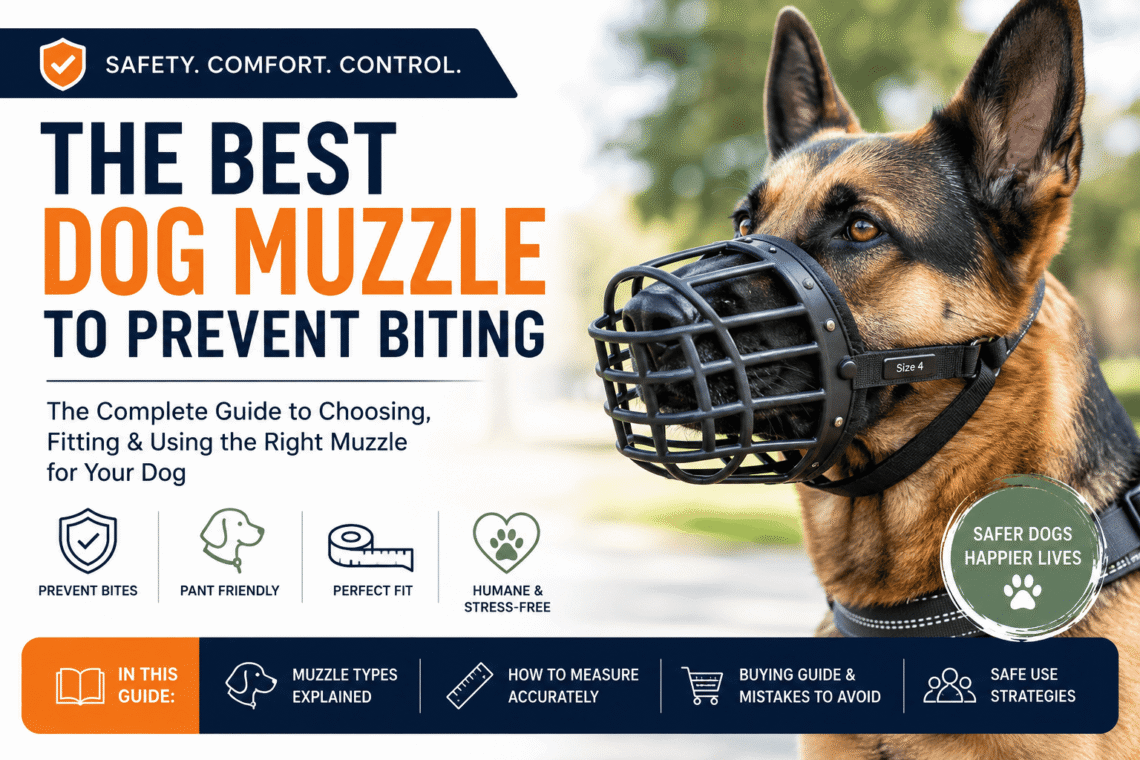
What You Will Learn In This Complete Guide:
- How to identify the right structural muzzle type tailored to your dog’s distinct breed shape.
- Step-by-step methods to accurately measure your dog for an escape-proof, comfortable fit.
- Critical safety pitfalls and purchasing mistakes to avoid when browsing items online.
- Proactive deployment strategies that safeguard your dog, handlers, and the public community.
Why Choosing the Right Muzzle Matters
Not all dog muzzles are created with bite prevention in mind. While many products on the market may look similar at first glance, their design, durability, and intended purpose vary dramatically. Choosing the right muzzle is essential not only for public safety but also for your dog’s physiological health and emotional well-being.
A muzzle that fits poorly or isn’t designed for bite prevention creates a false sense of security. In some cases, dogs can still nip, snap, or completely strip off an improperly fitted model. This puts owners, veterinary staff, groomers, and the public at risk. Conversely, a well-chosen muzzle provides reliable protection while allowing the dog to remain as comfortable and relaxed as possible.
Not All Dog Muzzles Are Designed for Bite Prevention
One of the biggest mistakes dog owners make is assuming that any muzzle will safely stop a dog from biting. Understanding the core difference in design types is critical:
⚠️ Soft Fabric, Nylon, or Mesh Sleeve Muzzles: These are intended strictly for brief, sedentary medical procedures such as a quick blood draw or a nail trim. Because these fabric muzzles work by holding the dog’s jaws tightly shut, they should never be used for walks, exercise, or extended periods.
✅ Basket-Style Designs (Plastic, Wire, or Silicone): Built specifically for daily bite prevention, these create a protective cage around the dog’s mouth. They provide crucial “pant room,” allowing the dog to fully open its mouth to regulate its body temperature, drink water, and accept training treats, all while preventing a full-force bite.
The Risks of Using the Wrong Muzzle
Selecting the wrong equipment can create severe physiological and behavioral problems that defeat the very reason you are using a muzzle.
🚨 Restricted Breathing & Fatal Overheating
Dogs regulate their body temperature almost entirely through panting. If a muzzle restricts the jaw from opening fully, a stressed or active dog can suffer from heatstroke or respiratory distress within minutes. This is the single biggest danger of using a fabric sleeve muzzle outside of a brief veterinary exam.
Inadequate Bite Protection
Some lightweight, fabric, or poorly constructed muzzles can deform under pressure. If a dog is highly motivated, they can often still pinch their lips forward to nip or bite right through soft mesh grids.
Increased Escape Risk
A poorly fitted or improper style may slide off during walks or high-stress encounters. Anxious or determined dogs can strip loose equipment off surprisingly fast, causing an immediate liability risk.
Escalated Stress & Anxiety
An uncomfortable muzzle makes a dog more frustrated and fearful. Friction burns, pinching, or restricted airflow cause the dog to associate the equipment with panic, making future handling difficult.
Delayed Training Progress
A muzzle should facilitate behavior modification—not act as a punishment. If the equipment causes distress, it will interfere with confidence-building exercises and ruin counter-conditioning efforts.
Choosing the right muzzle from the start helps create a safer, more positive experience for both you and your dog. It allows you to focus on managing behavior and building confidence rather than fighting with failing equipment.
Interactive Gear Assessment Simulator
Select a muzzle style below to preview how it physically impacts your dog’s physiological status during a walk:
Understanding Different Types of Dog Muzzles
Before you can choose the best dog muzzle to prevent biting, it’s important to understand the different styles available. Each type is designed for specific situations, and what works well for one dog may be completely unsuitable for another. Knowing the strengths and limitations of each muzzle style will help you make a safer and more informed decision.
Basket Muzzles
Instead of pinning the dog’s mouth completely shut, they create a cage-like barrier around the snout. This allows the dog to open its mouth while safely eliminating full-force biting abilities.
This design provides life-saving advantages: dogs can pant normally to cool down, drink water, and accept high-value treats through the openings during counter-conditioning.
Soft Fabric & Mesh Muzzles
Usually made of nylon or mesh materials, these work by tightly clamping the dog’s mouth shut. They are lightweight, cheap, and frequently used by clinical staff during short procedures.
Furthermore, a highly determined dog can often still pinch their lips forward to nip or bite through front fabric gaps if the fit isn’t completely tight.
Leather Muzzles
Offering a balance between exceptional durability and classic styling, leather muzzles are often utilized within working-dog and protection circles. They can feature a broad basket layout or an enclosed, solid shell (agitation style).
High-quality leather withstands significant force and sits gently against skin. However, solid leather profiles severely restrict airflow and trap heat/saliva, turning into a dangerous sweatbox in warm weather. They also absorb moisture and require rigorous sanitization.
Metal Basket Muzzles (Wire)
For dogs with a significant bite history, extreme reactivity, or exceptional jaw strength, wire basket muzzles provide the absolute highest level of security available.
Constructed from lightweight, chrome-plated or stainless steel, these grids cannot be chewed, bent, or compressed. They offer the best airflow of any muzzle type, granting maximum panting room while guaranteeing 100% reliable bite protection.
Which Type Is Best for Preventing Bites?
For the vast majority of dogs, a wire basket or rigid plastic basket muzzle offers the ultimate combination of safety, comfort, and functionality. It allows the dog to act like a dog—panting, drinking, and learning through continuous rewards—while providing a definitive structural safety barrier.
💡 Professional Risk Assessment: If your dog has a known history of severe or damaging bites, bypass flexible rubber/silicone muzzles entirely. A highly motivated dog can compress flexible grids against human skin to deliver a pinch-bite. Instead, opt for a heavy-duty wire basket frame or a custom vinyl model to ensure absolute safety.
However, simply picking a basket design isn’t enough. Professional dog trainers and experienced reactive-dog owners know that a muzzle’s security in the real world relies on small, technical design features. Without these features, a panicked or highly aroused dog can easily rip a muzzle off, regardless of how many standard straps it has.
Real-World Security: The Missing Technical Gaps
When selecting a bite-prevention tool, ensure your choice includes these critical structural elements to guarantee it remains completely escape-proof:
⚓ The Bottom Collar Loop (The Ultimate Fail-Safe)
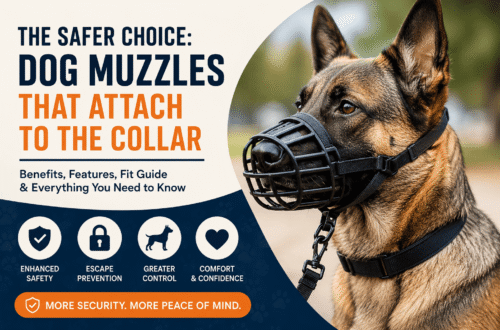
This is the single most critical escape-proof feature on any muzzle. Located at the bottom base, it allows you to thread your dog’s regular flat collar directly through the muzzle frame. Without this anchor, a clever or panicked dog can step on the front of the basket, pull backward, and slide the entire contraption straight over their ears.
📐 The “Forehead Strap” Nuance
An over-the-head strap running between the eyes prevents dogs from rubbing or shaking the muzzle off sideways. However, it requires anatomical matching: while essential for security on long-snouted breeds, it is virtually useless—and frequently slips sideways into the eyes—on short-nosed or round-headed dog breeds.
The “Treat Hole” vs. Bite Prevention Paradox
Many manufacturers advertise large openings at the front of the basket to make treat delivery easy. However, for a true bite-risk dog, this introduces a dangerous paradox: if the opening is large enough to push a thick piece of hot dog through, it is also large enough for your dog to stick its teeth out and bite someone’s finger.
The industry solution is a specialized dedicated treat slot or a “litter guard” plate. These layouts completely block front-teeth nipping and ground scavenging while still allowing you to safely deliver high-value paste rewards via a squeeze-tube (like peanut butter or wet food) without exposing your hands.
Need a truly secure, bite-proof safety configuration?
Shop Secure Wire Basket Muzzles on AmazonMuzzle Security Configuration Blueprint
Click the configurations below to visually review how hidden structural gaps alter real-world safety performance:
Key Features to Look for in a Bite-Prevention Dog Muzzle
Once you understand the different muzzle types, the next step is to identify the features that actually make a muzzle safe and effective at preventing bites. A good muzzle is not just about appearance—it’s about structure, security, and functionality working together to keep both dogs and people safe.
1. Secure, Escape-Proof Attachment Points
The most important feature of any bite-prevention muzzle is how securely it stays on your dog’s face. A muzzle that can be pulled off during a high-stress reaction is an immediate liability. Look for these specific security elements:
💨 2. True “Pant Room” Clearance
Dogs do not sweat; they rely entirely on panting to regulate their body temperature. If a muzzle restricts this, it can cause fatal heatstroke within minutes—especially during high-stress training sessions or warm weather.
• Visual Clearance: Looking from the side, the bottom of the basket should sit a few inches below their lower jaw, giving the tongue full clearance to move freely.
🍖 3. Safe Treat Delivery & Drinking
A muzzle must allow your dog to stay hydrated and receive rewards during behavior modification. However, for serious bite-risk dogs, large open front holes present a serious biting hazard.
• Scavenging Guards: If your dog eats objects off the ground, select a basket with a solid front plate (litter guard). This blocks nipping and scavenging but still allows drinking by submerging the front into a bowl.
🛡️ 4. Rigid, Deformation-Resistant Materials
Since the primary purpose is to stop a determined bite, the structural material must withstand incredible jaw pressure without deforming.
• For High Risk: Opt for vinyl-wrapped built muzzles or heavy-duty chrome wire cages that absolutely cannot bend or break.
☁️ 5. Anatomical Comfort & Padding
A muzzle that causes rubbing or skin irritation will increase your dog’s stress, escalating the exact reactive behavior you are trying to fix.
• Contoured Eye Clearance: The top edge of the basket should sit just below the stop (where the forehead meets the snout) so it does not press into lower eyelids or block peripheral vision.
Why These Features Matter
A bite-prevention muzzle is only as reliable as its weakest feature. By prioritizing a **collar loop** for security, **rigid materials** for bite protection, and **ample pant room** for physical safety, you ensure that your dog remains comfortable and able to learn while keeping the community entirely safe.
How to Measure Your Dog for the Correct Muzzle Size
Even the best dog muzzle to prevent biting will fail if it doesn’t fit properly. Sizing is one of the most overlooked parts of muzzle selection, yet it directly affects safety, comfort, and effectiveness. A well-fitted muzzle should be secure enough to prevent escape but spacious enough to allow natural movement, especially panting.
Taking accurate measurements before buying ensures you avoid common fitting problems and reduces the need for returns or replacements.
Essential Measurements You Need
To find the correct muzzle size, you’ll need to measure three key areas of your dog’s head and snout using a soft clothing tape measure:
Snout Length
Measure along the bridge of the nose from the very tip of your dog’s nose to a point just below the eyes where the basket framework will naturally terminate.
Snout Circumference
Wrap the soft measuring tape completely around the widest part of your dog’s snout, typically located directly below the baseline of the eyes while the jaw is closed.
Head Strap Length
Measure from the eye termination line, running behind the ears and around the back of the crown where the primary attachment straps sit secured.
Why Breed Alone Is Not Enough
Many dog owners make the mistake of choosing a muzzle based only on breed recommendations listed on commercial packaging. While breed guides can offer a loose baseline, they are frequently inaccurate.
Dogs within the exact same breed exhibit vastly disparate head configurations, skeletal spacing, and snout widths. For example, one German Shepherd may require a completely different basket clearance than another of identical age and physical weight. Always prioritize your concrete localized measurements over retail assumptions.
⚠️ Common Sizing Mistakes to Avoid
- Choosing a Muzzle That Is Too Tight: A tight frame blocks the jaw line, restricting essential respiration panting, which precipitates stress and severe overheating vulnerabilities.
- Going Too Loose for Comfort: Overly generous spacing allows an active dog to easily shift the unit, slip out of the harness alignment, or compress the basket to deliver nip bites.
- Ignoring Distinct Snout Shapes: Long, narrow sight-hounds and wide, blocky mastiffs have divergent requirements. Buying a shape mismatch causes severe localized pressure points even if lengths look acceptable on paper.
- Forgetting Puppy Development Curves: Growing juvenile dogs require persistent checking. Opt for dynamic adjustable systems or factor in sizing adjustments over development phases.
How to Test the Fit Properly
Once your new muzzle arrives, verify its anatomical suitability using these baseline verification tests before entering real-world exposure scenarios:
• The Two-Finger Rule: You must be able to smoothly slide two fingers beneath all strap segments and your dog’s coat layers. This validates structural stability without promoting tight friction sores.
• The Panting Check: Observe your dog’s breathing profile inside the basket. The dog must retain enough physical clearance to drop their lower jaw fully open to yawn and cycle deep breaths unobstructed.
• The Movement Test: Encourage your dog to trot, reposition, and shake its head naturally. The main nose unit must remain completely stable without rotating sideways or creeping up into the lower eyelids.
🚨 Clear Indicators of an Invalid Fit
Immediately remove the device and seek configuration changes if you witness any of the following alerts:
- The muzzle frame slides cleanly off the face when your dog leans forward or paws.
- Your dog cannot open its mouth or shift its tongue to receive fluids.
- Localized raw marks, missing fur, or indentation pressure points form on the snout bridge.
- Panicked, obsessive pawing that persists long after a patient, gradual introduction process.
Why Proper Sizing Is Critical for Bite Prevention
A muzzle is only effective when it stays securely in place while allowing your dog to breathe and behave naturally. Proper sizing ensures the muzzle functions as an empowering safety tool—not a source of discomfort or emotional stress. Taking the time to measure correctly is one of the simplest but most important steps in preventing bite incidents safely and responsibly.
Matching the Muzzle to Your Dog’s Behavior
Choosing the best dog muzzle to prevent biting isn’t only about size and material—it’s also about understanding your dog’s unique behavioral profile. A muzzle configuration that operates flawlessly for a calm but nervous pet may be completely unsuitable for a highly reactive or historically bite-prone dog. Matching the device layout directly to canine behavioral patterns safeguards both public safety and long-term psychological comfort.
⚠️ Dogs With a History of Biting
If your dog has previously bitten a human or another animal, absolute safety becomes the non-negotiable priority. In these high-risk cases, you must select an uncompromising framework that provides maximum bite prevention without relying on behavioral assumptions or training progress.
A rigid, heavy-duty wire basket or custom heavy vinyl cylinder is the standard safety configuration. These dogs typically require structured counter-conditioning protocols alongside continuous, locked muzzle wear to target the root mechanics of their aggression safely.
⚡ Reactive Dogs
Reactive individuals may not possess an explicit bite index, but they routinely lunge, snap, barrier-frustrate, or undergo intense arousal spikes during triggers like crowded paths or dog encounters.
For this group, comfort and active handler redirection must be perfectly balanced. High-ventilation open basket frameworks work optimally, keeping airways fully open during physical arousal while letting handlers quickly slip rewards inside to reshape behavioral reactions.
☁️ Fearful or Anxious Dogs
Fear-based flight responses represent a major cause of sudden defensive biting. Terrified dogs react unpredictably if they feel cornered, touched unexpectedly, or trapped by handlers.
The target gear should feel as unrestrictive and non-threatening as possible. Ultra-lightweight basket styles featuring soft nose padding and high visibility help keep stress levels minimized. Patient, positive desensitization is critical during initial introduction sessions.
🍖 Dogs Undergoing Behavior Modification
Dogs enrolled in rigorous training programs require equipment that supports active cognitive processing rather than functioning purely as restraint. Because systematic desensitization depends on rewards and low stress, the basket must prioritize seamless treat ingestion.
Basket muzzles engineered with a dedicated wide front treat aperture or spacious wire spacing allow fast reward timing during exposure setups without reducing surrounding structural defense properties.
🏃♂️ High-Energy or Working Dogs
Working lines or high-drive working dogs demand structural frameworks that endure rapid locomotion, heavy panting, and sudden impacts. These dogs run, pivot, and shift rapidly, which creates massive stabilization stress on standard consumer strap setups.
Look for reinforced frameworks utilizing thick straps and an anchoring forehead leash to keep the nosepiece locked centered on the snout bridge through intense, high-impact running maneuvers.
Why Behavior-Based Selection Matters
Two dogs of identical breed, age, and size metrics can require completely distinct muzzle architectures depending on their underlying emotional state and historical context. A meticulously matched muzzle configuration keeps canine stress indicators low, enhances training compliance, and guarantees ironclad bite prevention in real-world environments.
By assessing your dog’s internal behavior patterns first, you identify a device that goes beyond simple physical parameters to actively support their mental and emotional rehabilitation needs.
Choosing the Right Muzzle for Different Dog Sizes and Breeds
Dog size and breed characteristics play a major role in selecting the best muzzle to prevent biting. While behavior determines safety level, physical structure determines fit and comfort. A muzzle that works well for a large working breed may be completely unsuitable for a small companion dog or a short-nosed breed.
Small Breeds
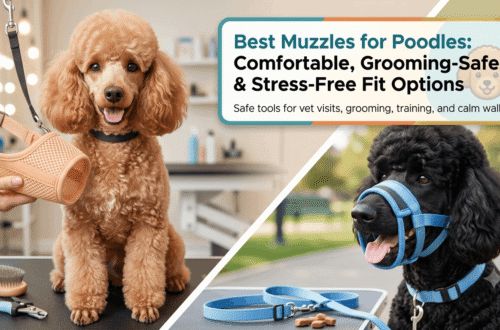
Small dogs like Chihuahuas, Shih Tzus, and Toy Poodles have delicate snouts and lighter bone structure. Weight and localized comfort are essential. Lightweight basket muzzles made from soft plastic or flexible silicone avoid excess bulk while maintaining pant space. Ensure adjustable straps do not apply concentrated pressure behind the ears.
- Key Features: Lightweight construction, soft nose padding, adjustable straps, narrow basket path.
Even within the same breed, individual dogs vary in head shape and snout width. However, breed-based categories narrow down the appropriate muzzle styles before fine-tuning. Matching your muzzle to size and breed guarantees better overall comfort, a dramatically reduced risk of escape, smooth unhindered breathing, and dependable bite prevention.
Signs a Dog Muzzle Is a Good Choice (Vs. Red Flags)
A properly chosen muzzle should not feel like a punishment for your dog. Instead, it functions as a protective management tool that supports natural behavior while preventing a bite incident. Once fitted, your dog’s physiological and physical responses will indicate if the gear matches their anatomy.
✅ Green Lights: Signs of a Good Choice
- Comfortable Panting: Your dog can fully lower their jaw to pant open-mouthed and cycle deep breaths without strain.
- Water Ingestion: The dog can easily submerge the basket tip into a bowl to lap water smoothly during exercise.
- Treat Compatibility: High-value food rewards can be easily slipped through openings to facilitate positive training reinforcement.
- Zero Slipping: The frame stays locked centered when your dog turns, shakes, or maneuvers actively.
- Natural Kinesiology: Your dog walks, sits, and rests without the gear altering their posture or balance.
🚨 Red Flags: Poor Configuration Indicators
- Restricted Breathing: Shallow, restricted breathing or clamped lips mean the basket lacks necessary clearance.
- Persistent Pawing: Obsessive, constant clawing at the face long after a gradual introduction indicates structural chafing.
- Friction Irritation: Visible raw friction marks or indented pressure lines form on the snout bridge or behind ears.
- Behavioral Freezing: The dog enters a state of panic or freezes stiffly in place, refusing to move or walk.
- Harness Rotation: The basket pivots loosely into the lower eyelids or shifts off-center during basic movement.
How to Introduce a Muzzle Successfully
Even the best dog muzzle to prevent biting will fail if your dog is not properly introduced to it. Muzzle training is a patient, step-by-step process that builds a positive association with the equipment, preventing fear and active resistance. Rushing this sequence causes equipment aversion, heightened anxiety, and persistent refusal to wear the tool.
💡 Training Protocol: Begin configuration setups in an entirely low-stress, familiar home environment before entering real-world triggers. Always pair every tool contact with high-value treats (like squeeze-tube peanut butter or hot dogs) and avoid using the muzzle exclusively for negative milestones like veterinary blood draws or nail trimmings.
Ready to start training? Get a reward-friendly basket muzzle today:
Browse Best Training Basket Muzzles on AmazonFrequently Asked Questions
Understanding how to choose and use a muzzle often raises practical concerns for dog owners. Below are some of the most common questions related to bite-prevention muzzles, along with clear and helpful answers.
Many dog owners avoid using protective equipment due to retail misinformation or social stigma. Resolving these foundational questions ensures that muzzles are correctly sized, introduced humanely, and used confidently to protect both your dog and your community during everyday outings.
Choosing Safety Without Sacrificing Comfort
Selecting the best dog muzzle to prevent biting is not about finding the heaviest or most expensive model on the shelf—it is about securing the perfect operational alignment between public safety, anatomical comfort, and precise structural fit. A meticulously chosen basket muzzle must protect people and surrounding animals from injury vectors while still permitting your dog to breathe naturally, drink water, and actively engage in positive reinforcement learning.
Throughout this comprehensive guide, the core theme remains absolute: a muzzle’s reliability hinges entirely on how accurately it matches your dog’s size metrics, emotional behavior patterns, and lifestyle needs. A reactive dog requires high-ventilation airflow for challenging training walks, whereas a terrified individual demands ultra-lightweight, cushioned materials to avoid escalating environmental stress. In every scenario, precise physical measurements, correct structural safety loops, and incremental reward-based training dictate real-world success.
It is equally critical to remember that a muzzle does not rewrite internal aggression. Instead, it serves as an empowering management tool that neutralizes dangerous outcomes, allowing handlers to systematically guide behavior through structured redirection. When introduced humanely, it becomes a supportive element of a safe, progressive approach to rehabilitation rather than an unfair restriction.
Ultimately, the ideal bite-prevention muzzle is one that your dog can wear with absolute calm and confidence while you maintain complete, responsible control in high-trigger environments. By prioritizing canine comfort, secure structural anchoring, and patient introductions, you ensure that public safety never comes at the cost of your dog’s physiological well-being.