Introduction
In law enforcement, the military, and professional protection, K9 handlers rely on strong partnerships with their German Shepherds. One of the most important—yet often misunderstood—tools they use is the tactical dog muzzle. While it may appear to be a simple restraint, it is actually specialized equipment that helps keep everyone safe, provides handlers with better control, and enables dogs to perform their jobs even in unpredictable situations.
German Shepherds are smart, strong, and driven. A regular muzzle usually isn’t enough for them. Tactical muzzles are designed for working dogs that face challenging situations, such as crowded areas, bite training, or assisting in apprehending a suspect. These muzzles do more than just prevent problems—they help handlers and dogs work with accuracy and confidence.
So, why do K9 handlers around the world trust tactical muzzles for their German Shepherds? Let’s look at the real reasons why the right muzzle matters in the field.
Understanding Tactical Muzzles
To understand why K9 handlers trust tactical muzzles, it helps to see how they differ from regular muzzles. Basic muzzles are made for short-term situations, such as grooming or vet visits. In contrast, tactical muzzles are designed to last, remain comfortable during prolonged use, and perform well in demanding work conditions.
What Is a Tactical Muzzle?
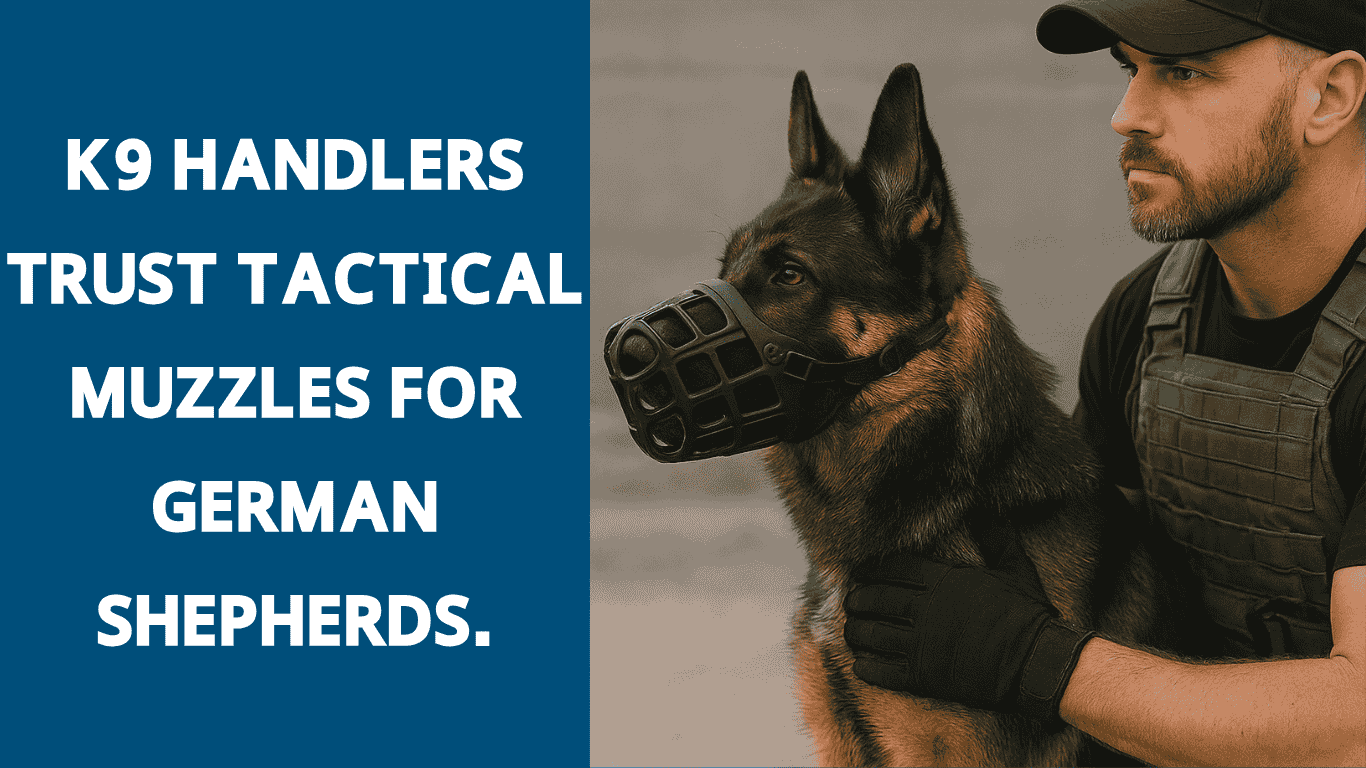
A tactical muzzle is a specially designed, durable piece of gear for dogs working in the military, police, security, or protection services. Unlike soft fabric or nylon muzzles used for everyday purposes, tactical muzzles are made from strong materials like:
- Steel or metal wire (often basket-style)
- Thick leather or synthetic polymers
- Padded interiors for comfort during long use.
- Secure strapping systems with quick-release buckles
These muzzles prevent biting but still allow the dog to pant, drink water, and bark. This is crucial for maintaining the health of working dogs and enabling them to communicate effectively while on the job.
Key Features That Define Tactical Muzzles
- Strength & Durability: Made to handle strong bites and outside forces, perfect for bite training and catching suspects.
- Breathability: Let’s air flow so the dog can pant and stay cool, even during stress.
- Comfortable Fit: Shaped for comfort, this design features padding and adjustable straps for a secure fit.
- Situational Readiness: Effective in various situations, such as entering buildings, crowd control, or rescues, without requiring removal.
- Non-Aggressive Appearance: Looks professional and calm, helping reduce public fear while still keeping everyone safe.
These features are most important for high-energy dogs, such as German Shepherds. Next, we’ll explain why German Shepherds especially benefit from tactical muzzles in their work.
German Shepherds: Why They Need Specialized Gear
German Shepherds are a top choice for military, police, and protection work because they are smart, loyal, and easy to train. However, their strength and high energy require gear that can keep up with them. For these dogs, tactical muzzles aren’t just helpful—they’re necessary.
Physical Strength Meets High Drive
German Shepherds have a strong bite (about 238–291 PSI), powerful bodies, and lots of energy. When they’re working, they face pressure and unpredictable situations, so control and safety are extremely important.
Regular muzzles can’t keep up with the demands or strength of a working German Shepherd. Tactical muzzles are designed to handle their power while still allowing the dog to move, breathe, and stay cool.
Common Working Roles That Demand Tactical Equipment
- Police & Military K9s: These dogs work in patrol, suspect apprehension, building searches, and explosive detection. In risky situations, handlers use muzzles to prevent accidental injuries, especially around civilians.
- Personal Protection Dogs: These dogs are trained to respond to commands, but they still require secure restraint when out in public or near strangers.
- Search & Rescue (SAR): German Shepherds often work around injured people and in chaotic situations, where stress can increase the risk of accidental bites.
- Crowd Control & Riot Situations: In loud, tense situations, dogs can react unpredictably. A secure muzzle helps handlers feel confident and lowers the risk of problems escalating.
Behavioral Considerations
Even well-trained German Shepherds can get stressed, scared, or overly excited, especially in new or intense situations. A muzzle acts as a safety net, protecting the public, the handler, and the dog from harm.
Because German Shepherds are so strong and work in tough jobs, regular muzzles just aren’t enough. Next, we’ll look at the main reasons K9 handlers rely on tactical muzzles to keep their dogs safe and effective at work.
Why K9 Handlers Rely on Tactical Muzzles — Key Benefits
Tactical muzzles are more than just safety tools—they are an essential part of a working dog’s gear, like a harness or leash. Here’s why K9 handlers choose tactical muzzles for their German Shepherds:
Safety for Everyone Involved
In high-pressure situations—such as a suspect takedown, a public event, or an emergency search—things can change rapidly. Even the best-trained German Shepherd can react on instinct.
- Prevents accidental bites during chaotic or high-stress events.
- Protects civilians, suspects, and fellow officers— reducing legal risk and liability.
- Keeps the dog safe, especially if it’s injured, stressed, or around unfamiliar people or animals.
“A muzzle isn’t a punishment—it’s protection. For everyone, including the dog.”
— K9 Handler, U.S. Police Department
Enhanced Control in Unpredictable Environments
Tactical operations are rarely routine. Whether in crowded city streets or tight indoor spaces, handlers need to control exactly how their dog behaves.
- Muzzles enable closer interaction with civilians without the risk of aggression.
- It can be used during transport, crowd control, or in tight quarters, where even a bark can escalate tension.
- Gives handlers peace of mind, allowing them to stay focused on the mission—not the dog’s reactions.
Built to Withstand Real-World Pressure
Tactical muzzles are designed with durability and function in mind, unlike soft muzzles used for casual walks or vet visits.
- Reinforced materials—like metal cages, leather, or polymer shells—stop damage from bites or impacts.
- Strong fastenings and adjustable straps keep the muzzle secure, even during intense activity.
- Made to last through tough conditions, including hot weather and wet, muddy environments.
Allows Panting, Drinking, and Communication
Unlike soft muzzles that restrict movement, tactical basket muzzles are designed to allow the dog to work, communicate, and remain comfortable.
- Wide ventilation allows dogs to pant and stay cool, a crucial factor during intense activity.
- Dogs can usually drink water or take treats during training, which supports positive behavior.
- Dogs can still bark, growl, or make other sounds to communicate their needs.
Supports Tactical Training and Behavior Management
K9 training often includes bite work, stress training, and agility drills. Muzzles are a must-have tool in these situations.
- Used in bite inhibition training or “muzzle fights” so dogs can practice engaging safely, without risk of injury.
- Helps dogs learn to focus under stress, since they know they can’t use their mouths.
- Allows trainers to correct or redirect the dog during training without risking physical confrontation.
Improves Public Perception and Legal Compliance
In many jurisdictions or organizations, working dogs are required to wear muzzles in public or during specific tasks.
- Shows a professional and responsible image, especially in busy or public settings.
- Reduces public fear and reassures people that the dog is fully under control.
- Helps handlers follow safety rules and legal guidelines for animal control and the use of force.
All these benefits make tactical muzzles a trusted and essential tool for K9 professionals. However, like any gear, there are some challenges to consider—which we’ll cover in the next section.
Potential Challenges & How Handlers Overcome Them
While tactical muzzles have numerous advantages, they also present some challenges. Experienced K9 handlers utilize proven techniques to keep their dogs safe, comfortable, and effective while working with them.
Heat Stress and Panting Restrictions
The Concern:
Dogs cool themselves by panting. If a muzzle blocks airflow or is made from solid materials, it can increase the likelihood of overheating—especially during strenuous work or in hot weather.
The Solution:
- Handlers use basket-style muzzles with wide gaps to let air flow freely.
- The muzzle type is chosen based on the job—metal wire for increased ventilation, lightweight polymer for hot conditions, and so on.
- Dogs receive regular water breaks and are closely monitored for signs of overheating.
- Some handlers switch between different muzzles depending on the weather and the task.
Discomfort, Rubbing, and Chafing
The Concern:
Poorly fitted muzzles can cause raw spots, pressure sores, or irritation—especially during extended wear.
The Solution:
- Proper sizing is key—handlers measure snout length, circumference, and head shape to ensure a good fit.
- High-quality tactical muzzles typically feature padded interiors and adjustable straps to provide a snug, comfortable fit.
- Handlers use break-in periods, allowing the dog to gradually become accustomed to the muzzle before its full use in the field.
- Some handlers add custom padding or use muzzle liners to give extra protection and comfort.
Negative Public Perception
The Concern:
To most people, seeing a dog in a muzzle can look scary—even if the dog is calm and friendly. This can cause fear or confusion about why the dog is wearing a muzzle.
The Solution:
- Handlers use calm, confident body language to show the dog is under control.
- Some tactical muzzles are designed to appear less aggressive while still ensuring the safety of everyone involved.
- During demos or public events, handlers explain that the muzzle is a safety tool, not a punishment.
Training Resistance or Fear of the Muzzle
The Concern:
If introduced improperly, a dog may associate the muzzle with punishment or stress, leading to resistance or fear during deployment.
The Solution:
- Muzzles are introduced with positive reinforcement—using treats, praise, and short, frequent sessions.
- Dogs learn to connect the muzzle with work or play, not punishment.
- Training utilizes “muzzle games” and agility drills so that the dog associates the muzzle with its job.
Operational Limitations
The Concern:
In certain scenarios, a muzzle may limit a dog’s ability to perform specific tasks (e.g., bite apprehension, certain scent work functions).
The Solution:
- Handlers are trained to know when to deploy or remove the muzzle, depending on the mission.
- Many K9 units utilize quick-release systems or muzzles specifically designed for rapid removal when necessary.
- Tactical teams coordinate closely so the muzzle becomes part of the standard operating protocol, not a hindrance.
Tactical muzzles can take some getting used to, but with a skilled handler, they become a valuable tool—not a limitation. Next, we’ll look at real-world examples of how these muzzles work in action.
Real-World Examples / Case Studies
Tactical muzzles aren’t just a theory—they’ve been tested in real-world situations where safety, precision, and professionalism matter most. Here are some strong examples of how K9 handlers use tactical muzzles in the field:
Case Study 1: Urban Crowd Control with a Police K9 Unit
Location: Los Angeles, CA
Dog: German Shepherd, 5 years old
Scenario: At a busy protest, a police K9 team used their German Shepherd for crowd control. The dog was trained for apprehension and scent detection, but needed to work close to both civilians and other officers.
Why the Muzzle Was Critical:
- Ensured the dog couldn’t react instinctively to loud noises or aggressive gestures.
- Allowed the handler to keep the dog focused on scent work without public fear or risk.
- The wire basket tactical muzzle allowed panting and drinking during long shifts in summer heat.
Handler Insight:
“Having the muzzle on wasn’t about doubting the dog—it was about controlling the environment. People feel safer, and I know we’re covered if anything unexpected happens.”
— Officer J. Morales, K9 Handler
Case Study 2: Military Training & Bite Inhibition
Location: Fort Bragg, NC
Dog: Dual-purpose German Shepherd (patrol & detection)
Scenario: In military training, the dog practiced both scent detection and mock apprehensions. Early on, the dog was introduced to a tactical muzzle during bite work drills to help it learn self-control.
Tactical Muzzle Use:
- A reinforced leather muzzle was used during “muzzle fight” drills.
- The dog learned how to engage physically without using its mouth—teaching restraint under pressure.
- Prevented injury to decoys and reinforced the dog’s confidence in close-quarters conflict.
Trainer Insight:
“We use the muzzle to teach the dog that it doesn’t need its teeth to control a situation. It learns to push, engage, and dominate without doing damage. That’s real control.”
— Sgt. Anthony LeClair, Military Dog Trainer
Case Study 3: Search and Rescue in Disaster Zones
Location: Turkey Earthquake Response, 2023
Dog: SAR-certified German Shepherd
Scenario: The dog searched through collapsed buildings, navigating tight spaces alongside rescue workers and civilians. Although the dog was trained to be friendly, the chaotic setting presented stress and unexpected challenges.
Muzzle Role:
- A lightweight, ventilated tactical muzzle prevented accidental nips during high-stress interactions.
- Allowed the dog to pant freely during extended searches.
- Maintained full functionality for scent detection.
SAR Team Insight:
“It’s a tool of prevention, not distrust. In these conditions, anyone—human or dog—can get overwhelmed. The muzzle protects the dog and the people it’s trying to help.”
— Medical First Responder, partnered with SAR K9
These real-world examples show that tactical muzzles aren’t meant to hold a dog back—they’re used to help dogs do their jobs better and keep everyone safe.
Key Criteria for Choosing a Tactical Muzzle for a German Shepherd
Not all muzzles are the same. For tactical work, using the wrong fit or material can put safety and performance at risk. K9 handlers must choose carefully when picking a muzzle for their German Shepherd. Here are the most important things to look for:
Material Matters
The material you choose affects how long the muzzle lasts, how comfortable it is, and how safe it is for your dog—especially in different environments.
- Steel or Wire Basket:
- Offers maximum ventilation and bite protection.
- Ideal for heat regulation and longer wear.
- Great for patrol and detection work.
- Leather Tactical Muzzles:
- Strong, flexible, and padded.
- Commonly used for agitation and bite training.
- A softer look may ease public tension.
- Polycarbonate or Military-Grade Polymers:
- Lightweight and durable.
- Often used for quick-deploy missions or hot climates.
Tip: Avoid nylon muzzles for tactical use—they’re too restrictive and not breathable.
Fit and Sizing
Improper fit can cause rubbing, slipping, or even injury. For German Shepherds, sizing must account for their long, strong snout and broad skull.
- Measure:
- Snout length (tip of nose to base of eyes)
- Snout circumference (around the widest part of the muzzle)
- Head width for strap fit
- Look For:
- Multiple adjustment points
- Padded nose bridge
- Chin strap or extra harness stability (optional but useful)
A properly fitted muzzle should be secure but allow the dog to open its mouth at least halfway for panting.
Ventilation and Breathability
Because German Shepherds work hard, the muzzle must allow for:
- Full panting
- Adequate airflow during running, training, or warm environments
- Occasional drinking through the basket if needed
Lack of airflow is one of the most dangerous issues with poor muzzle design—don’t compromise here.
Security & Safety Features
A tactical muzzle must stay in place during pursuit, training, or sudden movements.
- Quick-release buckles (for fast removal in emergencies)
- Locking straps or buckles to prevent accidental removal
- Anti-pull designs for bite resistance or agitation work
- Some handlers prefer muzzle sleeves for added padding and security.
Ease of Cleaning & Maintenance
Working dogs get dirty. Choose materials that:
- Resist absorbing odors
- They are easy to wipe or wash.
- Can dry quickly (especially if working in wet environments)
Balance Between Protection and Function
Choose based on task type:
| Patrol/Crowd Control | Steel or basket muzzle (breathable & secure) |
| Agitation/Bite Work | Reinforced leather with padding |
| SAR or Detection | Lightweight polymer or ventilated basket |
| Urban Deployment | Low-profile, professional-looking muzzle |
Choosing the right muzzle isn’t just about how it works—it’s about helping your dog stay safe and confident on the job.
Conclusion: More Than Restraint—A Tool for Control, Trust, and Protection
Tactical muzzles aren’t meant to hold a dog back—they help unlock a dog’s true potential, safely.
For K9 handlers with German Shepherds, these muzzles offer peace of mind in unpredictable situations. Whether it’s patrol, protection, or search and rescue, the right muzzle lets the dog do its best work while keeping everyone safe—including the public, the handler, and the dog.
When handlers invest in a quality tactical muzzle and use proper training, they strengthen their bond with their dog, gain better control, and show true professionalism and responsibility.
A tactical muzzle isn’t a symbol of aggression—it’s a sign of preparation.
No matter if you’re a police officer, military handler, security professional, or a civilian trainer with a high-energy German Shepherd, picking the right muzzle is one of the most important choices you can make.
If you need a tactical muzzle, don’t choose generic gear. Pick one made for working dogs, designed for function, safety, and long-lasting performance.