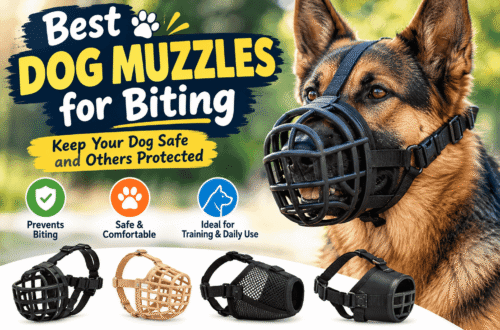

Muzzle for Small Dog to Stop Barking? Read This Before Buying One
Searching for a muzzle to stop your small dog from barking? A muzzle can be a useful safety-management tool in the right situation, but it should not be treated as a bark-control solution. This guide explains what to look for, what to avoid, and what can actually help reduce excessive barking.
A muzzle and a barking solution are not the same thing. Start by identifying why your dog is barking before choosing equipment.
Barking can happen because of alerting, attention-seeking, excitement, frustration, fear, anxiety, environmental triggers, boredom, or other causes. The appropriate response depends on the reason behind the behavior.
Explore barking causes →What You’ll Learn
Understand whether a muzzle is appropriate for barking, how to choose one safely, and what actually helps reduce excessive barking in small dogs.
Can a Muzzle Stop a Small Dog From Barking?
A muzzle may limit how much a dog can vocalize in some situations, but it should not be used as a primary method for stopping barking. The more important question is why the dog is barking and whether a muzzle is actually needed for safety.
A muzzle is not a bark-training shortcut.
Barking is a form of communication. A dog may bark because it is alerting to something, seeking attention, excited, frustrated, frightened, anxious, or reacting to a specific trigger. Restricting the mouth does not address the reason behind that behavior.
For that reason, a muzzle should be thought of primarily as a management and safety tool, not as a device designed to teach a dog when it should be quiet.
Barking has a cause
Before choosing equipment, identify the pattern. A dog barking at strangers through a window has a different problem from a dog barking because it wants attention or becomes distressed when left alone.
Identify the trigger →Not every muzzle is suitable
Muzzle designs differ significantly. A basket-style muzzle is designed very differently from a restrictive soft or closed-mouth design. Fit, airflow, panting room and drinking access matter.
Compare muzzle types →Training changes the behavior
When barking is the actual problem, training and trigger management are usually more relevant than trying to silence the dog with a device. The objective is to teach a more appropriate response.
See safer alternatives →Why are you considering a muzzle?
Focus first on the cause of the barking, environmental management, and reward-based behavior training.
A properly fitted muzzle may have a role in situations involving bite-risk management, professional handling, or other specific safety needs.
Start by identifying the dog's barking trigger and then assess whether a muzzle is needed at all.
Why Using a Muzzle for Bark Control Can Be a Problem
A muzzle can be an important safety tool when a dog may bite, but using one simply to silence barking can create the wrong solution for the wrong problem. The design of the muzzle, the dog's ability to pant and drink, the reason for the barking, and the length of use all matter.
A quieter dog is not necessarily a calmer dog.
Preventing or restricting vocalization does not remove the trigger causing a dog to bark. A dog may still be frightened, frustrated, overstimulated, anxious, or reactive even when its barking is reduced.
It doesn't address why the dog is barking
Barking can have different causes. Alert barking, attention-seeking, excitement, frustration, fear, and anxiety can require very different management and training strategies.
Restrictive designs can limit panting
Dogs rely on panting to help regulate body temperature. A restrictive muzzle that holds the mouth closed is fundamentally different from a properly fitted basket muzzle that allows normal mouth opening.
It can make behavior training harder
Reward-based training often depends on delivering small food rewards. A restrictive sleeve-style muzzle can make feeding treats difficult, which can interfere with some behavior-modification exercises.
It can hide the warning without fixing the trigger
Barking is communication. If the underlying trigger remains present, simply restricting the dog's mouth does not automatically teach the dog a more appropriate response to that trigger.
Not every muzzle allows normal drinking
Basket-style designs are generally intended to provide substantially more freedom around the mouth than closed-mouth designs. Before buying any muzzle, check what the manufacturer says about drinking and panting.
A muzzle is not a set-and-forget device
Proper fit, introduction, supervision, and the specific reason for wearing the muzzle all matter. A dog should not simply be muzzled and left unattended as a way to deal with household barking.
Basket muzzle vs. restrictive muzzle
The phrase “dog muzzle” covers very different designs. For a small dog, choosing by appearance alone can be a mistake.
Is a muzzle solving the problem you actually have?
Choose an option above to see the recommended direction.
Use the muzzle for safety. Use training to change barking.
If barking is the main issue, begin by identifying the trigger, changing the environment where practical, reinforcing calm behavior, and teaching an alternative response. A muzzle should only be part of the plan when there is a legitimate safety reason for using one.
Why Small Dogs Bark So Much
Small dogs do not bark for just one reason. A Chihuahua, Yorkie, Pomeranian, Shih Tzu, or other small breed may bark to alert you, ask for attention, react to another dog, express excitement, respond to fear, or deal with frustration. Finding the pattern is more useful than simply trying to silence the sound.
The same barking sound can come from very different causes.
Before buying a muzzle, notice what happens immediately before the barking, what your dog does while barking, and what happens after. Those details can reveal the trigger and the reinforcement pattern.
“Someone is there.”
Your dog may bark when hearing footsteps, seeing a person outside, noticing another animal, or hearing an unfamiliar sound.
“Pay attention to me.”
Barking can become a learned way of getting interaction when barking is regularly followed by talking, touching, eye contact, play, food, or another response.
“Something exciting is happening.”
Some dogs bark during greetings, play, walks, car rides, feeding, or other highly stimulating moments.
“That makes me uncomfortable.”
A small dog may bark when confronted with people, animals, objects, places, sounds, or situations it finds threatening or unfamiliar.
“I can't get to it.”
A dog may bark when separated from a person, unable to reach another dog, prevented from accessing something interesting, or frustrated by a barrier.
“I need more to do.”
Some dogs bark more when their daily routine lacks sufficient activity, social interaction, environmental variety, or mental work.
“I'm struggling when I'm alone.”
Repeated barking around departures or periods of isolation can have a different underlying cause from ordinary alert barking and may require a more targeted behavior plan.
“Something has changed.”
A sudden or unusual increase in barking deserves more attention, particularly when it appears alongside other changes in behavior, routine, mobility, hearing, or general wellbeing.
What does your dog's barking look like?
Select the description that comes closest to what you see. This is a starting point, not a diagnosis.
Start by observing the pattern.
Select the description that best matches your dog's barking.
Learn how to identify the trigger →“My dog barks → I need a bark-control muzzle.”
This skips the most important step: figuring out what is causing the behavior.
“What happens just before the barking?”
That observation gives you a much stronger starting point for management and behavior modification.
Record the pattern before choosing a solution
Identify the Reason Behind the Barking
“My small dog barks too much” describes the symptom, not the cause. The fastest route to a useful solution is to look for the pattern: what happens before the barking, what your dog does during it, and what happens immediately afterward?
Before • During • After
Those three moments can reveal whether you are dealing with alert barking, attention-seeking, excitement, fear, frustration, separation concerns, or another pattern that needs a different response.
What happened just before the barking?
Look for the immediate trigger rather than the entire day's routine. A person approaching, a sound outside, a leash coming out, a meal, a closed door, or your departure can all create very different patterns.
What does your dog look like while barking?
The dog's overall body language can provide useful context. Notice whether your dog moves toward the trigger, backs away, stays behind a barrier, jumps, freezes, or repeatedly seeks your attention.
What happens when the barking starts?
Your response matters too. If barking is repeatedly followed by food, attention, being released, being picked up, or another desired outcome, that sequence may become part of the learned pattern.
What the situation may be telling you
Use the pattern as a starting point. It does not replace a professional behavior or veterinary assessment.
Which situation sounds most familiar?
Choose the closest match to see the next area worth exploring.
Start with the trigger.
Select a situation above to get a more specific direction.
Continue →Record the pattern instead of guessing
Use these five fields whenever the barking happens. A short record can make repeated triggers much easier to spot.
Once you know the problem, you can decide whether you need a muzzle at all.
A muzzle may be appropriate when there is a genuine safety reason, such as managing bite risk in a specific situation. It should not replace the work of understanding and addressing the barking itself.
Muzzle Types: Basket vs. Soft/Closed-Mouth
“Dog muzzle” is not one single design. For a small dog, the difference between an open basket muzzle and a restrictive soft or closed-mouth muzzle can affect panting, drinking, treat delivery, comfort and how the muzzle can safely be used.
For many safety situations, the key question is not “Can it stop barking?” but “Can my dog safely open its mouth inside it?”
A properly fitted basket muzzle is designed to leave meaningful space around the mouth. Restrictive soft or closed-mouth designs work very differently and are generally intended for much shorter, specific uses.
Basket Muzzle
An open structure that places a barrier around the dog's mouth while leaving more room for natural mouth movement.
Soft / Closed-Mouth Muzzle
A sleeve-like or restrictive design that holds the mouth much more closed than a basket muzzle.
Which design fits the job?
Which situation are you trying to manage?
Pick the closest match. The result points you toward the type of information that matters most.
Choose the situation above.
Your selection will show the most useful next consideration.
Continue →Why Basket Muzzles Are Different
A basket muzzle is built around a very different idea from a closed-mouth muzzle. Instead of holding the dog's jaws tightly together, the basket creates a barrier around the mouth while leaving space for movement, airflow and, depending on the design, drinking and treats.
The basket is a barrier around the mouth — not simply a strap over it.
That difference matters because dogs need room to open the mouth and pant normally, particularly during activity or warm conditions. A good basket muzzle also needs to stay securely positioned without pressing continuously against sensitive areas of the face.
What the open basket is trying to preserve
The open structure creates several spaces that are important to understand when comparing muzzles for a small dog.
More mouth freedom
The open basket can provide substantially more freedom to open the mouth than a design intended to hold the jaws shut.
FUNCTIONBetter panting potential
Proper dimensions matter, but the open design gives the dog room to use the mouth and tongue for panting.
COMFORTEasier reward delivery
Some basket muzzles include enough opening for treats, which can be useful when the muzzle is being introduced or used during training.
TRAININGMore practical for defined safety use
When a muzzle is genuinely needed to manage bite risk, an appropriately fitted basket design is often more versatile than a highly restrictive alternative.
SAFETY“Basket” does not automatically mean “safe for every dog.”
A basket muzzle can still be too small, too short, too loose, poorly positioned, or unsuitable for a particular facial shape. The same label also covers very different materials and constructions. Fit and intended use still come first.
What do you need the basket to let your dog do?
Select the functions that matter most to your situation.
Select one or more priorities.
The more functions you need, the more important basket shape, internal space and fit become.
“A basket muzzle is supposed to make my dog unable to bark.”
Not necessarily. A properly designed basket muzzle prioritizes a physical barrier while preserving useful mouth function. A dog may still vocalize while wearing one. The purpose of the muzzle should therefore be considered separately from barking behavior.
Can Small Dogs Pant and Drink in a Muzzle?
Yes, some muzzle designs are specifically built to allow a dog to open its mouth, pant and drink. But that is not true of every muzzle. For a small dog, internal space, basket shape, fit and the individual dog's facial proportions all need to be considered.
A muzzle should leave enough room for the dog to open its mouth appropriately for panting.
Drinking and panting are not optional details when evaluating a muzzle. A design that simply prevents the dog from opening its mouth may look effective for bark suppression, but it is a very different tool from an open basket muzzle designed around normal mouth function.
Can the mouth open enough?
The muzzle should not press the jaws together. A properly fitted basket design should provide enough internal room for the mouth to open appropriately for panting.
Can your dog access water?
Many open basket styles allow drinking, but the ease of access depends on the basket's shape, depth and openings. Check the actual product design rather than assuming all basket muzzles work identically.
Can you still use training rewards?
Some basket muzzles leave room for treats to be delivered through the opening. This can make muzzle conditioning and reward-based behavior work considerably easier.
Panting is more than “making the dog comfortable.”
Dogs use panting as part of normal heat regulation. That means muzzle selection becomes especially important during physical activity, warm weather, travel, outdoor time or any other situation where the dog may become warm.
A muzzle that looks secure while the dog is resting may not be appropriate if the dog cannot open its mouth adequately once it becomes more active.
Warning signs that the muzzle may be too restrictive
The muzzle holds the mouth tightly closed.
Your dog cannot open its mouth appropriately to pant.
Water access is blocked or impractical for the intended use.
The muzzle rubs, presses or causes obvious discomfort.
The dog can easily push, shake or pull the muzzle out of position.
What does your dog need to do while wearing the muzzle?
Select every function that applies to the intended situation.
Select your dog's needs.
Your selections will highlight the features that deserve the most attention.
Smaller does not mean you should simply choose the smallest size.
A muzzle that is too short or shallow can prevent appropriate mouth opening even when the outside dimensions appear to match the dog. Measure the individual dog's snout and check the manufacturer's sizing instructions carefully.
Does your small dog have a short or flat snout?
Short-snouted dogs can require very different muzzle dimensions. The correct design may be more important than simply finding a “small dog muzzle.”
Ask these four questions
How to Choose a Muzzle for a Small Dog
Choosing a muzzle for a small dog is not simply a matter of finding the smallest available size. The right choice depends on the dog's measurements, facial shape, intended use, mouth-opening room, retention, comfort and whether the design allows appropriate panting and drinking.
Choose by fit and function — not by breed name alone.
Two dogs of the same breed can have different muzzle proportions, while two dogs of similar weight can need very different muzzle shapes. The intended purpose should come first, followed by accurate measurements and the amount of mouth freedom required.
Why does your dog need it?
Decide whether the muzzle is for bite-risk management, scavenging, veterinary handling, grooming-related situations, training, or another specific purpose.
What are your dog's actual dimensions?
Use the manufacturer's measuring method. Important dimensions commonly include snout length and circumference, with some designs requiring additional head or neck measurements.
Can the dog open its mouth appropriately?
The basket should provide enough internal space for the dog to pant appropriately. A tight fit around the mouth is not the goal.
Will it stay in position?
A muzzle that fits the snout but can be easily displaced is not a reliable solution. Strap configuration and head shape both matter.
Can your dog wear it without unnecessary pressure?
Look for appropriate clearance, stable positioning and materials that do not create avoidable rubbing or pressure points.
Purpose + Fit + Function + Retention
Start with the situation, not the product page
A muzzle suitable for one purpose may be poorly suited to another.
Prioritize secure fit, appropriate construction, retention and enough mouth space for normal panting.
SECURITYFront openings and guard configurations become particularly important when stopping a dog from picking up unwanted objects.
CONTROLConsider whether treats can be delivered and whether the dog can remain comfortable while gradually learning to wear the muzzle.
TRAININGDo not select a restrictive muzzle simply because your goal is to reduce vocalization. Address the barking trigger separately.
BEHAVIORWhat should matter most for a small dog?
Which factor is your biggest concern?
Pick one to see what should move to the top of your checklist.
Choose your biggest concern above.
Your selection will highlight the most relevant next step.
Continue to the measurement guide →A “small dog muzzle” is not automatically suitable for every small breed.
Toy breeds can have narrow or short snouts, while some small dogs have much broader facial structures. Short-nosed dogs can present additional fitting and breathing considerations. Treat facial shape as a primary selection factor rather than relying on weight alone.
See short-snouted dog considerations →Six questions to answer first
Small-Dog Muzzle Fit: Measurements That Matter
A muzzle that looks “small enough” is not necessarily the right fit. For a small dog, the important measurements depend on the muzzle design, but snout length, circumference, mouth-opening space and retention all deserve attention. The manufacturer's own sizing method should always take priority over a generic breed chart.
Measure the individual dog, then match those measurements to the exact muzzle.
Weight and breed can help narrow the search, but they cannot tell you whether a particular basket has enough length, width, height or internal mouth space. A secure muzzle must also remain positioned correctly during the intended use.
The dimensions to pay attention to
Different manufacturers use different sizing systems. Use the measurements their fitting guide specifically requests.
Snout length
Helps determine whether the front of the muzzle extends far enough without sitting excessively close to the nose or eyes.
Snout circumference
Gives the manufacturer a way to match the muzzle around the snout. Measuring too tightly or at the wrong point can produce a misleading result.
Mouth / muzzle height
Particularly important when you need enough vertical space for the dog to open its mouth appropriately inside a basket-style design.
Head, neck or strap dimensions
Some muzzles require additional measurements because the straps need to sit correctly around the head, ears, neck or other anchoring points.
A simple measurement workflow
The exact points vary by manufacturer, so use this as a workflow rather than a universal measuring formula.
A muzzle can be wrong in more than one direction
Too short
The front can sit too close to the nose and leave insufficient room for appropriate mouth opening.
Too tall
Extra space is not automatically an improvement if the muzzle becomes unstable or poorly positioned.
Too narrow
The muzzle can create pressure around the snout and restrict natural movement unnecessarily.
Too loose
Excess movement can allow the muzzle to shift position or become easier for the dog to dislodge.
Resting mouth size is not the same as panting space.
A dog's mouth position changes when it pants. That's why a muzzle that appears to fit around a closed mouth can still fail to provide enough internal space for appropriate mouth opening.
When comparing products, look for the manufacturer's guidance on panting room rather than trying to make a close fit work by simply selecting a larger or smaller size.
What have you measured already?
Select everything you have confirmed before ordering.
Accurate measurements are the foundation of a useful muzzle fit.
Toy breeds can be especially unforgiving when dimensions are slightly wrong.
On a very small dog, a seemingly minor sizing difference can change the position of the basket and straps significantly. Avoid assuming that the next-smallest size is safer. The correct size is the one that matches the individual dog's measurements and the manufacturer's fit requirements.
A custom or specialty muzzle may make more sense for hard-to-fit dogs.
Unusual proportions, short snouts, very narrow faces, broad noses, unusual strap placement or a substantial bite-risk requirement can make standard sizing difficult. In those situations, a specialty manufacturer or qualified professional can provide more useful guidance than repeatedly guessing between sizes.
Special Considerations for Short-Snouted Small Dogs
A muzzle for a short-snouted dog cannot be selected the same way as a conventional long-snout muzzle. Facial proportions, nose position, internal mouth space, strap placement and airflow all become especially important. For some dogs, a purpose-designed or specialty muzzle may be more appropriate than adapting a standard shape.
“Small” and “short-snouted” are two different fit problems.
A small dog can have a conventional muzzle shape, while another small dog may have a much shorter or broader facial structure. The second dog may need a completely different basket geometry. Do not solve a short-snout fit problem simply by choosing a smaller standard muzzle.
More forward muzzle projection
A conventional basket can often be selected using standard snout length, circumference and height measurements when the facial shape matches the manufacturer's design.
Less forward space between face and barrier
A standard long-snout basket may sit incorrectly on a short-faced dog. The muzzle may require a different basket angle, opening, nose position or retention system.
Four things can change at once
Shorter facial proportions can affect how a muzzle sits relative to the nose, mouth, eyes, cheeks and straps.
Less snout length
A standard basket may extend too close to the face or fail to align with the dog's actual nose position.
Different mouth geometry
The opening required to accommodate normal mouth movement may sit differently than it does on a longer muzzle.
Strap placement
Head shape and ear position can make ordinary strap arrangements unstable or uncomfortable.
Airflow and comfort
The muzzle should not be selected solely because it covers the mouth. Space, positioning and the dog's individual anatomy matter.
What should you check first?
Which description is closest to your dog?
Use this only as a starting point. The manufacturer's fitting requirements remain the deciding factor.
Select a description above.
The result will point you toward the most useful next consideration.
Return to the measurement guide →Do not force a conventional muzzle onto a facial shape it was not designed for.
A muzzle that appears secure but sits incorrectly can create pressure points, poor mouth clearance or unstable positioning. For a short-faced dog, compatibility should come before convenience or appearance.
Some dogs are simply difficult to fit with an off-the-shelf muzzle.
A specialty or custom muzzle may be worth considering when the dog has unusual proportions, a short or broad muzzle, a history of escaping standard designs, or a legitimate safety need that requires a more specialized fit.
Before ordering, confirm these five points
What to Do Instead of Using a Muzzle to Stop Barking
A muzzle can sometimes help manage a specific safety situation, but it does not teach a small dog what to do instead of barking. A better long-term strategy is to identify the trigger, change the environment where practical, teach an alternative response, and consistently reinforce quiet behavior.
Change the barking pattern, not just the sound.
Dogs bark for different reasons, so the solution should match the reason. For many common barking problems, the most useful combination is trigger management plus an alternative behavior plus rewards for calm, quiet responses.
Replace the barking loop
Think of barking as a sequence rather than an isolated noise.
Something happens that gets the dog's attention or changes the dog's emotional state.
→The dog reacts with vocalization and may also stare, pace, jump, run, freeze or seek attention.
→Something happens after the bark. The dog may get attention, access, distance from a trigger or another result.
→Teach a behavior that works better, such as looking at you, sitting, going to a mat or remaining quietly settled.
Make unnecessary barking harder to rehearse.
If a dog spends every afternoon barking at people through a window, repeatedly practicing that behavior can make the pattern difficult to change. Management does not replace training; it gives training a better starting point.
Give your dog a behavior that can replace barking.
Look at me
Useful when you need to redirect attention from a mild trigger back toward the handler.
Sit and settle
Gives the dog a clear physical response that can be rewarded instead of repeatedly reacting to the trigger.
Go to mat
Particularly useful around doors, visitors, meals, work areas and other predictable household situations.
Signal another way
For needs such as going outside, teach a clear alternative signal rather than requiring barking to get the owner's attention.
What is your small dog barking about?
Choose the closest match to see the first training priority.
Choose the closest barking pattern.
Your first training step will appear here.
Recheck the barking pattern →Use the A-B-C pattern to find the leverage point.
What happened immediately before the barking?
What exactly did the dog do after the trigger appeared?
What happened immediately afterward?
Reward quiet moments before they become a problem.
Training becomes easier when rewards are not reserved only for stopping unwanted behavior. Calm behavior that happens naturally can also be noticed and reinforced, so the dog has more opportunities to learn what earns attention.
A simple daily barking-reduction plan
Keep sessions short and repeatable rather than waiting for a major barking episode to happen.
A muzzle may help in a specific safety context.
The right muzzle can be part of a responsible management plan when there is a legitimate reason to prevent biting, scavenging or other mouth-related risk.
Training changes what the dog learns to do.
Trigger management, alternative behaviors and reinforcement are the parts that address the barking pattern itself.
Persistent or fear-related barking deserves a closer look.
When barking is intense, difficult to interrupt, associated with fear or aggression, happens mainly when the dog is alone, or continues despite a consistent training plan, professional veterinary or behavior guidance can help identify the underlying problem.
Choose the primary tool by the problem.
Do not assume that making a dog unable to vocalize means the underlying problem has been solved. A quieter dog may still be frightened, frustrated, overstimulated or distressed. The goal is a dog that can increasingly handle the situation with a more appropriate response.
How to Teach a Small Dog a Quiet Cue
A quiet cue works best when the dog first learns that brief silence, attention and calm behavior are worth responding to. The goal is not to shout “quiet” over prolonged barking. Instead, teach the cue during manageable moments, reward the pause, and gradually make the exercise more realistic.
Teach the dog what “quiet” means before expecting it to work around major triggers.
The most useful sequence is simple: create a small amount of barking or use a naturally occurring pause, wait for silence, mark that moment, reward it, then gradually introduce the verbal cue. Practice first in easy situations and only later around stronger distractions.
Capture silence before naming it.
The dog needs a clear association between the behavior you want and the reward that follows.
A mild, manageable event creates interest without overwhelming the dog.
Wait for even a brief moment of silence or a turn toward you.
Use a consistent marker such as a clicker or a short verbal marker.
Deliver an appropriate reward while the dog is still quiet.
Once the pause is becoming predictable, pair the behavior with “quiet.”
Gradually practice with more realistic triggers while keeping the dog successful.
Repeating “QUIET!” while the dog is already barking does not automatically teach the meaning of the word.
From the dog's perspective, loud human speech can become part of the already-exciting event. A better approach is to keep the cue consistent, wait for a teachable pause, reinforce the silence, and avoid turning every barking episode into a shouting match.
Build the quiet cue in four training stages.
Capture a natural pause
Work in a calm environment or use a mild trigger. The instant the dog stops barking, mark the silence and reward it.
Add the word “quiet”
Once the dog is beginning to offer short pauses reliably, say “quiet” in a calm voice immediately before or as the pause occurs, then reinforce the behavior.
Extend the quiet period
Gradually ask for a little more calm behavior before delivering the reward. Increase time slowly rather than expecting a long silent period immediately.
Practice around mild triggers
Introduce a slightly stronger version of the trigger. If barking becomes intense and the dog cannot respond, reduce the difficulty rather than repeatedly escalating the cue.
What should you do next?
Select the situation that best describes your dog's current level.
Select the closest description.
Your next training step will appear here.
Continue to trigger-specific training →Increase the challenge in small increments.
You are looking for repeated successful repetitions, not a single perfect session.
The reward should matter to the dog.
Depending on the situation, reinforcement may include a small food reward, access to something the dog wants, play, praise or another appropriate consequence the dog clearly values. The important part is that the reward follows the behavior you want.
These signs mean the exercise is too difficult right now.
The dog cannot find a pause long enough to respond.
The trigger may be creating more arousal than the dog can handle.
Lower the difficulty instead of repeating the same failed setup.
Move away from the trigger and reassess the training plan.
A practical sequence to remember
Quiet-cue training checklist
Training
Teaches the dog what behavior you want instead of barking.
Management
A properly fitted muzzle may address a separate safety or mouth-management need.
Better plan
Use each tool for the problem it can actually solve.
Some barking problems need more than a quiet cue.
If barking is driven by significant fear, aggression, separation-related distress, severe reactivity, or a sudden behavior change, focus on the underlying problem rather than repeatedly asking for silence. Veterinary or qualified behavior guidance can help determine the right approach.
Reducing Barking at Windows, Doors and Passersby
Window, door and passerby barking can become self-reinforcing because the person, dog, vehicle or sound eventually disappears. The practical goal is to reduce unnecessary rehearsal while teaching your small dog what to do when a trigger appears.
Start by controlling the view, distance and routine.
Do not make the dog repeatedly practice racing to the window or door and barking at every person outside. Block unnecessary visual access, supervise outdoor trigger situations, create distance when needed, and teach a predictable alternative such as going to a mat or looking back at you.
Where does the barking begin?
Different locations usually need different management.
Choose a barking hotspot.
A location-specific strategy will appear here.
Revisit the quiet-cue training →The easiest bark to train may be the one you prevent from starting.
If the dog can spend hours watching the street and barking at every movement, it gets repeated practice. Limiting the visual trigger can give the dog fewer opportunities to rehearse the behavior while you teach a replacement response.
Reduce the rehearsal opportunities.
Replace the door rush with a predictable routine.
A door event becomes easier when the dog already knows where to go before a visitor actually arrives.
Teach the dog to move to the chosen mat or station.
Use a mild knock or sound while keeping the dog below its reaction threshold.
Ask for the practiced alternative behavior and reinforce it.
Gradually add stronger door sounds and more realistic visitor setups.
What should happen when the doorbell rings?
Do not turn the yard into an unsupervised bark practice zone.
Outdoor access can expose a dog to a constant stream of people, dogs, vehicles and sounds. When those triggers repeatedly produce barking, the dog can get many opportunities to rehearse the same response. Supervision and better access management make training easier.
Supervise
Stay close enough to intervene before the dog becomes fully engaged.
Increase distance
Move away from the fence or trigger when the dog starts escalating.
Reinforce calm
Reward the dog for noticing a trigger without immediately barking.
End the session
Bring the dog inside when the situation becomes too difficult.
Work below the point where your dog loses the ability to respond.
During walks, distance is one of your most useful training tools. Start far enough away that the dog can notice a person or dog and still take food or respond to the handler.
Your dog sees a trigger. What should happen next?
Pick the situation closest to what you see.
Select a scenario above.
A practical response will appear here.
Review the quiet-cue training →Look at what happens before, during and after the bark.
What appeared?
Person, dog, vehicle, door sound, bird, delivery or another event.
How intense was it?
Did the dog look, freeze, stare, rush, bark, pace or try to move closer?
What happened next?
Did the trigger disappear, did the owner respond, or did the dog gain access to something?
Four responses that can make the routine harder.
Your dog may experience your raised voice as additional excitement.
Repeated barking gives the behavior many opportunities to be practiced.
The dog can learn that intense behavior is part of the arrival routine.
A muzzle does not teach the dog how to respond appropriately to a trigger.
A simple 7-day trigger-management reset
Use this as an organization tool, not as a promise that barking will disappear in exactly seven days.
Trigger management
Reduce unnecessary opportunities for barking and create distance.
Behavior training
Teach a calm response such as looking at you or going to a mat.
Safety management
Use an appropriate, conditioned muzzle only for a separate legitimate safety need.
What should you do first?
Severe reactions should not be handled by simply increasing exposure.
If your dog becomes highly distressed, repeatedly lunges, cannot disengage, redirects toward people nearby, or has a bite-risk history, prioritize safety and seek qualified veterinary or behavior guidance. The training setup should be adjusted to the dog's actual response level.
Reducing Attention-Seeking Barking
Attention-seeking barking can become surprisingly persistent because even a response that feels negative to you may still function as attention for the dog. The useful goal is to change the pattern so that calm, appropriate behavior becomes a more reliable way to receive attention, interaction or access.
Stop paying for barking with attention, then actively reward the behavior you want instead.
The most important distinction is between ignoring an inappropriate demand and ignoring a dog that is genuinely distressed. For ordinary attention-seeking behavior, reduce the attention that follows barking and build a predictable alternative such as sitting, coming quietly, lying on a mat or offering another trained behavior.
See why the pattern can repeat.
A dog does not need to receive a reward every single time for a behavior to remain persistent.
The dog wants attention, access, interaction or another outcome.
Looking, speaking, touching, moving toward the dog or opening a door can all become part of the consequence.
The barking behavior may become a useful way to make something happen.
The same strategy is repeated when the dog wants that outcome again.
Attention-seeking barking usually has a target.
Identify what changes after the bark. That gives you the starting point for changing the pattern.
The dog barks until someone touches or talks to it.
Barking appears when the dog wants a game to start or continue.
Barking happens around meals, treats or human food.
Barking is used to get a door opened or a person moving.
Barking starts when the owner sits down, works or becomes unavailable.
The dog demands interaction from visitors or household members.
“Attention-seeking” should not be used as a label for every barking problem.
Barking can also reflect fear, frustration, anxiety, territorial behavior, pain, sensory changes or other underlying issues. A dog that is barking because it is distressed should not simply be ignored. Look at the context before deciding that the behavior is ordinary attention-seeking.
What usually happens right after your dog barks?
Select the closest response to identify the most useful starting point.
Choose the closest pattern.
Your first adjustment will appear here.
Review alternative-behavior training →Don't just remove the reward. Teach a better way to ask.
The dog still has needs and wants. A clearer communication behavior gives those needs an appropriate outlet.
Sit quietly
Use when the dog wants attention from a nearby person.
Go to mat
Useful when the owner is working, eating or receiving visitors.
Wait
Useful for access requests such as doors, play or other activities.
Quiet approach
Reward the dog for approaching without barking when appropriate.
The reward should arrive after the alternative, not after the bark.
Imagine your dog barks because it wants attention. Instead of immediately responding to the bark, wait for an appropriate quiet moment when it is safe and practical, cue or capture the alternative behavior, and then provide the attention.
The barking may briefly become louder or more persistent after the old strategy stops working.
A previously successful behavior can sometimes increase temporarily when its usual consequence changes. That does not mean the new plan is failing. It does mean the household needs to remain consistent and avoid accidentally rewarding the escalation.
Everyone should follow the same basic rule.
Dogs learn patterns from repeated interactions, not from one perfect training session.
Check whether the dog actually needs something.
Avoid assuming that frequent barking is simply “small dog attitude.”
Small dogs can develop the same fear, frustration, anxiety, pain, attention-seeking and environmental barking patterns as larger dogs. Treat the actual context and behavior rather than using size as the explanation.
Demand barking
A muzzle is not a substitute for changing the attention pattern.
Quiet behavior
Training teaches the dog what response earns the desired outcome.
Safety management
Use a properly fitted muzzle only when there is a separate legitimate safety reason.
Barking connected with distress needs a different response.
Be more cautious when the dog appears frightened, panicked, intensely frustrated, unable to settle, vocalizes mainly when alone, or has shown a sudden unexplained behavior change. Those patterns deserve assessment rather than treating the barking as a simple demand.
A practical five-step attention-barking plan
Persistent barking can be a symptom, not merely a nuisance.
When the barking is severe, newly developed, associated with fear or aggression, occurs primarily during separation, or does not improve despite a consistent plan, veterinary or qualified behavior guidance can help identify what is actually maintaining the behavior.
Reducing Fear, Anxiety and Reactivity Barking
Fear-based or reactive barking needs a different strategy from ordinary attention-seeking barking. The objective is not simply to force silence. Instead, identify the trigger, create enough distance for the dog to remain able to respond, prevent repeated overwhelming exposures, and gradually build a more comfortable response through reward-based training.
Do not treat fear barking like a simple “bad habit.”
A frightened or highly reactive dog may bark because it is trying to create distance, respond to a perceived threat or cope with an overwhelming situation. Management comes first. Training should then help the dog feel safer and learn a more appropriate response without repeatedly pushing it past its comfort level.
The same bark can have very different meanings.
Context, body language and what happens around the barking matter more than the sound itself.
“I want something.”
The dog may repeatedly bark toward a person and stop when attention, access or interaction is provided.
“I do not feel safe.”
The dog may bark, retreat, freeze, stare, lunge, hide or show other signs of distress when a particular person, dog, sound or situation appears.
The goal is to work before the reaction becomes overwhelming.
Think of the dog's response as a sliding scale rather than a simple calm-or-barking switch.
Give your dog fewer reasons to rehearse the reaction.
Temporary avoidance is not the entire treatment, but it can prevent repeated overwhelming experiences while a training plan is built.
Window
Reduce unnecessary access to the view when outdoor movement is a reliable trigger.
Dogs
Choose quieter routes or greater distance when another dog is likely to trigger the reaction.
People
Do not allow unfamiliar people to crowd, reach for or force contact with an uncomfortable dog.
Noise
Reduce exposure to predictable sounds where practical and provide a quieter area for recovery.
Visitors
Give the dog a safe space and avoid forcing greetings when guests arrive.
Timing
Practice during quieter periods when you can control the intensity of the situation.
What causes the strongest reaction?
Choose the closest trigger to see the first management priority.
Choose a trigger above.
Your first management step will appear here.
Review the barking-pattern guide →Change what the trigger predicts.
The basic idea is to present the trigger at a level the dog can handle and pair it with something valuable. Over repeated successful sessions, the trigger can become less predictive of something threatening and more associated with a positive outcome.
Distance is not failure. It is a training tool.
A dog does not need to stand close to the trigger to learn. Start where the dog can still think, eat, orient toward you or perform a familiar behavior.
Far enough away that the dog can still respond.
Keep the exposure brief and manageable.
Reinforce calm observation, orientation toward you or another trained response.
Create space and repeat before the dog becomes overwhelmed.
Barking is only one part of the response.
The rest of the dog's behavior can tell you whether the exercise remains manageable or whether you need to create more distance.
The dog can shift attention away from the trigger.
The dog remains engaged enough to eat or interact normally.
Sustained fixation can mean the dog is becoming more engaged with the trigger.
Stiffness, pacing or other escalating signs mean the exercise may be getting harder.
The dog may no longer be in a useful learning zone.
Increase distance and reconsider the training setup.
Pick the closest response level.
Choose your current level.
Your next move will appear here.
Review alternative-behavior training →More exposure is not automatically better.
Fearful dogs should not be deliberately pushed into intense situations on the assumption that they will simply “get used to it.”
Allow the dog space rather than requiring contact with unfamiliar people.
Give the dog a way to move away and recover.
Harsh responses can increase fear and may worsen the behavioral problem.
A muzzle is a management tool for specific safety needs, not a method for making a fearful dog tolerate a trigger.
A successful session can end before the dog is completely “fixed.”
If your dog notices a trigger, remains manageable, receives rewards, and then successfully returns to a calmer state, that is useful training information. End while the dog is still coping rather than stretching the session until the reaction becomes intense.
Fear
The underlying emotional response needs to be addressed.
Barking
Silencing the sound does not automatically make the trigger less scary.
Safety
An appropriate muzzle may be useful separately when genuine bite-risk management is required.
Barking that happens mainly during separation needs separate consideration.
A dog that vocalizes primarily when left alone may have a separation-related problem rather than ordinary attention-seeking barking. The training plan should be based on the underlying pattern, and simply suppressing the vocalization does not address why the dog is struggling.
Continue to the next behavior pattern →Severe fear or reactivity deserves an individualized plan.
Professional guidance is especially important when a dog has a history of biting, shows intense reactions that are difficult to interrupt, cannot remain under threshold around common triggers, or has behavior that is worsening despite careful management. Cornell recommends seeking help from a veterinary behaviorist or appropriately qualified trainer when owners are having difficulty managing reactive behavior. :chatgpt-content-reference{index="3"}
Small size does not make a fear response less real.
A small dog may be easier for an owner to physically move away from a trigger, but that should not be confused with the dog being comfortable with the situation. Treat the emotional response seriously and use the same principles of distance, management, gradual training and appropriate reinforcement.
Before the next training session
Nighttime Barking
A small dog that is quiet during the day but barks repeatedly at night is giving you a useful clue. The trigger may be outside noise, activity, separation, a disrupted routine, discomfort, anxiety, or—especially in an older dog—age-related changes. The first job is to identify the pattern rather than simply suppress the sound.
Do not assume nighttime barking is just a training problem.
Start by checking the environment, routine and the dog's physical comfort. If the behavior is new, unusually intense, associated with restlessness or disorientation, or occurs in an older dog alongside other behavior changes, veterinary assessment is more important than simply trying to make the dog quieter.
When does the barking happen?
Timing can help narrow down what needs to be investigated.
Choose the closest nighttime pattern.
Your first investigation will appear here.
Review the barking-pattern guide →Nighttime barking has several possible explanations.
The same dog may have more than one factor operating at once.
Outside sounds
Traffic, animals, people, doors, alarms or other sounds can become more noticeable after the household becomes quiet.
Alert barking
Some dogs remain watchful at night and vocalize when they detect an unusual sight or sound.
Routine changes
A changed sleeping location, schedule, household activity or environment can alter a dog's nighttime behavior.
Separation-related distress
Vocalization that occurs when the dog is separated from people can require a different behavior plan than ordinary nuisance barking.
Physical discomfort
Pain, illness, sensory changes or other physical problems can alter sleep and vocal behavior.
Senior changes
Older dogs can develop disrupted sleep-wake cycles, restlessness, disorientation and increased vocalization.
Make the evening routine boring in the best possible way.
Predictability can make it easier to recognize whether the barking is connected to a particular event instead of the normal transition into nighttime.
Reduce the nighttime triggers you can actually control.
Reduce nighttime visual access if movement outside reliably starts the barking.
Avoid leaving the dog positioned directly beside an active doorway.
Reduce predictable indoor and outdoor sound exposure where practical.
Make sure the sleeping area is comfortable and easy for the dog to access.
Keep the nighttime environment predictable rather than constantly changing.
If household movement is the trigger, reduce unnecessary activity around the sleeping area.
What does your dog do immediately before barking?
Select the closest description.
Choose a clue above.
Your first investigation step will appear here.
Start the barking log →Record the pattern before changing everything.
A short log can reveal whether the barking is connected to a repeatable event rather than occurring truly at random.
New nighttime vocalization in an older dog deserves more attention.
Senior dogs can develop sleep-wake changes, nighttime pacing, disorientation and increased vocalization with cognitive dysfunction. However, aging-related cognitive change is not the only possible cause. Pain, illness, sensory changes and other medical problems can also alter nighttime behavior.
Nighttime barking becomes more concerning when other changes appear too.
Awake and restless at night while sleeping much more during the day.
Appears confused in familiar areas or struggles with familiar routines.
A previously house-trained dog starts having unexpected accidents.
Behavior toward familiar people or animals changes noticeably.
New fears, increased clinginess or unusual restlessness appear.
Previously familiar cues or routines become harder for the dog.
Five calm steps before reaching for a bark-control solution.
Silence is not the same thing as solving the nighttime problem.
A raised voice can become another part of the nighttime interaction.
Fear-related vocalization requires investigation and behavior support, not simply stronger corrections.
New nighttime vocalization in an older dog can accompany medical or cognitive changes.
A muzzle should not be treated as an unattended nighttime bark-control device. It does not address the reason the dog is vocalizing.
Night barking
Find out why the dog is vocalizing.
Bark suppression
Making the sound harder to produce does not solve the underlying cause.
Safety management
A properly fitted, conditioned muzzle may be useful for a separate safety need under appropriate supervision.
A sudden nighttime behavior change is worth investigating.
Contact a veterinarian when nighttime vocalization is new, persistent, progressively worsening, or accompanied by other changes such as unusual restlessness, pacing, disorientation, house-soiling, altered interaction, apparent pain, changes in appetite or thirst, or other abnormal behavior. Older dogs in particular may need evaluation for medical and cognitive contributors.
Your nighttime barking pattern determines the first move.
Small dogs can be especially sensitive to nighttime environmental changes.
A smaller dog may notice sounds and movement from outside that people barely register. That does not mean the barking should automatically be suppressed. First identify whether the dog is alerting, worried, seeking contact, uncomfortable or responding to another underlying change.
When Is a Muzzle Appropriate for a Small Dog?
A muzzle can be a useful safety tool when there is a specific reason to prevent biting or inappropriate eating. It is much less appropriate when the only goal is to suppress barking or force a dog's mouth closed.
Use a muzzle for a defined management need — not as a general behavior-control device.
For an appropriately fitted basket muzzle, reasonable uses can include bite-prevention during necessary handling, preventing a dog from eating dangerous objects outdoors, and adding a safety layer during carefully managed behavior work. The muzzle should still be properly introduced, fitted, and supervised.
Situations Where a Muzzle May Make Sense
Bite-Risk Management
A properly conditioned muzzle can provide an additional safety barrier when a dog may attempt to bite during necessary handling, veterinary care, grooming, or another appropriately managed situation.
Scavenging or Dangerous Eating
Basket muzzles can be useful for dogs that repeatedly pick up rocks, trash, or other inappropriate objects outdoors when supervision and environmental management alone are not sufficient.
Veterinary Visits
A dog that becomes fearful or defensive during handling may benefit from already being comfortable wearing a muzzle. This can allow safer handling with less physical restraint.
Controlled Behavior Work
In some carefully managed reactivity or aggression cases, a muzzle can add a safety layer while behavior modification is being carried out at an appropriate distance.
Handling After Injury
Dogs that are frightened or painful may react differently during examination or handling. A previously conditioned muzzle can help reduce the chance of a bite during necessary care.
Preparedness
Some owners train a dog to comfortably wear a basket muzzle before it is ever needed. That way the muzzle is familiar rather than something introduced for the first time during a stressful event.
✅ A reasonable muzzle use
- There is a clearly identified safety or management purpose.
- The muzzle is fitted to allow appropriate mouth movement for its intended use.
- The dog has been gradually conditioned to wear it.
- The dog remains supervised while wearing it.
- The handler can still observe the dog's comfort and behavior.
- The muzzle is one part of a broader safety or behavior plan.
⚠️ A poor muzzle use
- Using it simply to make barking quieter.
- Keeping it on an unattended dog.
- Using a restrictive design when panting or drinking is necessary.
- Putting it on for the first time during a highly stressful event.
- Using it to force a fearful dog into a situation it cannot handle.
- Using it instead of addressing a medical or behavior problem.
What Are You Actually Trying to Manage?
Select the closest match. This checker is designed to help distinguish legitimate management needs from situations where a muzzle is unlikely to solve the underlying problem.
Small-Dog Muzzle Decision Guide
| Situation | Muzzle Role | Important Condition | Overall Fit |
|---|---|---|---|
| Known bite-risk during necessary handling | Safety management | Correct fit, conditioning, supervision, and an appropriate design | Appropriate |
| Repeated scavenging of dangerous objects | Preventing access | Basket-style access must still permit appropriate panting and drinking | Appropriate |
| Veterinary or grooming handling | Safety layer | Condition before the appointment whenever practical | Appropriate |
| Reactivity or aggression behavior plan | Risk management | Must be combined with behavior modification and careful trigger management | Case-specific |
| Trying to stop normal barking | Not a behavior solution | Identify the trigger and train a suitable alternative response | Not appropriate |
| Leaving the dog unattended in a muzzle | No supervision | Manufacturer and veterinary guidance should be followed; unattended muzzle use is not a safe default | Avoid |
A Muzzle Is Only as Useful as the Dog's Training
Introduce It Calmly
Let the dog investigate the muzzle voluntarily rather than immediately fastening it during a stressful situation.
Build Positive Associations
Pair the muzzle with appropriate rewards so the dog learns that the equipment predicts something positive and predictable.
Increase Duration Gradually
Start with short calm sessions and increase duration only while the dog remains comfortable with the equipment.
Practice Before You Need It
A dog that sees the muzzle for the first time during an emergency or stressful appointment has fewer opportunities to develop a comfortable association.
Think of the muzzle as equipment — not a punishment.
The goal is for the dog to calmly tolerate or willingly participate in putting the muzzle on. A dog that fights the equipment, repeatedly paws at it, freezes, or becomes highly distressed may need the training plan slowed down or professionally assessed.
Small dogs need the same safety principles — in a smaller package.
Do not choose a muzzle simply because the package says “small dog.” The dog's individual snout shape, circumference, mouth-opening space, retention points, and intended use still matter. Very short or unusual facial shapes can require a more specialized fitting approach.
Short-snouted dogs need additional caution
Dogs with very short or unusually shaped snouts may not fit standard muzzle designs well. In those cases, the shape of the muzzle and the dog's ability to breathe comfortably are more important than simply finding the smallest available size.
Review the short-snouted dog section →Do
- Choose the muzzle for a specific safety purpose.
- Measure the individual dog rather than relying only on breed labels.
- Use a design appropriate to the amount of panting and drinking required.
- Condition the dog gradually.
- Supervise the dog while wearing the muzzle.
- Continue the underlying training or medical plan.
Don't
- Use a muzzle as the main treatment for barking.
- Use it to punish the dog for making noise.
- Force a frightened dog into an overwhelming situation because it is muzzled.
- Assume any small-size muzzle will fit a small dog correctly.
- Ignore panting, breathing, rubbing, or distress.
- Leave a dog unattended in a muzzle as a normal routine.
A muzzle can manage a risk. It does not remove the reason the risk exists.
For a small dog with a legitimate safety or scavenging problem, a properly fitted and positively conditioned basket muzzle can be useful. For ordinary barking, fear, anxiety, attention-seeking, or other behavior problems, the underlying cause still needs to be addressed separately.
View veterinary and behavior sources
Common Muzzle and Barking Mistakes
Most muzzle problems are not caused by the idea of using a muzzle itself. They happen when the equipment is asked to solve the wrong problem, fitted incorrectly, introduced too quickly, or used without considering the dog's comfort and behavior.
Treating “quieter” as proof that the barking problem is solved.
If a muzzle reduces a dog's ability to vocalize, the underlying trigger can still be present. The dog may still be frightened, frustrated, excited, uncomfortable, or trying to communicate. Good management should reduce risk while the actual cause is addressed separately.
Using a Muzzle as a Bark Stopper
A muzzle is not a general-purpose bark-control device. If barking is caused by attention seeking, alerting, fear, frustration, or anxiety, the trigger and learned response still need to be addressed.
Better: identify the trigger firstChoosing the Size by Breed Name
“Small dog” is not a precise measurement. Two dogs of similar weight can have very different muzzle shapes and dimensions, so sizing should be based on the individual dog.
Better: measure the dogPicking the Tightest Muzzle
A muzzle that looks secure because it is extremely restrictive may interfere with normal panting, drinking, eating, or comfort. Security and adequate functional space are different requirements.
Better: fit for functionIgnoring Short-Snout Anatomy
Standard muzzle shapes do not work equally well for every facial structure. Short-snouted and unusually shaped dogs can require specialized fitting and closer attention to breathing and comfort.
Better: use shape-specific fittingPutting It on Without Conditioning
A dog that has never worn a muzzle may find sudden restraint stressful. Introducing the muzzle gradually can make the equipment more predictable and easier to tolerate.
Better: train before you need itUsing Punishment Around the Muzzle
Pairing the muzzle with scolding, force, or an already frightening event can create negative associations with the equipment and potentially increase distress around future use.
Better: build calm associationsIgnoring the Dog's Warning Signs
Repeated pawing, rubbing, trying to escape the muzzle, freezing, heavy distress, or obvious difficulty panting should not simply be dismissed as “the dog getting used to it.”
Better: stop and reassessUsing a Muzzle Instead of a Veterinary Check
A sudden change in barking accompanied by pain-like behavior, sleep disruption, confusion, appetite changes, or other physical or behavioral changes can require veterinary assessment rather than bark suppression.
Better: investigate the changeLeaving the Dog Unattended by Default
A muzzle should not become an unattended substitute for solving barking, separation distress, scavenging, or another behavior problem. Appropriate supervision and the manufacturer's instructions matter.
Better: use supervised managementForcing the Dog Closer to a Trigger
A muzzle can add a safety layer, but it does not make a highly stressful situation emotionally safe. A fearful or reactive dog still needs appropriate distance, trigger management, and gradual behavior work.
Better: manage distanceMuzzle → quieter dog → assume problem solved
This approach can mistake reduced vocalization for reduced stress. The trigger may still be active, and the underlying behavior can remain unchanged.
Trigger → understand cause → manage risk → train or treat
Here the muzzle, when genuinely needed, serves as a safety tool while the owner works on the actual behavioral or medical issue.
Which Mistake Are You Closest to Making?
Select the statement that sounds most like your current situation. The result points you toward the next thing to review.
Before blaming the dog, check the equipment.
When a dog struggles with a muzzle, first consider whether the problem is actually equipment-related. A poor fit, inadequate panting space, rubbing, or a confusing introduction can turn an otherwise useful management tool into a source of unnecessary stress.
Why these mistakes matter even more for small dogs
A few millimeters can represent a meaningful portion of a small dog's available muzzle space. That makes “almost the right size” a poor standard. For tiny dogs, toy breeds, and dogs with unusual facial proportions, careful measurement and actual fit assessment are particularly important.
The safest approach is to separate three different jobs.
Management controls immediate risk. Training changes learned behavior. Veterinary care investigates health-related causes. A muzzle may belong in the first category, sometimes alongside the second, but it should not automatically replace either of the other two.
View veterinary and behavior sources
Small Dog Barking Quick Decision Guide
Not every barking problem needs the same response. Use this guide to decide whether your first priority should be behavior training, trigger management, veterinary care, or a properly fitted muzzle for a separate safety reason.
Ask three questions before reaching for a muzzle.
What is causing the barking? Has anything physical or behavioral recently changed? And is there a separate safety problem that genuinely requires mouth management? These three questions prevent many of the most common bark-control mistakes.
Build Your Decision in 4 Questions
Choose the answer that best matches your dog. The final recommendation is a practical starting point, not a diagnosis.
Select your answers above.
Your recommendation will appear after the four questions.
Complete the guideThe Quick Decision Matrix
| What You See | First Priority | Muzzle Role | Avoid |
|---|---|---|---|
| Predictable barking at windows, doors, passersby, or other triggers | Trigger management + alternative behavior training | Usually not necessary for the barking itself | Using a muzzle simply to make the barking quieter |
| Attention-seeking barking | Stop reinforcing barking and reward an alternative behavior | Not the primary solution | Giving attention after barking or using equipment as punishment |
| Fear, anxiety, or strong reactivity | Reduce trigger intensity, increase distance, and use appropriate behavior support | May provide a safety layer in selected cases | Forcing the dog closer to the trigger because it is muzzled |
| Sudden barking plus physical or behavioral changes | Veterinary assessment | Does not address the underlying cause | Treating a new medical clue as ordinary disobedience |
| Repeated dangerous scavenging | Environmental management + behavior training | Basket muzzle may be useful as management | Restrictive muzzle designs that interfere with normal function |
| Genuine bite-risk during necessary handling | Safety plan + appropriate professional guidance | Properly fitted, conditioned muzzle may add a safety barrier | First-time muzzle use during a highly stressful event when avoidable |
| Owner wants to leave the dog alone wearing a muzzle | Solve the underlying management problem another way | Not a routine unattended bark-control solution | Using a muzzle as an unattended substitute for supervision or training |
Think in Four “Lanes”
Behavior Training
Use this lane when the barking has an identifiable behavioral trigger and your dog otherwise appears healthy. Teach an alternative response and reinforce quiet behavior.
Veterinary Check
Use this lane when barking is new, unusual, intense, or accompanied by changes in health, sleep, appetite, mobility, senses, bathroom habits, or general behavior.
Muzzle Management
Use this lane only when there is a separate safety reason, such as bite-risk management or dangerous scavenging, and the muzzle is properly fitted and conditioned.
Professional Help
Use this lane when aggression, severe fear, compulsive behavior, major reactivity, or a difficult-to-manage problem exceeds what can be safely handled alone.
What Should You Do Today?
Understand
Identify why the dog is barking rather than treating every bark as the same behavior.
Manage
Control the environment and immediate risk while the underlying problem is being addressed.
Train or Treat
Use behavior modification for behavior causes and veterinary care when health may be involved.
Small-dog reminder: “small” does not mean “simple.”
Small dogs can have very different muzzle shapes, behavior patterns, and safety needs. A tiny dog that barks at the window may need the same trigger-management approach as a larger dog, while a small dog with bite-risk or scavenging behavior still needs carefully selected and fitted equipment. Size changes the fitting details — it does not change the basic decision-making process.
Don't ask, “How can I make my small dog stop barking?” Ask, “Why is my dog barking, what risk am I managing, and what response will actually solve that problem?”
That distinction keeps training, medical care, environmental management, and muzzle use in their proper roles — and prevents a muzzle from becoming a substitute for understanding your dog.
View veterinary and behavior sources
Small Dog Muzzle & Barking FAQ
These are the questions that usually come up after comparing muzzle types, checking fit, identifying barking triggers, and deciding whether a muzzle is actually appropriate.
A muzzle may help manage a specific safety risk, but it should not be treated as the main solution for ordinary barking.
The right answer depends on why the dog is barking, whether there is a separate safety concern, the dog's facial shape, and whether the selected muzzle permits the functions required for the intended use.
Can a muzzle for a small dog actually stop barking?
It may reduce or limit vocalization with some designs, but that does not mean the underlying barking problem has been solved. Barking can be related to alerting, attention, excitement, fear, frustration, anxiety, environmental triggers, or health changes. A muzzle therefore should not be used as the primary treatment for barking.
Open any question below for the practical answer. The goal is to make the decision easier without turning a muzzle into a one-size-fits-all bark-control solution.
Will a basket muzzle completely stop my small dog from barking?
Not reliably. A basket muzzle is designed primarily as a management barrier around the mouth. Depending on its design, the dog may still be able to vocalize. Even when vocalization is reduced, the reason for barking can remain unchanged.
Barking still needs a cause-based planIs a muzzle a good way to stop a small dog barking at people?
Generally, no. First identify whether the barking is alerting, fear, frustration, excitement, territorial behavior, or another response. Managing the dog's distance from the trigger and teaching an alternative behavior is more useful for changing the pattern.
Manage the triggerCan a small dog pant while wearing a muzzle?
Some basket muzzles are designed with enough space for panting, while restrictive or closed-mouth designs can significantly limit mouth opening. The correct answer depends on the specific design and fit, so never assume that every muzzle provides adequate panting space.
Check the design and fitCan a dog drink water through a basket muzzle?
Some basket muzzles are designed to allow drinking. However, the individual fit and shape still matter. A muzzle that blocks access to water or prevents the dog from using its mouth normally for the intended activity is not automatically suitable.
Drinking access mattersIs a soft muzzle better than a basket muzzle for barking?
Not simply because barking is the goal. Soft or closed-mouth designs can restrict mouth opening and therefore may be inappropriate when normal panting or drinking is required. A basket design generally offers more functional mouth space when the intended use requires it.
Choose by functionCan I leave my small dog alone wearing a muzzle?
Unattended muzzle use should not be treated as a normal substitute for supervision, training, or solving separation-related behavior. Follow the equipment manufacturer's directions and appropriate veterinary or behavior guidance for the specific situation.
Avoid unattended default useHow long can a small dog wear a muzzle?
There is no single safe duration that applies to every dog and every muzzle. Duration depends on the muzzle design, fit, environment, activity level, weather, panting demands, the dog's tolerance, and the manufacturer's instructions. A muzzle should never be treated as an all-day bark-control device simply because the dog appears quiet.
Context determines durationWhat if my small dog keeps pawing at the muzzle?
Repeated pawing can mean the dog is uncomfortable, the muzzle is poorly fitted, or the dog has not been properly conditioned to wearing it. Stop and reassess rather than automatically assuming the dog will “get used to it.”
Recheck fit + conditioningDoes muzzle training make a small dog less likely to bark?
The main purpose of muzzle conditioning is to make the equipment predictable and comfortable enough for appropriate management. It is not a bark-training method by itself. Bark reduction still requires identifying the cause and teaching alternative responses.
Muzzle training ≠ bark trainingCan a muzzle help a small dog that tries to bite?
A properly fitted and conditioned muzzle can provide an additional safety barrier in suitable situations involving bite risk. It does not guarantee that a bite is impossible, nor does it remove the need for behavior assessment and professional guidance when aggression is a concern.
Safety layer, not a cureWhat about a small dog that barks and lunges at other dogs?
This can involve fear, frustration, excitement, or other forms of reactivity. A muzzle may sometimes be appropriate as a safety layer when carefully introduced and paired with a suitable behavior plan. It should not be used to force the dog closer to other dogs.
Safety + distance + behavior workShould I muzzle my dog at night to stop barking?
A muzzle should not be used as a routine nighttime bark-suppression solution. Nighttime barking can have environmental, anxiety-related, routine, sensory, medical, or age-related causes. A new nighttime pattern, especially in an older dog, deserves attention to the underlying reason.
Find the nighttime causeWhat should I do if barking suddenly becomes much worse?
Look for what changed immediately before the increase. If the new barking occurs alongside pain-like behavior, sleep changes, confusion, appetite or bathroom changes, mobility problems, sensory changes, or another unusual symptom, a veterinary assessment is more appropriate than simply trying to suppress the barking.
Sudden change = investigateAre muzzles safe for very small dogs?
A small dog can potentially use a muzzle safely when the equipment is appropriate for its facial shape, correctly measured and fitted, gradually conditioned, and used for a legitimate management purpose. Tiny dimensions can make accurate fitting more important, not less.
Small size requires precise fittingWhat if my dog has a short or flat muzzle?
Standard muzzle shapes may not fit short-snouted dogs properly. Facial structure, airway comfort, muzzle clearance, and secure retention become especially important. Specialized designs may be needed rather than simply choosing a smaller standard size.
Shape matters as much as sizeCan I use a muzzle to stop attention-seeking barking?
It is better to change the reinforcement pattern. Avoid rewarding barking with the attention the dog is seeking and reinforce a calm alternative behavior instead. A muzzle does not teach the dog what behavior should replace barking.
Reinforce the alternativePredictable barking
There is a clear trigger and no major health or behavior change. Start with trigger management, reinforcement changes, and alternative behavior training.
Mixed or unclear pattern
The barking does not have an obvious cause or several factors may be involved. Keep a barking log and review the pattern before choosing equipment as the solution.
New + other changes
Sudden vocalization accompanied by physical, sleep, sensory, appetite, mobility, bathroom, or confusion changes deserves medical consideration.
Five Quick Answers to Remember
Small-dog reminder: the label is not the fit.
“XS,” “small,” or a breed recommendation can help narrow the options, but actual muzzle length, circumference, height, facial shape, and retention still need to be checked. This becomes especially important for toy breeds and short-snouted dogs.
A muzzle can be part of a responsible safety plan — but barking still needs to be understood.
Choose equipment for the dog's actual management need, fit it to the individual dog, condition the dog gradually, and address the behavioral or medical cause separately.
View veterinary and behavior sources
Muzzle for Small Dog to Stop Barking: The Final Verdict
After looking at barking causes, muzzle types, fit, panting, drinking, training, medical warning signs, and legitimate safety uses, the answer becomes much clearer: a muzzle can be useful for some small dogs, but it should not be treated as the main solution to ordinary barking.
A muzzle can manage a safety problem. Training changes a barking problem.
If your small dog barks because of attention, alerting, excitement, fear, frustration, anxiety, environmental triggers, or another behavior pattern, the useful starting point is to identify that cause and change the response. A properly fitted muzzle may still have a separate role when there is a genuine safety concern, such as bite-risk management or dangerous scavenging.
A properly fitted and conditioned muzzle can be useful when there is a legitimate bite-prevention, handling, or scavenging-management reason.
A muzzle can sometimes add a safety layer during appropriate behavior work, but the underlying trigger still needs to be addressed separately.
Suppressing vocalization is not the same as changing the reason the dog is barking. A muzzle should not replace behavior training or medical assessment.
“My dog is quiet, so the problem is fixed.”
A quieter dog can simply mean that the dog's ability to vocalize has changed. The fear, frustration, excitement, anxiety, or environmental trigger can still be present.
“My dog's risk is managed while the actual problem is addressed.”
That is the healthier way to think about muzzle use: management reduces immediate risk, while behavior work or veterinary care addresses why the problem is happening.
The Best Approach for a Small Dog That Barks
One Last Check Before You Buy a Muzzle
Answer these three questions. The tool gives you a simple final direction based on the framework used throughout this guide.
Answer the three questions above.
Your practical recommendation will appear here.
Complete the checkFor barking
Find the cause, manage the trigger, and teach the response you want instead.
For safety
A muzzle can be useful when there is a separate reason to manage biting or dangerous eating.
For fit
Choose by the dog's measurements, anatomy, function, retention, and comfort — not the label alone.
The best muzzle is not the one that makes the most noise disappear. It is the one that safely solves the problem you actually have.
For a small dog, that may mean no muzzle at all for barking — or it may mean a carefully selected basket muzzle for a genuine safety-management need. The important part is making that decision for the right reason.