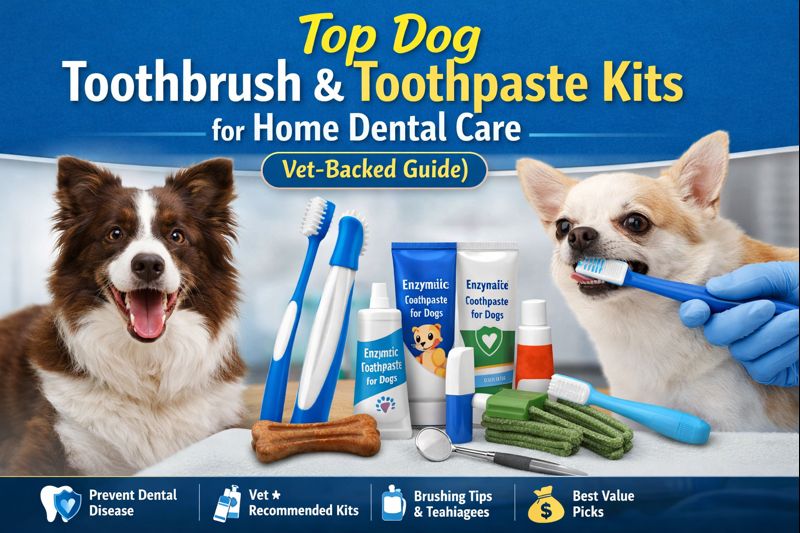
Top Dog Toothbrush and Toothpaste Kits for Home Dental Care (Vet-Backed Guide)
Dental disease is common in dogs, but it can be prevented. Most dogs develop gum disease early if their teeth aren’t cleaned regularly.
Brushing your dog’s teeth at home with the right tools is the best way to keep their teeth and gums healthy and protect their overall health.
Why Dog Dental Care Matters (What Vets Say)
Veterinary dental groups often warn that dental disease is very common in dogs.
According to the American Veterinary Dental College , over 80% of dogs show signs of gum disease by age three.
VCA Animal Hospitals also says that untreated dental disease can cause:
- Chronic pain
- Tooth loss
- Jaw bone damage
- Heart, liver, and kidney complications
- Systemic infections
This happens because bacteria from the mouth can enter the bloodstream and spread through the body.
Dental care is not just cosmetic—it helps prevent disease.
What This Guide Covers
- ✔ What veterinary research says about dog dental care
- ✔ Why brushing works better than chews alone
- ✔ How to choose safe dental kits
- ✔ How to brush correctly
- ✔ Which kits offer the best long-term value
Whether you are just starting or want to improve your brushing routine, this article will help you follow a vet-recommended dental care plan.
Extra Dental Care Tips
Start brushing slowly, use dog-safe toothpaste, and reward your dog after each session. Being consistent matters more than being perfect.
For best results, brush your dog’s teeth at least 3–4 times a week and schedule regular vet checkups.
How Dental Disease Develops in Dogs

Knowing how dental disease starts shows why brushing is so important. Without proper care, small problems can quickly become serious health issues.
After eating, bacteria create a sticky layer called plaque on your dog’s teeth.
If plaque is not removed within two days, it turns into hard tartar.
Tartar irritates the gums and can cause redness, swelling, and bleeding.
The infection spreads below the gumline and damages the bone and tissue.
This is why early, regular brushing is so important. Starting young and staying consistent helps prevent long-term damage.
Veterinary studies show that brushing is the most effective way to care for your dog’s teeth at home. The American Veterinary Dental College states that removing plaque through brushing is key to preventing dental disease.
Dental chews and additives can help, but they cannot replace brushing.
Brush your dog’s teeth at least 3–4 times a week using dog-safe toothpaste. Start slowly and reward your dog after each session.
For best results, combine regular brushing with yearly vet dental exams.
Why Enzymatic Toothpaste Matters
Dog toothpaste is not just about flavor. High-quality formulas contain enzymes that help break down bacterial biofilm on the teeth.
Veterinary dental products often use enzyme systems that:
- ✔ Reduce harmful bacteria
- ✔ Slow plaque formation
- ✔ Improve breath
- ✔ Support gum health
Always choose toothpaste made specifically for dogs.
Enzymatic toothpaste works even without rinsing, making it ideal for dogs that resist brushing.
Enzymatic toothpaste works without rinsing, making it ideal for dogs that resist brushing.For best results, use enzymatic toothpaste with regular brushing at least 3–4 times a week.
What Makes a High-Quality Dental Kit?
When choosing a toothbrush and toothpaste kit, veterinarians recommend focusing on performance instead of marketing claims.
1. Toothbrush Design
Look for:
- ✔ Soft bristles
- ✔ Angled heads
- ✔ Dual-head or triple-head designs
- ✔ Appropriate size
2. Toothpaste Formula
Choose products that are:
- ✔ Enzymatic
- ✔ Fluoride-free
- ✔ Xylitol-free
- ✔ Dog-specific
Flavor can help your dog accept brushing, but safety is always more important.
3. Adaptability
The best kits include:
- ✔ Standard brush
- ✔ Finger brush
- ✔ Instructions
- ✔ Replacement availability
This lets you change tools as your dog becomes more comfortable over time.
Avoid kits with very hard bristles or unclear ingredient labels. Always check for veterinary approval when possible.
Investing in a quality kit can lower long-term vet costs and make brushing easier to maintain.
How to Brush Your Dog’s Teeth (Vet Technique)
Veterinarians recommend the following method to keep your dog’s teeth clean and help prevent long-term dental disease.
Let your dog taste the toothpaste from your finger for several days.
Focus on canines and incisors first.
Brush at a 45-degree angle toward the gumline.
Most plaque accumulates on the outside of teeth.
Start with 30 seconds and increase gradually.
How Often Should You Brush?
Veterinary Consensus:
- ✔ Ideal: Daily brushing
- ✔ Acceptable: 3–4 times per week
- ✔ Minimal benefit: Less than twice per week
Plaque builds up quickly, so skipping days lets it harden into tartar.
Dogs at Higher Risk of Dental Disease
Some dogs need extra care when it comes to dental health.
High-Risk Groups:
- ✔ Small breeds (Chihuahua, Yorkie)
- ✔ Flat-faced breeds (Pug, Bulldog)
- ✔ Senior dogs
- ✔ Dogs on soft diets
- ✔ Dogs with crowded teeth
These dogs benefit most from daily brushing and regular vet checkups.
Brush at the same time each day to build a routine. Use positive reinforcement after every session.
If your dog resists, start with a finger brush before moving to a regular toothbrush.
Best Dog Toothbrush and Toothpaste Kits (Vet-Informed Picks)
Virbac C.E.T. Oral Hygiene Kit
Best for: Moderate–Severe Plaque
- ✔ Veterinary enzymatic formula
- ✔ Proven plaque control
- ✔ Gentle on gums
Arm & Hammer Dog Dental Kit
Best for: Beginners
- ✔ Enzymatic toothpaste
- ✔ Starter-friendly kit
- ✔ Easy to find
TropiClean Oral Care Kit
Best for: Large Dogs
- ✔ Triple-head brush
- ✔ Faster sessions
- ✔ Natural ingredients
Vet’s Best Dental Starter Kit
Best for: Puppies & Nervous Dogs
- ✔ Gentle formula
- ✔ Finger brush
- ✔ Low stress
Common Mistakes That Reduce Effectiveness
Many owners brush their dog’s teeth but still notice dental problems.
Avoid these errors:
- ❌ Brushing once per month
- ❌ Using human toothpaste
- ❌ Scrubbing too hard
- ❌ Ignoring the gumline
- ❌ Relying only on chews
Signs Your Dog Needs Dental Attention
Contact your veterinarian if you notice any of the following signs.
- 🦷 Persistent bad breath
- 🩸 Bleeding gums
- ⚠️ Loose teeth
- 😟 Facial swelling
- 🍽️ Dropping food
- 🐾 Pawing at the mouth
Professional Cleanings Still Matter
Even with excellent home care, dogs still need professional dental cleanings to prevent serious oral disease.
These procedures include:
- ✔ Anesthesia
- ✔ Scaling under the gumline
- ✔ Polishing
- ✔ Dental X-rays
- ✔ Extractions if needed
Frequently Asked Questions
Bottom Line: What Vets Recommend
Show / Hide Recommendations
Veterinary research consistently shows that home brushing is the most effective way to prevent dental disease.
Best practices:
- ✔ Use enzymatic toothpaste
- ✔ Brush frequently
- ✔ Choose proper tools
- ✔ Monitor gums
- ✔ Visit your vet yearly
- ✔ Combine brushing with professional care