Puppies grow rapidly in their first year and need balanced nutrition.
- ✔ Higher protein
- ✔ More fat for energy
- ✔ Balanced calcium and phosphorus
- ✔ DHA for brain development
- ✔ Adequate calories
Without proper balance, puppies may develop:
- ⚠ Weak bones
- ⚠ Joint disorders
- ⚠ Poor muscle growth
- ⚠ Low immunity
- ⚠ Delayed development
Veterinarians calculate feeding based on:
- ✔ Body weight
- ✔ Age
- ✔ Metabolic rate
- ✔ Calorie density
Body Weight
Heavier puppies need more calories, but not always proportionally.
Age
Younger puppies need more calories per pound.
Metabolism
Puppies burn energy faster than adult dogs.
Calories
Different foods have different calorie levels.
Calories matter more than measuring cups.
If two foods have different energy levels, equal portions may cause:
- ⚠ Overfeeding
- ⚠ Rapid growth
- ⚠ Joint stress
- ⚠ Obesity
- ❌ Free feeding all day
- ❌ Overfeeding for faster growth
- ❌ Too many treats
- ❌ Sudden food changes
- ❌ Feeding adult food too early
Best Puppy Foods on Amazon
These foods meet veterinary nutrition standards.
✔ Balanced growth
✔ DHA for brain health
✔ Easy digestion
This chart is based on dry kibble with 360–400 kcal per cup. Always compare it with your puppy food label.
Daily Feeding Guide (Dry Food)
| Puppy Weight | 8–12 Weeks | 3–6 Months | 6–12 Months |
|---|---|---|---|
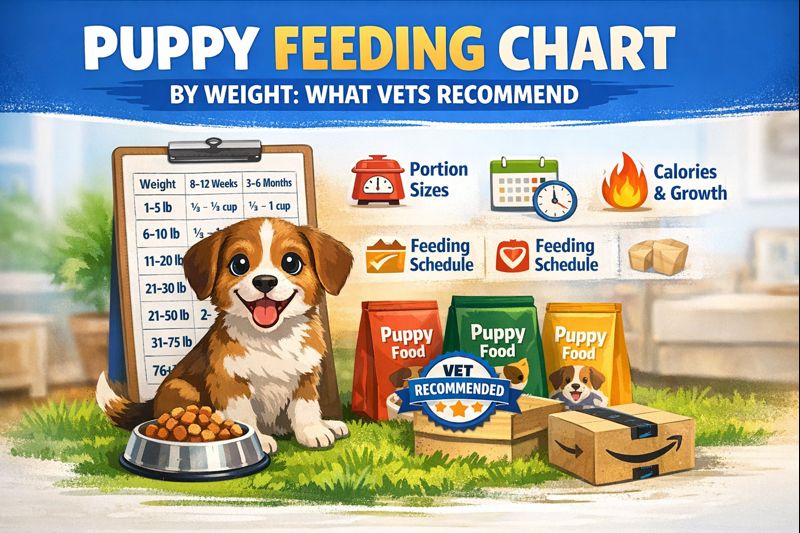
| 1–5 lb | ⅓ – ⅔ cup | ⅔ – 1 cup | ⅔ – 1 cup |
| 6–10 lb | ⅔ – 1 cup | 1 – 1½ cups | 1 – 1½ cups |
| 11–20 lb | 1 – 1½ cups | 1½ – 2 cups | 1¼ – 2¼ cups |
| 21–30 lb | 1½ – 2 cups | 2 – 2½ cups | 1¾ – 2¾ cups |
| 31–50 lb | 2 – 3 cups | 2½ – 3½ cups | 2 – 3 cups |
| 51–75 lb | 2½ – 3½ cups | 3 – 4 cups | 2½ – 3½ cups |
| 76+ lb | 3 – 4 cups | 3½ – 5 cups | 3 – 4 cups |
Adjust portions based on:
- ✔ Body condition
- ✔ Activity level
- ✔ Veterinary advice
- ✔ Stool quality
🐶 Recommended Puppy Foods (Vet-Approved)
Choose balanced puppy food to support healthy growth and digestion.
✔ DHA for brain development
✔ Controlled calcium levels
✔ High-quality protein
These amounts are starting points. Adjust portions based on:
- ✔ Body condition
- ✔ Activity level
- ✔ Veterinary advice
- ✔ Stool quality
Feeding Schedule by Age
Veterinarians recommend splitting daily food into several small meals.
| Age | Meals Per Day |
|---|---|
| 6–12 weeks | 4 meals |
| 3–6 months | 3 meals |
| 6–12 months | 2–3 meals |
| Adult | 2 meals |
Why Multiple Meals Matter
Large meals may cause digestive problems in young puppies:
- ❌ Vomiting
- ❌ Low blood sugar
- ❌ Bloating
- ❌ Poor digestion
Understanding Calories and Puppy Growth
Most puppy foods list calories as kcal/cup or kcal/kg.
Calories matter more than measuring cups:
- Food A = 380 kcal
- Food B = 450 kcal
Feeding higher-calorie food may cause:
- ⚠ Excess weight
- ⚠ Rapid growth
- ⚠ Joint stress
Wet Food and Mixed Feeding Adjustments
Wet Food: Canned food contains more water, so portions appear larger.
Mixed Feeding: Reduce portions when combining foods.
- Instead of 2 cups dry
- Feed 1 cup dry + ½ can wet
| Product | Best For | Benefits | Buy |
|---|---|---|---|
| Purina Pro Plan Puppy | All Breeds | DHA, Probiotics, High Protein | Check Price |
| Royal Canin Puppy | Growth Support | Breed-Specific Nutrition | View Deals |
| Hill’s Science Diet Puppy | Sensitive Stomach | Easy Digestion | Shop Now |
| Blue Buffalo Puppy | Natural Diet | No Poultry By-Product | See Price |
- ✔ Steady weight gain
- ✔ Visible waistline
- ✔ Shiny coat
- ✔ Good energy
- ✔ Firm stools
- ⚠ Visible ribs
- ⚠ Low energy
- ⚠ Poor growth
- ⚠ Dull coat
- ⚠ Rapid weight gain
- ⚠ No waistline
- ⚠ Loose stool
- ⚠ Lethargy
- Free feeding all day
- Overfeeding for growth
- Too many treats
- Sudden food changes
- Feeding adult food too early
- Small breeds: 9–12 months
- Medium breeds: ~12 months
- Large breeds: 12–18 months
- ⚠ Not gaining weight
- ⚠ Chronic diarrhea
- ⚠ Vomiting often
- ⚠ Refusing food
- ⚠ Weakness
Q: How much should a 10 lb puppy eat?
1–1½ cups daily at 3–6 months.
Q: Can I use homemade food?
Only with veterinary supervision.
Q: Is grain-free better?
Not unless medically required.
Q: Should I use supplements?
Most puppies don’t need them.
- ✔ Use weight charts
- ✔ Follow schedules
- ✔ Buy quality food
- ✔ Monitor growth
- ✔ Adjust portions
- ✔ Work with vets