
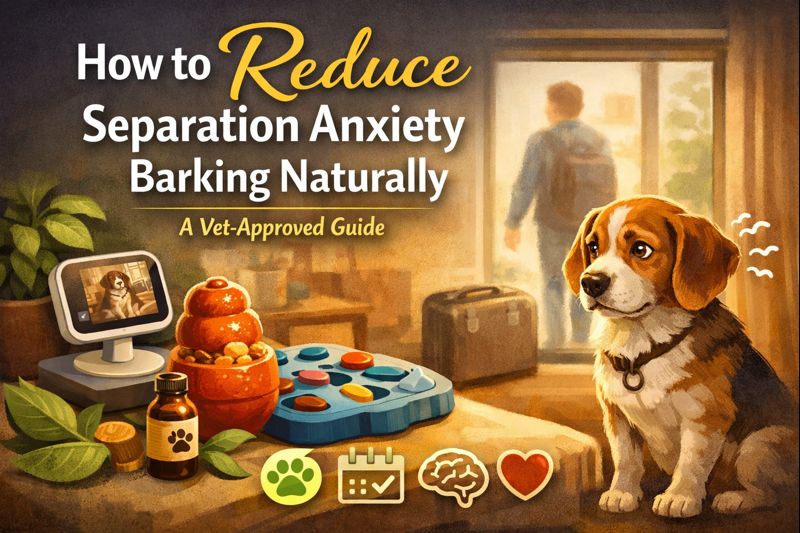
Excessive barking when you leave home is one of the most upsetting problems for dog owners. Many people think their dog is being “stubborn” or “disobedient,” but most ongoing barking when left alone is actually caused by separation anxiety, which is a real emotional disorder based on fear and panic.
As a veterinarian, I often see dogs who struggle quietly when left alone. The good news is that with the right approach, separation anxiety barking can be reduced and often resolved using natural, humane, and science-based methods.
This guide will help you recognize separation anxiety, understand why it happens, and follow a step-by-step plan so your dog can feel safe and calm when you’re away.
What Is Separation Anxiety in Dogs?
Separation anxiety is a behavioral problem where a dog feels intense stress when away from their main caregiver. Unlike barking from boredom, separation anxiety causes real emotional distress.
Common signs include:
- Continuous barking, whining, or howling after you leave
- Scratching doors or windows
- Destructive chewing near exits
- Pacing, panting, or drooling
- House soiling in a previously trained dog
- Attempts to escape
These behaviors usually start within minutes after you leave and stop soon after you come back. This pattern is an important clue for figuring out the cause.
Why Do Dogs Develop Separation Anxiety?
Several factors increase a dog’s risk of developing separation anxiety:
1. Changes in Routine
Dogs do best with a predictable routine. Moving to a new home, changing work hours, or returning to the office after working from home can trigger anxiety.
2. Rescue or Shelter Background
Rescue dogs are more prone to separation anxiety, especially if they experienced abandonment.
3. Lack of Early Alone Training
Puppies who never learned to spend time alone may have trouble with it as adults.
4. Strong Attachment
Some dogs become very attached to one person and feel unsafe when that person is gone.
5. Breed Factors
Some breeds, such as Border Collies, German Shepherds, and Labradors, are more likely to develop anxiety-related behaviors.
Understanding these causes can help owners feel less frustrated and more compassionate, which is important for successful treatment.
Is It Really Separation Anxiety?
Before starting any training, make sure the barking is caused by anxiety and not boredom, territorial behavior, or noise sensitivity.
Signs It Is Likely Separation Anxiety
- Barking happens only when you leave
- Destruction focuses on doors and windows
- The dog follows you closely at home
- Visible distress before departure
- Calm behavior when you are present
How to Check at Home
Set up a pet camera or record with your phone while you’re gone. Watch the first 30 minutes, since true separation anxiety usually starts quickly.
If your dog shows panic, self-injury, or severe destruction, consult a veterinarian or veterinary behaviorist early.
Why Punishment Makes Barking Worse
Many owners try yelling, using spray bottles, using bark collars, or scolding after coming home. From a medical and behavioral perspective, these actions are harmful.
Punishment:
- Increases fear and insecurity
- Damages trust
- Worsens anxiety over time
- Suppresses warning signs
Dogs with separation anxiety are not being bad. They are experiencing emotional distress similar to panic attacks in humans.
Treatment should focus on emotional safety, not discipline.
The Foundation: A Natural, Humane Treatment Plan
Successful treatment combines five pillars:
- Predictable routine
- Physical exercise
- Gradual desensitization
- Mental enrichment
- Environmental and nutritional support
Step 1: Create Predictable Daily Routines
A regular routine reduces uncertainty, which helps lower anxiety.
- Feeding
- Walks
- Play
- Training
- Rest
Avoid emotional goodbyes. Leave and return calmly.
Step 2: Provide Adequate Physical Exercise
Exercise lowers stress and improves learning.
- Small dogs: 30–45 minutes/day
- Medium dogs: 45–60 minutes/day
- Large/working breeds: 60–90 minutes/day
Exercise 30–60 minutes before departure.
Step 3: Desensitization and Counterconditioning
You teach your dog that being alone leads to positive experiences.
Identify Departure Cues
- Keys
- Shoes
- Bags
- Doors
Practice these without leaving.
Practice Micro-Departures
Start with very short absences and increase slowly.
Pair Alone Time With Rewards
- Frozen KONGs
- Lick mats
- Chews
- Puzzle feeders
Practice daily and remain consistent.
Step 4: Provide Mental Enrichment
- Food puzzles
- Snuffle mats
- Scent games
- Treat balls
- Treasure hunts
Aim for 30–45 minutes daily.
Step 5: Create a Calming Environment
Safe Zone
- Soft bedding
- Favorite toys
- Good airflow
- Low noise
Background Noise
- Soft music
- Radio
- TV
Pheromone Therapy
DAP and Adaptil may help when combined with training.
Step 6: Nutritional Supplements
- L-Theanine
- Tryptophan formulas
- Herbal blends
Always consult your veterinarian before use.
Step 7: Supportive Training Tools
Helpful Tools
- Clickers
- Treat pouches
- Interactive feeders
- Training apps
- Pet cameras
Avoid
- Shock collars
- Spray collars
- Ultrasonic devices
Tracking Progress
- Date
- Absence duration
- Barking level
- Behavior notes
Mild: 4–8 weeks | Moderate: 3–6 months | Severe: 6+ months
When Medication Is Appropriate
- Fluoxetine
- Clomipramine
- Trazodone
- Gabapentin
Medication supports learning and is prescribed by veterinarians.
Real-Life Examples
Case 1: Pomeranian — Improved in 6 weeks
Case 2: Shepherd Mix — 80% improvement in 4 months
Case 3: Senior Dog — Resolved in 3 months
Frequently Asked Questions
Will a muzzle stop barking? No.
Can another dog help? Sometimes.
Should I ignore barking? Do not ignore distress.
How long does it take? Usually months.
Recommended Tools and Products
- Stuffable toys
- Automatic feeders
- Pheromone diffusers
- Treat pouches
- Training cameras
- L-Theanine supplements
(Insert affiliate links here.)
Final Veterinary Advice
Separation anxiety barking is not disobedience. It is fear.
- Emotional security
- Slow progress
- Consistent routines
- Professional guidance
By using these natural, science-backed methods, you give your dog the best chance for a calmer, happier life.