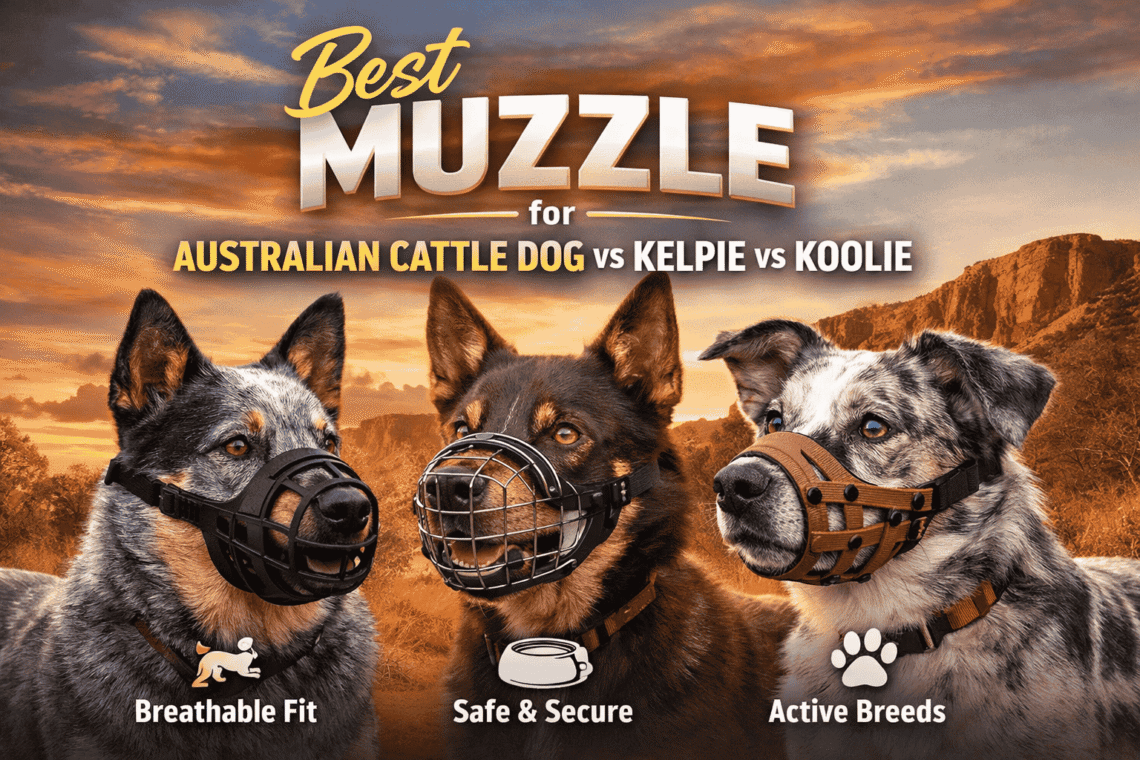
Working Australian herding dogs such as the Australian Cattle Dog, Australian Kelpie, and Koolie are built for energy, speed, and long hours of work with livestock.
Because of this, choosing the right muzzle and introducing it properly is very important for their comfort, safety, and performance.
These breeds usually have medium-length snouts and high energy levels. For most of them, basket-style muzzles are a good place to start.
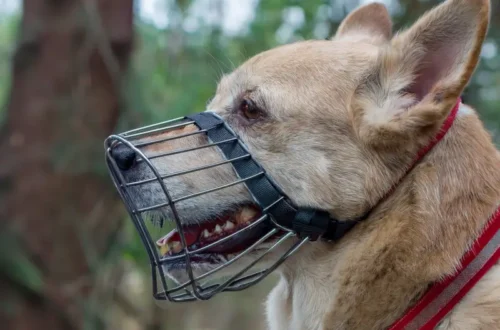
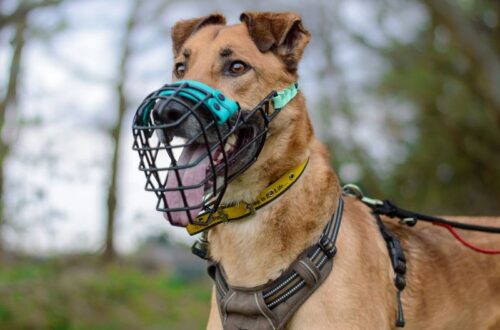
Basket muzzles allow dogs to pant, drink water, and cool down while still preventing biting or scavenging.
✔ Safety — to prevent biting or chewing ✔ Comfort — to allow breathing and movement
Breed size charts are only a guide. Even dogs of the same breed can have different snout shapes and sizes.
That is why measuring your dog carefully and checking manufacturer sizing charts is essential.
- How these three breeds differ in muzzle fit
- Which muzzle types work best
- How to measure your dog correctly
- How to train calm muzzle use
All advice in this guide is based on trusted fitting standards and professional recommendations.
👉 Start the GuideMuzzle Types: How They Compare for Cattle Dogs, Kelpies, and Koolies
Choosing a muzzle is not just about picking a style you like. It is about safety, comfort, and proper breathing. This is especially important for active herding dogs.
A good muzzle should allow your dog to breathe easily, pant freely, drink water, and stay cool. The wrong muzzle can cause stress and overheating.
🛠️ 1) Basket Muzzles (Rigid)
Why They Work Best
- Allow panting and breathing
- Let dogs drink water
- Strong and durable
- Safe for training and work
Best for walking, herding, training, and outdoor activities.
🧵 2) Soft Muzzles (Cloth or Mesh)
Serious Limitations
- Blocks panting
- No drinking
- Unsafe for exercise
- Can cause overheating
Only suitable for very short vet or grooming visits.
🪶 3) Flexible Basket Muzzles (Biothane)
Balanced Option
- Lightweight
- Good airflow
- Comfortable fit
- Easy to clean
Good for long walks and daily activity.
🔎 Quick Comparison
| Muzzle Type | Panting | Drinking | Best Use | Suitability |
|---|---|---|---|---|
| Basket (Rigid) | Yes | Yes | Training / Work | Best Choice |
| Soft (Cloth) | Limited | No | Vet Visits | Limited |
| Flexible Basket | Yes | Yes | Daily Use | Good |
| Wraps | No | No | Not Recommended | Avoid |
How to Measure Your Dog for a Muzzle (Size Calculator)
Correct measurements are the most important factor when choosing a safe and comfortable muzzle.
Step-by-Step Measuring Guide
Use a soft measuring tape and measure when your dog is calm.
✔ Measure circumference with mouth closed ✔ Measure length from nose tip to stop ✔ Measure width of snout
🛒 Recommended Basket Muzzles (Top Picks)
These muzzles are popular among trainers and working dog owners.
🎓 How to Train Your Dog to Wear a Muzzle
Proper training makes muzzle use stress-free and comfortable for your dog.
Positive Training Steps
- Let your dog sniff the muzzle first
- Reward with treats near the muzzle
- Practice short sessions indoors
- Gradually increase wearing time
- Use praise and rewards consistently
- Practice in calm environments first
📍 How a Proper Fit Should Feel
A well-fitted muzzle should feel secure without causing discomfort. Your dog should be able to move, breathe, and relax naturally.
A good muzzle should allow your dog to:
- Open its mouth slightly
- Pant easily
- Drink water (with basket muzzles)
- Move without rubbing
- Keep the muzzle in place
🧠 Common Measuring Mistakes
❌ Mistake 1 — Using Breed Size Only
Do not rely on general labels like “medium cattle dog.” Dogs of the same breed can have very different snout shapes and sizes.
❌ Mistake 2 — Ignoring Panting Space
Some owners choose muzzles that look tight. This blocks panting and increases the risk of overheating.
❌ Mistake 3 — Tight Straps
Straps should be firm, not tight.
Too loose = slipping
Too tight = pain and poor breathing
🧠 Expert Advice on Muzzle Fit
Most professional trainers and behavior experts agree on three essential rules when choosing and fitting a muzzle.
- Measurements are more important than breed charts
- Basket muzzles provide the best airflow
- Training is just as important as proper sizing
A poorly fitting muzzle can make dogs anxious, fearful, or stressed. This often creates unnecessary training problems.
📌 Quick Summary: Measuring Steps
| Step | What to Measure | Why It Matters |
|---|---|---|
| 1 | Snout Length | Prevents nose pressure |
| 2 | Snout Width | Ensures comfort and security |
| 3 (Optional) | Head Length | Improves strap fit |
⭐ Final Tip
Take your time when measuring your dog’s muzzle. Measure twice if needed, and never rush the process.
A few extra minutes now can prevent many fitting problems later.
How to Size & Fit These Recommended Muzzles
Even the best muzzle will not work well if it does not fit properly. Breed size charts are only rough guides.
Accurate measurements are the key to comfort, safety, and airflow for Australian Cattle Dogs, Kelpies, and Koolies.
🧰 Step 1 — Take Accurate Measurements
Use a soft tape or string.
- Snout Length: Between eyes to nose tip
- Snout Circumference: Widest part below eyes
- Head Length (Optional): Skull to snout
🧲 Step 2 — Match Your Measurements to the Size Chart
Each brand uses different sizing. Always check first.
| Size | Snout Length | Circumference |
|---|---|---|
| X-Small | 6.5–8.5 cm | 17.5–22.5 cm |
| Small | 8–10 cm | 22.5–27.5 cm |
| Medium | 9–12 cm | 27.5–33 cm |
| Large | 11–13 cm | 33–38 cm |
| X-Large | 13–15 cm | 38–43 cm |
Trust your measurements more than breed labels.
🧠 Step 3 — Check the Fit on Your Dog
Test movement and comfort.
- No pinching
- Slight mouth opening
- Easy panting
- No slipping
- Secure position
Conclusion: Choosing the Right Muzzle for Cattle Dogs, Kelpies & Koolies
Australian Cattle Dogs, Australian Kelpies, and Koolies are intelligent, energetic working breeds. Because they are active and often work in warm conditions, they need muzzles that focus on airflow, comfort, and strength.
For these breeds, panting and cooling are essential. This is why experts consistently recommend basket-style muzzles made from plastic, wire, or biothane.
These designs allow dogs to breathe freely, drink water, and take treats while still preventing biting or unsafe behavior.
Even the best muzzle will not work well if:
- It is the wrong size
- It is introduced too quickly
- It is used without proper training
To get the best results, always:
- Measure your dog carefully
- Use the brand’s size chart
- Choose breathable basket designs
- Train slowly with treats and praise
- Watch for comfort during activity
When used correctly, a muzzle becomes a tool for safety and confidence, not punishment. Many working dogs wear muzzles calmly once properly trained.
⚠️ Important Safety Reminders
🐕 Do Not Use Tight Muzzles During Exercise
Cloth and sleeve muzzles restrict panting and should not be used for walking, training, or hot weather.
🌡️ Watch for Signs of Overheating
Heavy drooling, slowing down, or distress means your dog needs water, shade, and a break immediately.
👀 Supervise at First
Always monitor early muzzle use and check for rubbing, slipping, or stress.
🚫 Never Use a Muzzle as Punishment
Using a muzzle after scolding creates fear and resistance.
📅 Recheck Fit Regularly
Re-measure every few months, especially for young or active dogs.
Frequently Asked Questions (FAQs)
1. Do these breeds really need basket muzzles?
In most cases, yes. These dogs are active and heat-sensitive. Basket muzzles allow proper cooling and breathing, which protects their health.
2. Can my dog drink water while wearing a muzzle?
With most basket muzzles, yes. Many allow drinking and taking treats. Soft muzzles usually do not.
3. Is using a muzzle cruel?
No, when used correctly. A well-fitted muzzle introduced with positive training does not harm dogs. It works like a leash or harness for safety.
It becomes harmful only when it is too tight, restrictive, used as punishment, or worn too long without breaks.
4. How long can my dog wear a muzzle?
This depends on the muzzle type, activity level, weather, and training.
With a proper basket muzzle and supervision, dogs can wear it during long walks or training. Regular breaks are still recommended.
5. My dog tries to remove the muzzle. What should I do?
This usually means:
- The fit is uncomfortable
- Training was rushed
- Positive rewards were skipped
Go back to slow training with treats. Never force the muzzle on.
6. Are wire muzzles safe?
Yes, when fitted correctly. They provide excellent airflow and strength. Check regularly for rubbing.
7. Should I buy a custom muzzle for my Koolie?
If standard sizes do not fit well, a custom or adjustable biothane muzzle can improve comfort and long-term use.
📝 Final Takeaway
- Choose basket-style muzzles
- Measure carefully
- Train with positive methods
- Focus on airflow and comfort
- Avoid tight fabric designs
A well-chosen and well-trained muzzle improves safety, reduces stress, and supports responsible ownership— especially for active Australian working dogs.