Dog Safety · Training Tools
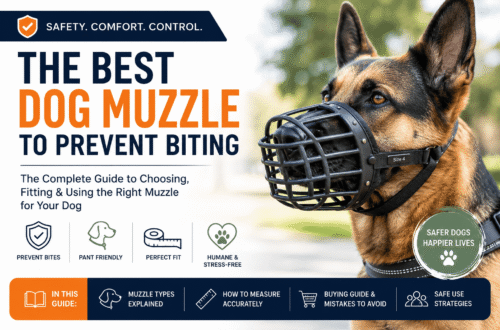
Dog muzzles are one of the most misunderstood tools in the dog world. Many people still associate them with “aggressive” or “dangerous” dogs, when in reality a good muzzle is simply a safety device that allows dogs and humans to stay safe while you work on training and behavior. When you live with a dog that might bite, choosing the best muzzle to prevent biting is one of the most important decisions you can make.
This guide goes deep into how muzzles work, which designs actually prevent bites, how to pick the right model for your dog, and how to train your dog to love wearing it. You can use it as a complete reference before you choose and recommend any specific products.
Why Use a Muzzle to Prevent Biting?
A muzzle does not magically cure aggression or fear, but it gives you a safe buffer while you work on the underlying problem. Think of it like a seatbelt: it does not stop accidents from happening, but it greatly reduces the damage if something goes wrong.
There are several situations where a muzzle is not just helpful, but responsible and sometimes essential for safety.
- You already know your dog has bitten or snapped at someone.
- Your dog is fearful or reactive around strangers, children, or other dogs.
- Your dog may bite when restrained, handled at the vet, or groomed.
- You are doing behavior modification with a trainer and need a safety margin.
- Your local laws, housing rules, or insurance require a muzzle in public.
Using a muzzle makes it possible to keep everyone safe while giving your dog more freedom. Instead of being locked away or never leaving the house, a properly fitted muzzle enables controlled walks, supervised socialization, and training sessions where your dog can learn better coping skills.
Most trainers and veterinarians now see muzzles as a normal part of responsible dog ownership. The negative stigma is fading, especially when owners choose modern, comfortable, colorful designs instead of harsh‑looking equipment.
What Makes a Muzzle Good at Preventing Bites?
Not all muzzles are created equal. Some are great for short vet procedures, but unsafe for walks. Others are comfortable for long wear, but flimsy enough that a determined dog can still nip through the gaps.
When your main goal is preventing biting, a good muzzle must meet a few key criteria that balance safety and comfort.
- Bite resistance: The material and construction must be strong enough that the dog cannot crush or fold the muzzle to make contact with teeth.
- Small enough gaps: Openings should be small enough that the dog cannot get a full bite on skin, even if they can take small treats through the muzzle.
- Safe panting and breathing: A bite‑prevention muzzle must let the mouth open for panting so the dog can cool down and breathe comfortably.
- Secure, escape‑proof fit: A loose muzzle is a dangerous muzzle; if it slips off or the dog can paw it off, you lose your safety margin.
- Breed‑appropriate shape: Long‑nosed, blocky‑headed, and short‑nosed dogs all need different muzzle shapes and depths.
If a muzzle fails on any of these points, it is not the best choice for preventing bites, even if it looks strong or “heavy duty.”
Main Muzzle Types for Bite Prevention
To pick the best muzzle, it helps to understand the main categories. Brands come and go, but these underlying types stay the same and guide your choices.
1. Metal Wire Basket Muzzles
Metal basket muzzles are often the go‑to option for serious bite risk. They are commonly used by police, military, and working‑dog handlers because of their strength.
- Pros: Very strong and rigid, excellent ventilation, allow panting and drinking, highly effective at stopping full bites when fitted properly.
- Cons: Heavier than other types, can heat up or cool down with weather, and may bruise if the dog lunges into someone while wearing it.
- Best for: Dogs with a real bite history and strong jaws where softer materials might deform or crack.
2. Biothane Basket Muzzles (Custom or Semi‑Custom)
Biothane is a coated webbing that is strong, flexible, waterproof, and easy to clean. Many modern, premium muzzles use biothane strips to create a basket‑style cage.
- Pros: Very strong and bite‑resistant, lightweight, allows panting and drinking, custom sizing gives superb fit, soft edges reduce rubbing.
- Cons: More expensive than typical off‑the‑shelf muzzles and often requires careful measuring and a production wait time.
- Best for: Dogs who wear muzzles regularly for walks or training and owners who want a long‑term, professional‑grade solution.
3. Leather Basket Muzzles
Leather basket muzzles have been used for decades, especially in working and protection dogs. They can be fully leather or leather with metal reinforcements.
- Pros: Strong and durable, softer against the skin than bare metal, can be very comfortable with padding, good ventilation if designed well.
- Cons: Need regular cleaning and conditioning, can stretch if not cared for, and cheap versions may skimp on ventilation.
- Best for: Strong dogs with a serious bite risk and owners comfortable with basic leather care.
4. Plastic or Rubber Basket Muzzles
Plastic and rubber basket muzzles are probably the most common option for everyday pet owners. They are widely available and often used as a first “real” muzzle.
- Pros: Lightweight and comfortable for many dogs, often allow panting and drinking, widely available in many sizes, budget‑friendly.
- Cons: Not all models are equally strong, cheaper plastics can crack or flex, and large gaps can allow small pinching bites.
- Best for: Dogs with moderate bite risk and general management on walks, training sessions, or supervised socialization.
5. Soft / Nylon Sleeve Muzzles
Soft or nylon sleeve muzzles wrap around the snout and usually keep the mouth mostly closed. They are common in vet clinics and grooming salons for very short procedures.
- Pros: Inexpensive, quick to put on, effective for brief control during handling.
- Cons: Severely restrict panting and drinking, unsafe for walks or exercise, and some dogs can still nip if the fit is loose.
- Best for: Very short, supervised use for vet exams or grooming when no other option is available.
For preventing biting in everyday life, a well‑fitted basket muzzle (metal, leather, biothane, or strong plastic) is usually a better and safer choice than a tight fabric sleeve muzzle.
🐶 Best Dog Muzzles to Prevent Biting (Expert Comparison)
Compare the most effective muzzle types used by trainers, vets, and dog owners. Choose based on safety, comfort, and real-world use cases.
🔥 Recommended: Best Overall Dog Muzzle
The Baskerville Ultra Dog Muzzle is one of the most trusted choices for preventing biting while still allowing panting, drinking, and treat training.
- ✔ Safe basket design for real bite prevention
- ✔ Allows panting, drinking & reward training
- ✔ Adjustable secure fit for most breeds
- ✔ Used by trainers & veterinarians
Prices, sizes, and availability may vary. Always choose correct sizing for your dog.
How to Choose the Best Muzzle to Prevent Biting
Once you know the types, the next step is matching the right muzzle to your dog and your lifestyle. Use this step‑by‑step approach to narrow down your options.
1. Honestly Assess Your Dog’s Bite Risk
Be realistic about your dog’s behavior; this is about safety, not judgment. Think about:
- Past incidents: Has your dog already bitten, and how serious were the bites?
- Bite strength: Does your dog have strong jaws that can crush or tear, or are they more of a quick “warning” nipper?
- Triggers: Are bites more likely around food, toys, strangers, children, or during handling and restraint?
Dogs with a history of deeper, more powerful bites generally need metal, leather, or high‑quality biothane muzzles. Dogs that mainly snap or nip may be adequately managed with a strong plastic or rubber basket muzzle.
2. Consider Duration and Environment
How long and where your dog will wear the muzzle will also influence your choice.
- Short vet or grooming visits: Soft or vinyl cup muzzles can work for very brief, supervised use.
- Regular walks and training: You need a basket muzzle that allows full panting, sniffing, and some access to water.
- Hot climates: Ventilation is critical; choose open designs with lots of airflow and avoid anything that wraps tightly.
For longer wear and outdoor activity, prioritize roomy basket muzzles with plenty of open space and a design that stands off the face rather than pressing tightly on the nose and lips.
3. Match the Muzzle to Your Dog’s Head Shape
A “best muzzle” is only best if it actually fits your dog. Different head shapes require different designs.
- Long, narrow snouts (collies, greyhounds, sighthounds) need deep, narrow baskets that don’t slip forward.
- Broad, blocky heads (staffies, mastiffs, bully breeds) often need wider, shorter baskets with more room at the sides.
- Short‑nosed (brachycephalic) breeds (pugs, Frenchies) require special short‑snout muzzles that leave nostrils clear.
Measure your dog with a soft tape and compare those numbers to the manufacturer’s size chart. If your dog falls between sizes, contact the seller when possible, or size up slightly and use straps to fine‑tune, as long as the muzzle cannot slip off.
4. Check Comfort and Security Features
Comfort and security go together. A comfortable muzzle is easier to put on, less likely to be resisted, and less prone to being pawed off.
- Look for padding on the nose bridge and other pressure points.
- Choose designs with multiple points of adjustment so the muzzle hugs the head without pinching.
- Prefer muzzles with a way to attach to the dog’s collar or harness for extra security.
- Avoid designs that ride up into the eyes or rub the corners of the mouth.
Training Your Dog to Accept a Muzzle
The best bite‑prevention muzzle will only work if your dog is willing to wear it. Proper conditioning turns the muzzle into a signal that good things are coming, not punishment.
Stage 1: Introduce the Muzzle Positively
Start by treating the muzzle like a special food bowl. Hold it in one hand and let your dog sniff, then drop treats into the basket so they put their nose in voluntarily. Do not fasten the straps yet; simply repeat this until your dog eagerly pushes their nose into the muzzle whenever you present it.
Stage 2: Add Short Strap Closures
Once your dog happily puts their nose in, gently bring the straps behind their head and close them for one or two seconds. Feed a treat while the muzzle is on, then take it off. Over several sessions, gradually increase the time to 10, 20, 30 seconds and beyond, always rewarding calm behavior.
Stage 3: Move Around in a Safe Space
When your dog can wear the muzzle for a minute or more without fussing, begin walking around the house or yard together. Toss treats on the ground, practice easy cues, and play simple games so the dog learns they can move, sniff, and interact normally while wearing it.
Stage 4: Use the Muzzle in Real‑Life Situations
Start with easy, low‑stress outings such as quiet streets or short car rides. When your dog is comfortable in those contexts, gradually introduce the muzzle in more challenging situations like busier walks, training classes, or vet visits. If your dog shows intense stress, step back and make the situation easier again.
Safety Guidelines for Muzzle Use
Even with a high‑quality muzzle, safety and common sense are essential. A muzzle is a tool that supports good handling and training, not a replacement for them.
- Never leave a muzzled dog unsupervised, even for a few minutes.
- Avoid vigorous exercise or hot weather with any muzzle that limits panting.
- Regularly check for chafing or hair loss and adjust padding or straps if needed.
- Do not use a muzzle as the only response to aggression; work with a qualified behavior professional to address the underlying cause.
- Educate family and visitors that the muzzle is a safety measure and part of responsible management, not a sign of a “bad dog.”
Scenario‑Based Recommendations
Here are a few common real‑life scenarios and the types of muzzles that tend to work best in each case.
Scenario 1: Strong Dog With Serious Bite History
Example: a large shepherd or bull‑type dog with multiple deep bites. You need maximum safety in public and at home around people.
- Recommended: Heavy‑duty metal basket or premium biothane/leather basket muzzle.
- Why: These designs resist crushing and bending, making it extremely hard for the dog to deliver a damaging bite.
Scenario 2: Family Dog That Bites at the Vet or Groomer
Example: a generally friendly dog that panics and snaps when restrained, examined, or handled.
- Recommended: Soft/nylon sleeve or vinyl cup muzzle for a few minutes under direct supervision, or a well‑conditioned basket muzzle if the dog will accept it.
- Why: Short‑term control is the priority, but long‑term comfort and positive experiences should still be a goal.
Scenario 3: Reactive Dog on Walks
Example: a dog that lunges and snaps at passing dogs, cyclists, or strangers, but still needs regular exercise and training.
- Recommended: Lightweight plastic, rubber, or biothane basket muzzle that allows panting, sniffing, and taking treats.
- Why: You need a balance of safety, ventilation, and comfort for 30–60 minute sessions outdoors.
Scenario 4: Newly Adopted Dog With Unknown History
Example: a rescue dog that seems nervous and unpredictable, and you are not sure what might trigger a bite.
- Recommended: Well‑fitting basket muzzle used during initial walks, introductions, and vet checks.
- Why: A muzzle gives you a safe buffer while you learn your dog’s triggers and work on trust.
Final Thoughts: Safety Plus Kindness
The best dog muzzle to prevent biting is not just the toughest product you can find; it is the one that actually fits your dog, allows them to pant and drink, and can be worn calmly in real‑life situations. When you combine a bite‑resistant basket muzzle with thoughtful training and professional behavior help, you get a powerful combination: safety for everyone and a real chance for your dog to improve.
Far from being a badge of shame, a well‑chosen muzzle is a mark of a responsible, caring owner. It shows you are willing to manage risk, protect others, and give your dog the structure they need to succeed.