Best muzzles for short‑nosed dogs like French Bulldogs and Pugs must be chosen with extra care because these brachycephalic breeds already struggle with breathing and heat regulation. This guide breaks down seven vet‑safe, owner‑approved options plus practical sizing and training tips so you can choose confidently and keep your dog safe.
Why Short‑Nosed Dogs Need Special Muzzles
Short‑nosed breeds such as French Bulldogs and Pugs have compressed airways, narrow nostrils, and elongated soft palates, which all make breathing harder, especially in heat or stress. A poorly designed muzzle can dangerously restrict panting, which is how dogs cool themselves and manage body temperature.
For these breeds, a good muzzle must allow wide, open‑mouth panting and free airflow, avoid pressing on the nose or eyes, and fit their broad head and flat face without slipping off. Soft, breathable materials and adjustable straps are also important to keep the dog comfortable and reduce the risk of rubbing or chafing.
Vets and trainers typically recommend muzzles for vet or grooming visits when a dog is fearful or in pain, to stop scavenging on walks, and as a safety tool when working on reactivity or aggression training. Used correctly, a muzzle is a management tool, not a punishment, and should always be paired with training and positive associations.
What to Look For in a Vet‑Safe Short‑Snout Muzzle
Any muzzle used for daily exercise or longer periods must allow the dog to pant and drink to stay safe. For flat‑faced dogs, that means choosing designs built specifically for short snouts rather than generic long‑nose muzzles.
- Breathability and ventilation: Choose open basket or mesh designs with plenty of holes and no solid fabric over the nostrils.
- Pant room: Your dog should be able to open the mouth fully, extend the tongue, and drink small amounts of water while wearing the muzzle.
- No nose pressure: The muzzle should not rest directly on or squeeze the nostrils, as this can further restrict breathing for brachycephalic dogs.
- Short‑snout design: Look for products labeled for brachycephalic or short‑snout breeds, which are shaped around wider heads and flatter faces.
- Secure, comfortable straps: Wide, adjustable straps around the head or neck with padding where they contact the skin help prevent rubbing and escape.
- Purpose‑appropriate style: Basket muzzles are best for extended use and walks, while soft “sleeve” styles should be reserved for short vet or grooming procedures.
As a rule of thumb, avoid closed‑front nylon muzzles that hold the mouth completely shut for more than a couple of minutes, and stop using any muzzle that causes noisy breathing, gagging, or intense pawing at the face.
7 Vet‑Safe Muzzles Short‑Nosed Dog Owners Love
The following seven options are frequently recommended in specialist guides and by owners of French Bulldogs, Pugs, and other brachycephalic breeds. Always confirm sizing and fit for your individual dog, as even the best design can be unsafe if fitted incorrectly.
1. Canine Friendly Short Snout Dog Muzzle
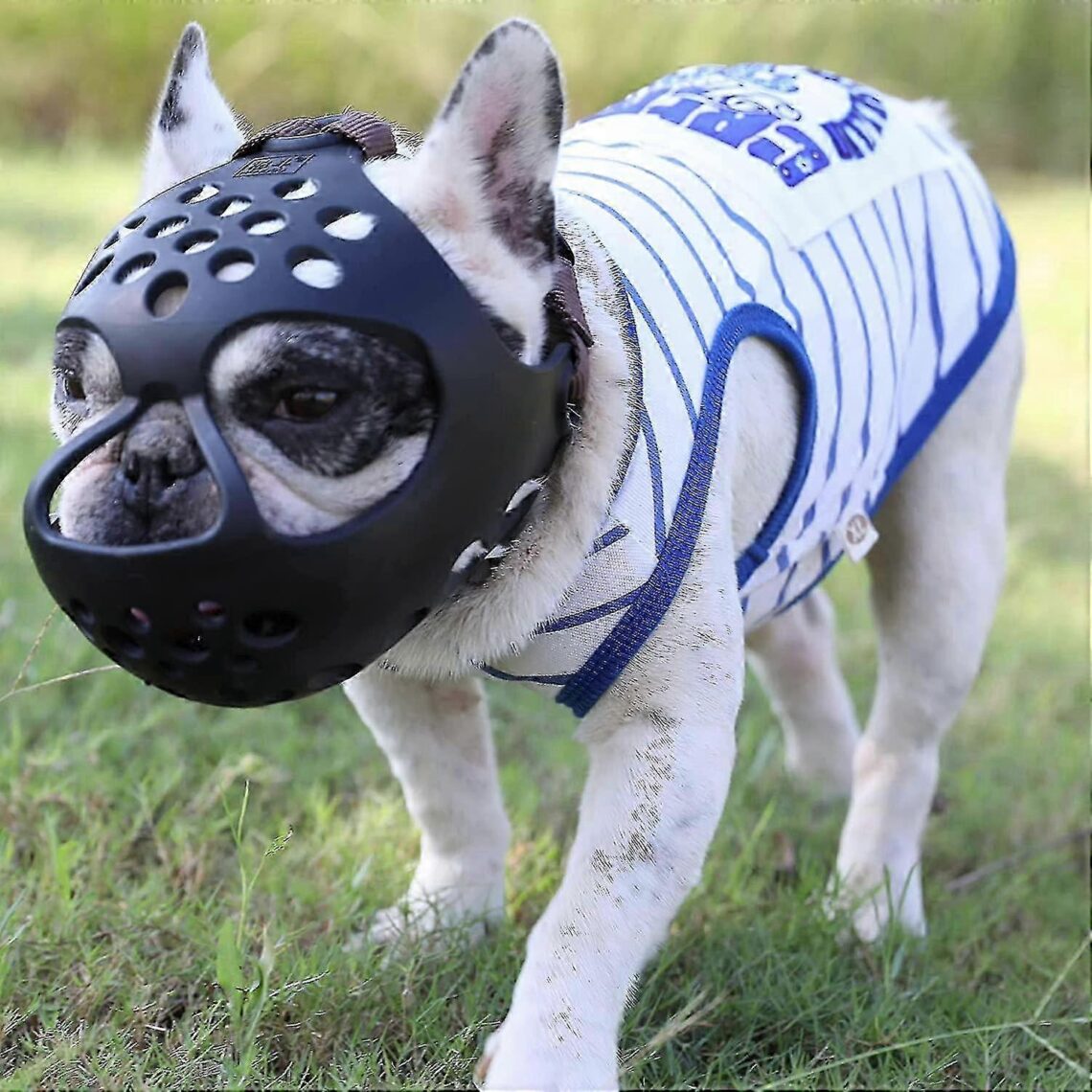
The Canine Friendly Short Snout Dog Muzzle is designed specifically for flat‑faced breeds and is often highlighted in “best short‑snout muzzle” round‑ups for Pugs and Bulldogs. Its curved, full‑face shape sits away from the nose, allowing good airflow and panting while still preventing bites or scavenging.
- Wide, curved face panel that avoids pressure on the nose and eyes for better comfort.
- Large mesh and ventilation areas so air can move freely, which is crucial for brachycephalic dogs.
- Adjustable straps that help you dial in a snug but not tight fit around different head shapes.
This style works well for Frenchies and Pugs that need a secure management muzzle on walks, in crowds, or for situations where scavenging or nipping is a concern.
2. JYHY Short Snout Dog Muzzle
The JYHY Short Snout Dog Muzzle is a popular mesh option for Pugs and other small flat‑faced breeds because it combines decent security with soft materials and good ventilation. Owners like that it keeps the eyes and nostrils clear rather than covering the entire face with solid fabric.
- Breathable mesh front with cut‑outs for eyes and nostrils to protect vision and breathing.
- Adjustable nylon straps that help keep the muzzle in place without digging into the skin.
- Enough room for panting, eating soft treats, and drinking small amounts, while still limiting biting and chewing.
This muzzle is well suited for Pug owners who need to limit chewing, light nipping, or street snacking but still want their dog to stay relatively comfortable on short walks.
3. TANDD Short Snout Dog Muzzle
The TANDD Short Snout Dog Muzzle is another widely recommended option in Pug‑specific guides thanks to its three‑hole design that protects the face without blocking the nose or eyes. It emphasizes comfort and freedom to pant over strict bark suppression, which is safer for brachycephalic dogs.
- Uses a combination of PVC structure with soft fabric and mesh for durability and skin comfort.
- Provides extra room around the mouth so the tongue can extend and the dog can pant easily.
- Effective at preventing biting and chewing, though it is not designed as a full bark‑control solution.
This choice makes sense for flat‑faced dogs that become mouthy during vet exams or grooming but still need maximum breathing space during those stressful moments.
4. Custom Biothane Brachycephalic Muzzles (BUMAS‑Style)
Custom biothane muzzles from specialist makers, often modeled after brands like BUMAS or Trust Your Dog, are a favorite among trainers and experienced owners of short‑snouted dogs. Because they are built to your dog’s exact measurements, they usually offer superior fit, comfort, and security compared with off‑the‑shelf designs.
- Biothane straps are durable, waterproof, and easy to clean, making them ideal for frequent use.
- Open, cage‑like construction leaves the nose and mouth free enough for panting, drinking, and taking treats through the muzzle.
- Custom sizing greatly reduces the chances of slipping, rubbing, or escaping, a common issue with generic muzzles on brachycephalic dogs.
These muzzles cost more and often have a longer lead time, but they are excellent for Frenchies or Pugs that need a muzzle regularly for training, public outings, or bite‑risk management.
5. Leather or Wire Basket Muzzles for French Bulldogs
Some specialist stores manufacture leather or wire basket muzzles shaped around the unique skull and muzzle structure of French Bulldogs. These are designed to sit away from the nose while providing good ventilation and bite prevention, making them suitable for more demanding environments.
- Full‑grain leather or welded wire baskets allow air to flow freely and enable open‑mouth panting.
- Felt or foam padding over key contact points helps prevent rubbing on the nose or face.
- Simple buckles or quick‑release closures make the muzzle easier to put on and take off securely.
These Frenchie‑specific baskets are a good fit for dogs that must not pick up food or trash in busy city environments or for those using public transport where muzzles are sometimes required.
6. Generic Mesh Short‑Snout Muzzles
Many manufacturers now offer generic “short‑snout” mesh muzzles aimed at Bulldogs, Pugs, Shih Tzus, and similar breeds, typically with several sizes based on head circumference. Quality can vary, but reputable models follow welfare guidelines and focus on ventilation and panting room.
- Soft mesh or nylon panels that wrap around the front of the face without covering the nostrils.
- Multiple size options, usually from extra small to extra large, based on face and neck measurements.
- Lightweight and affordable, making them a practical choice for owners who only need a muzzle occasionally.
These models can work well for short, supervised sessions such as vet visits, car rides, or brief walks, provided you measure carefully and monitor your dog closely for any breathing or comfort issues.
7. Welfare‑Focused Short‑Snout Brands (e.g., The Muzzle Movement)
Newer welfare‑focused companies like The Muzzle Movement create muzzles with input from behavior professionals and center their designs around comfort, welfare, and modern aesthetics. Their short‑snout models are tailored to brachycephalic head shapes and emphasize positive muzzle training.
- Designed by trainers and behaviorists who understand stress‑free muzzle use, fit, and conditioning.
- Open designs that allow panting, drinking, and treat‑feeding through the muzzle to support positive reinforcement.
- Often custom or semi‑custom sizing, with more options for hard‑to‑fit flat‑faced dogs.
These brands are ideal for owners who use a muzzle frequently and want a product that balances function, dog welfare, and a more stylish, friendly appearance in public.
Quick Summary: Best Short-Snout Muzzles
A side-by-side look at our top recommended picks for flat-faced breeds.
| Muzzle Brand / Style | Best For | Key Material | Standout Feature | Action |
|---|---|---|---|---|
| Editor’s Choice JYHY Short Snout Muzzle | Everyday Walk Safety & Vet Visits | Breathable Mesh & Nylon | Dual-eyehole cutouts provide maximum visibility and zero nostril pressure. | View on Amazon |
| Best Value Canine Friendly Muzzle | Anti-Scavenging & Light Nipping | Full-Face Mesh Panel | Curved face bumper design that stays entirely clear of delicate eyes. | Check Price |
| TANDD Short Snout | Grooming & Intense Stress Tasks | Eco-PVC & Soft Edge Mesh | Three-hole pattern gives extra broad tongue room for comfortable panting. | Check Price |
| Premium Pick Custom Biothane Style | Reactivity Training & Long Wear | Waterproof Biothane | Open cage architecture allows effortless treat-feeding and drinking. | Browse Styles |
*Pricing and availability are real-time via Amazon. As an affiliate, we earn from qualifying purchases.
How to Measure a Frenchie or Pug for a Muzzle
Fit is just as important as the brand when it comes to muzzle safety, and you should not rely only on generic breed size charts. Instead, take a few simple measurements with a soft tape or piece of string and a ruler.
- Head or neck circumference where the main strap will sit, usually just behind the ears.
- Face circumference around the widest part of the muzzle and cheek region, even though the snout is short.
- Distance from just below the eyes to under the chin to gauge depth and strap placement.
Once you have the measurements, compare them to the manufacturer’s size chart and choose the size where your dog’s numbers sit near the middle of the range, sizing up slightly if you are between sizes and can still adjust straps securely. Signs of a good fit include free panting, no straps digging into eyes or throat, and a muzzle that stays in place without sliding into the eyes or popping off.
How to Introduce a Muzzle So Your Dog Accepts It
Behaviorists and trainers strongly recommend gradual, reward‑based muzzle conditioning so that your dog sees the muzzle as a cue for good things, not a punishment. Rushing the process can create fear, resistance, and even worsen reactivity in sensitive dogs.
- Show the muzzle and reward: Present the muzzle briefly, then immediately give a high‑value treat and put the muzzle away; repeat until your dog shows happy anticipation when it appears.
- Encourage voluntary nose‑in: Hold a treat inside the muzzle so your dog chooses to put their nose in; do not fasten straps yet, just let them dip in and out and reward every try.
- Add very short strap time: Once relaxed about nose‑in, gently fasten the straps for one to two seconds, treat, and remove; build duration over several sessions rather than in a single day.
- Pair with fun activities: Have your dog wear the muzzle while doing enjoyable things like short walks or simple games, keeping early sessions brief and positive.
If your dog freezes, pants heavily despite cool conditions, or claws at the muzzle, you are likely going too fast and should step back to easier stages until they are comfortable again. With patient conditioning, many Frenchies and Pugs eagerly push their faces into the muzzle because it predicts treats and outings.
Safety Tips for Frenchies and Pugs in Muzzles
Because brachycephalic dogs overheat and struggle to breathe more easily than other breeds, safety rules around muzzle use are stricter for them. That includes paying close attention to weather, exertion level, and duration every time your dog wears a muzzle.
- Avoid strenuous exercise in hot or humid conditions while muzzled, and keep walks short and shaded when possible.
- Never leave your dog unattended while wearing a muzzle, even for a few minutes.
- Reserve tight, closed‑mouth nylon or gauze muzzles for very short, supervised procedures such as nail trims or specific vet treatments.
- Remove the muzzle and cool your dog immediately if breathing becomes noisy or labored, or if they show signs of distress.
With good socialization and training, many Frenchies rarely need muzzles for behavior reasons, but a well‑fitted, breathable muzzle can still be invaluable for scavenging control or safe handling in emergencies. Used thoughtfully, a muzzle becomes one part of a broader safety and training plan that helps short‑nosed dogs navigate the world more confidently.
Which Muzzle Is Best for Your Short‑Nosed Dog?
For many Frenchie and Pug owners, short‑snout designs like Canine Friendly, JYHY, or TANDD offer a practical mix of comfort, ventilation, and affordability for everyday walks and general management. If you rely on a muzzle frequently for training or safety, a custom biothane or welfare‑focused muzzle can provide superior long‑term fit and comfort, especially for hard‑to‑fit brachycephalic heads.
French Bulldog‑specific leather or wire basket muzzles from specialist shops are worth considering if you need robust scavenging control or must comply with transport rules that require muzzling in public spaces. Whatever you choose, combining a well‑fitted, breathable muzzle with positive training and careful supervision is the best way to keep your short‑nosed dog safe while protecting their breathing and comfort.