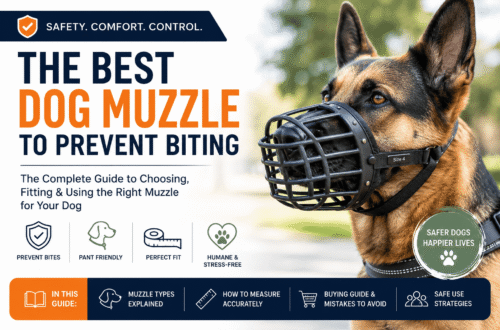
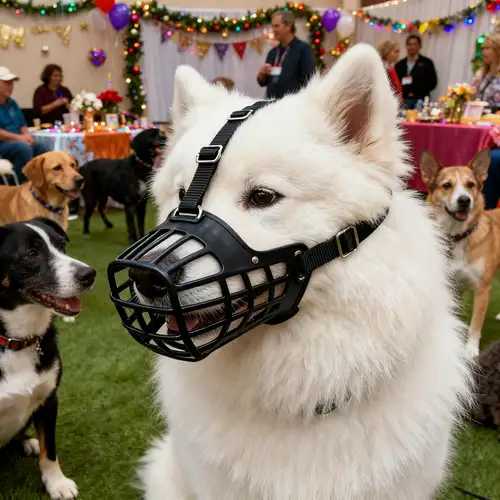
Veterinary and welfare organisations consistently prefer basket muzzles over tight nylon sleeves because a properly fitted basket allows a dog to open their mouth, pant, drink water, and accept treats while still preventing a bite.
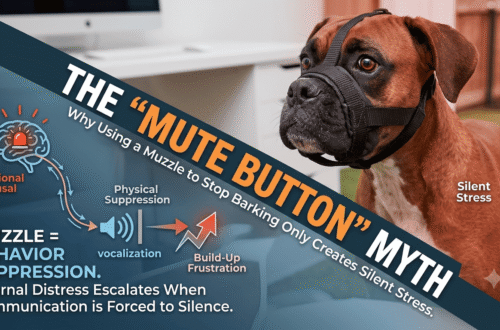
Soft fabric or nylon muzzles that hold the mouth closed are only recommended for very short, supervised procedures at the vet or groomer, not for walks or regular use, because they restrict panting and can cause overheating.
Basket muzzles are one of the few tools that work for both very small and very large dogs, because they can prevent bites or scavenging while still allowing panting, drinking, and treat‑taking when properly fitted. The main mistake people make is buying a tight fabric muzzle that holds the mouth shut or picking a “one size fits all” basket that doesn’t match their dog’s measurements, which veterinary guidance warns is unsafe for anything beyond a very short procedure.
Quick overview: basket muzzle types you’ll see on Amazon
The table below maps the main styles you’ll see in Amazon search results to the dog sizes they suit best and the kind of use they’re designed for.
| Product Style | Best Sizes | Material / Design | Best Use | Action |
|---|---|---|---|---|
| Baskerville Ultra‑type basket muzzle | Small to giant dogs | Flexible rubber basket with multiple straps | All‑rounder for walks, vet, grooming when bite prevention is needed | Shop Models |
| Mayerzon‑type rubber basket muzzle | Small to large dogs | Plastic/rubber basket, budget build | Starter basket for training and occasional safety | Shop Models |
| Barkless‑type plastic cage muzzle | Medium to large dogs | Rigid plastic cage with adjustable straps | Low‑cost bite and scavenging prevention | Shop Models |
| Leather basket for bully breeds | Medium–large blocky heads | Padded leather basket fitted to wide muzzles | Secure fit on Pitbull‑type and staffy‑type breeds | Shop Models |
| Wire basket muzzles | Medium to giant dogs | Metal basket with leather straps | Maximum airflow and durability for strong dogs | Shop Models |
| Clear vinyl basket (Jafco‑style) | Small to large dogs | Transparent basket, room to pant | Behaviour work and vet use where mouth visibility matters | Shop Models |
| Nylon sleeve multi‑packs | Tiny to large dogs | Fabric that holds mouth mostly shut | Very brief vet or grooming procedures only | Shop Models |
| Custom biothane basket muzzles | Tiny to giant (made to measure) | Biothane straps woven into a basket | Frequent use, unusual head shapes, perfect fit | Shop Models |
Why experts recommend basket muzzles over tight fabric muzzles
A health handout from a veterinary teaching hospital explains that a properly fitted basket muzzle allows your dog to pant, drink water, and accept treats while preventing bites or scavenging, making it a humane safety tool when used correctly. Large veterinary groups and hospital articles similarly note that basket muzzles are preferred for anything beyond short procedures, because nylon sleeves restrict panting and can cause overheating if left on too long.
The American Kennel Club also describes muzzle training as a life skill for all dogs, not just “aggressive” ones, and advises owners to choose non‑restrictive basket designs that allow panting and treat‑taking instead of muzzles that hold the mouth shut. Their step‑by‑step guide recommends introducing the muzzle slowly with treats so your dog sees it as something positive, not punishment.
Key Amazon basket muzzles that work for both small and large dogs
Baskerville‑type rubber basket muzzle – best all‑rounder
Independent gear guides and trainers repeatedly pick Baskerville‑style rubber basket muzzles as a best overall choice because they balance strength, comfort, and availability of sizes from small up to giant breeds. These muzzles are made from thermoplastic rubber with several straps and often an optional overhead strap, so they stay secure even on active large dogs while allowing panting, drinking, and treat delivery.
Because they come in multiple sizes and can sometimes be slightly heat‑shaped for a better fit, they’re a strong first choice if you want one product line that can work for both a small companion and a big power breed in your household.
Wire basket muzzles – premium airflow for strong large dogs
Wire basket muzzles are still the gold standard for very strong or working dogs because the metal frame is difficult to deform and the open design maximises airflow. Reviews of wire basket muzzles for German Shepherds and similar breeds highlight that good models have padded nose bands and multiple adjustable leather straps, allowing dogs to pant wide, drink, and even take treats while preventing them from eating rubbish or biting.
This style is ideal for large, powerful dogs that have already broken or slipped out of lighter plastic muzzles, but they are generally too heavy for tiny dogs, which are better served by lighter rubber baskets.
Budget plastic and mesh baskets – light options for smaller dogs
Budget basket muzzles like Mayerzon and Barkless use moulded plastic or rubber cages with adjustable straps and are widely available on Amazon in several sizes. Comparison sites point out that they are lighter than wire, which can help them stay in place on smaller heads, and that many designs advertise enough room for dogs to pant and drink when properly sized.
These are good starting points for small and medium dogs who don’t have extremely strong jaws, but you should double‑check photos and reviews to confirm that the basket actually sits clear of the nose and doesn’t clamp the jaw shut once fitted.
Custom biothane basket muzzles – solving tricky fits at both extremes
High‑end custom brands and their look‑alikes on Amazon offer biothane basket muzzles built to your measurements, which reviewers describe as lightweight, durable, and easy to clean. Because the basket is assembled from straps, the maker can tailor it for very short noses, very long muzzles, or extremely broad heads, making this style excellent for toy breeds and giant breeds that never seem to fit standard sizes.
These cost more than off‑the‑shelf products but are worth considering if your dog needs to wear a muzzle frequently for behaviour work, chronic scavenging, or ongoing veterinary handling.
How to choose the right basket muzzle on Amazon for your dog
Measure first, shop second
Muzzle training guides from vets and welfare groups all emphasise measuring your dog’s snout before ordering online. They recommend measuring from the tip of the nose to the stop (where the forehead starts) for length, and around the widest part of the snout for circumference, then choosing a muzzle slightly larger than this circumference so there is room to pant.
Check panting, drinking, and treat‑taking
Veterinary resources define a safe muzzle as one that allows the dog to open their mouth, pant freely, drink water, and accept treats while still preventing a bite. When reading Amazon descriptions, look for these features explicitly mentioned, and confirm through customer photos that dogs are shown with their mouths open inside the muzzle rather than clamped shut.
Match material to your dog’s size and strength
Guides from welfare organisations advise choosing bite‑proof materials (often metal) when there is a real risk of serious biting, especially with large dogs, while lighter plastic or rubber baskets are usually fine for smaller dogs or milder use cases. If your dog is small and sensitive, a heavy wire muzzle may be overkill; if your dog is large and powerful, a thin plastic muzzle might not be secure enough.
How to introduce a basket muzzle so your dog accepts it
The American Kennel Club and veterinary hospitals recommend a gradual, treat‑based introduction so your dog learns that putting their nose in the muzzle predicts rewards, not punishment. Their step‑by‑step advice is to let the dog sniff the muzzle, then earn treats for putting their nose in, then slowly build up to fastening the straps and wearing it for longer periods, always keeping sessions short and positive.
Veterinary basket muzzle training guides specifically suggest starting by placing high‑value treats inside the muzzle so the dog chooses to push their nose in, repeating until they are eager to do so, and only then adding the strap behind the head and adjusting it so one or two fingers fit under the strap. This kind of conditioning is important for both tiny and giant dogs, because a fearful or struggling dog is harder to handle safely in any size.
If you want more detail straight from a veterinary behaviour source, you can read Cornell’s full basket muzzle training article here: Cornell: Basket muzzle training.
For another perspective, the American Kennel Club has a practical guide on when and how to correctly use muzzles, including fit tips and step‑by‑step training: AKC: Dog muzzles – when, why, and how.