Selecting the right muzzle should always prioritise your dog’s safety, comfort, and welfare — never punishment or appearance. In the UK, muzzles are commonly used for public safety, training, scavenging prevention, and veterinary visits. Because different breeds have different head shapes and needs, an ill-fitting muzzle can quickly cause discomfort or become unsafe.
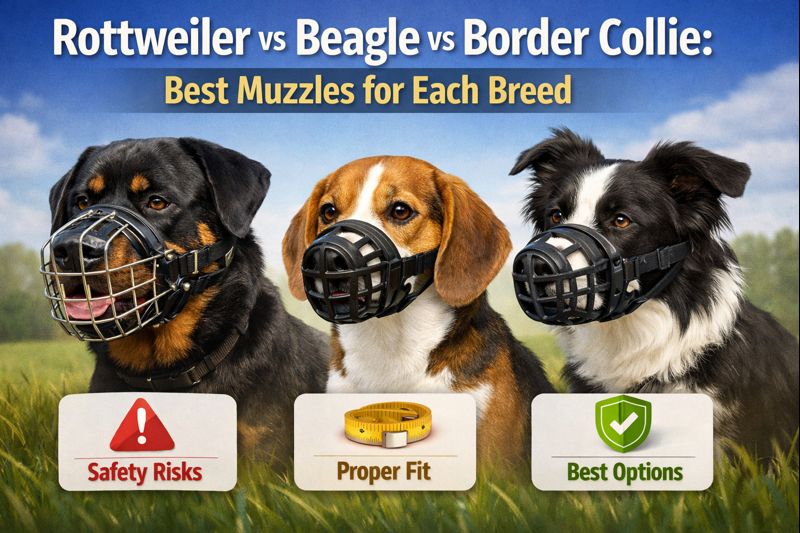
This guide focuses on three popular UK breeds, each with distinct requirements:
- Rottweiler – powerful, strong-jawed, broad head
- Beagle – medium snout, food-driven scavenger
- Border Collie – narrow head, highly active and intelligent
By the end of this article, you will understand:
- Why safety matters more than strength
- What makes a muzzle safe according to UK veterinary guidance
- Which muzzle type works best for each breed
- How to measure your dog correctly
- How to choose the right size and style when buying from Amazon UK
Why the Safest Muzzle Matters More Than the Strongest
Many owners look for a muzzle that appears strong or secure, especially for large breeds like Rottweilers. However, UK veterinarians and animal welfare organisations consistently stress that muzzles must never restrict breathing or panting.
Dogs regulate their body temperature primarily by panting. If a muzzle restricts mouth opening or airflow, the risk of overheating increases quickly — even during short walks or mild weather.
Common problems caused by unsafe or poorly fitted muzzles include:
- Heat stress and restricted airflow
- Pressure injuries on the bridge of the nose
- Rubbing, sores, and hair loss
- Muzzles twisting or slipping while the dog moves
These risks are higher when:
- Fabric or nylon muzzles are used for walks
- The muzzle is too shallow for the dog’s snout
- The size is chosen by breed name alone, without measuring
Key takeaway: Strength matters only after proper fit, airflow, and comfort are guaranteed.
What Makes a Muzzle Safe?
A safe muzzle should always:
- Allow full panting and yawning
- Avoid pressure on the top of the nose
- Stay secure without twisting or sliding
- Match the dog’s jaw strength
- Allow drinking if worn for longer periods
For this reason, properly sized basket muzzles are usually recommended by veterinarians for walking and public use.
Soft or fabric muzzles are suitable only for limited situations and are not intended for exercise or prolonged wear.
Breed Profiles — Head Shape, Risks & Fit Priorities
Rottweiler — Broad Head, Very Strong Jaw
Rottweilers are powerful, confident dogs with wide heads and extremely strong jaws. In the UK, they are often muzzled in public settings due to their size and strength, even when well trained.
Main safety risks:- Weak or thin muzzles bending under jaw pressure
- Fabric muzzles collapsing or restricting breathing
- Poor strap systems allowing the muzzle to slip
- Reinforced basket or heavy-duty basket muzzle
- Strong, secure strap system
- Enough depth to allow panting
- Padding to prevent pressure points
Beagle — Medium Snout, Strong Scavenging Instincts
Beagles are intelligent dogs with an exceptional sense of smell. In the UK, muzzles are often used to prevent scavenging, eating rubbish, or picking up dangerous items outdoors.
Main safety risks:- Anti-scavenging muzzles that block airflow
- Fabric muzzles used during walks
- Muzzles that prevent sniffing and panting
- Deep basket design
- Lightweight structure
- Allows panting and sniffing
- Prevents eating without blocking breathing
Border Collie — Narrow Head, High Energy
Border Collies are extremely active, intelligent dogs with relatively narrow heads. Poorly fitted muzzles often slip, twist, or rub during movement.
Main safety risks:- Muzzles slipping during running
- Straps shifting under movement
- Heavy muzzles causing discomfort
- Lightweight basket muzzle
- Narrow fit with adjustable straps
- Stable design for active movement
Muzzle Safety Comparison by Breed (UK Guide)
| Breed | Head & Jaw Type | Main Risk With Wrong Muzzle | Safest Muzzle Type | Key Fit Priority | Recommended Amazon UK Option |
|---|---|---|---|---|---|
| Rottweiler | Broad head, very strong jaw | Weak muzzles bending or fabric muzzles collapsing | Reinforced basket muzzle | Strength + deep panting space |
STRONG JAW
BEST OVERALL Baskerville Ultra (Large / Reinforced) View on Amazon UK |
| Beagle | Medium snout, strong scavenging instinct | Anti-scavenge muzzles blocking airflow | Lightweight basket muzzle | Airflow + scavenging control |
ANTI-SCAVENGING Baskerville Ultra (Medium Sizes) View on Amazon UK |
| Border Collie | Narrow head, very high activity | Muzzle slipping or twisting during movement | Lightweight basket muzzle | Secure fit + stability |
ACTIVE FIT Baskerville Ultra (Adjustable Fit) View on Amazon UK |
Muzzle Types Explained — Quick Pros & Cons
Basket Muzzles
Basket muzzles made from thermoplastic or wire allow dogs to breathe, pant, yawn, and drink. When properly fitted, they are the safest option for walks, training, and public use.
Reinforced Basket Muzzles
Designed for strong-jawed breeds. They are heavier than standard baskets but far safer than fabric muzzles for powerful dogs such as Rottweilers.
Soft or Fabric Muzzles
These restrict panting and airflow and should only be used briefly under close supervision, such as during a short veterinary examination.
Safest Muzzle by Breed (Amazon UK)
Beagle
Safest type: Lightweight basket muzzle (anti-scavenging)
Border Collie
Safest type: Lightweight basket muzzle with adjustable straps
How to Measure Your Dog Correctly
Snout Length
Measure from the nose tip to the stop (where the snout meets the forehead).
Snout Circumference
Measure the widest part of the snout with the mouth slightly open.
Neck Circumference
Measure just behind the ears where the muzzle strap will sit.
Panting Depth
Ensure the muzzle allows enough depth for full panting and yawning.
Between Sizes?
If your dog is between sizes, choose the larger basket muzzle for safety.
Common Fitting Mistakes to Avoid
- Choosing a muzzle by breed name alone without measuring
- Using fabric muzzles for walks or outdoor exercise
- Picking a muzzle that looks “snug” rather than allowing space
- Forgetting to allow enough room for panting
- Not checking for rubbing after the first use
Final Verdict
- Rottweiler: Reinforced basket muzzle
- Beagle: Lightweight basket muzzle for anti-scavenging
- Border Collie: Lightweight basket muzzle with secure straps
In all cases, a properly sized basket-style muzzle is the safest and most humane choice.
FAQ
Can my dog pant while wearing a muzzle?
Yes. A correctly fitted basket muzzle allows full panting and drinking. Fabric muzzles do not and should only be used briefly under supervision.
How long can a dog wear a muzzle?
Fabric muzzles should only be used for very short periods. Basket muzzles can be worn for longer durations under supervision, but you should always monitor comfort, airflow, and signs of stress.
Affiliate disclosure: As an Amazon Associate, I earn from qualifying purchases.