Choosing the right muzzle for your dog is about keeping them safe, comfortable, and able to breathe easily — not about controlling them or how they look. This is especially true for popular UK breeds like Greyhounds, Bullmastiffs, and Cocker Spaniels, because each has a different head shape, jaw strength, and set of needs.
Many owners pick the wrong muzzle at first. Sometimes it is too tight. Sometimes a soft fabric muzzle seems kind but actually makes it hard for the dog to pant. These mistakes can make your dog uncomfortable, cause rubbing or breathing problems, and mean you have to return the muzzle.
This simple UK guide covers:
- What makes a muzzle safe
- How Greyhounds, Bullmastiffs, and Cocker Spaniels differ
- Which muzzle types are best for each breed
- How to measure your dog
- How to buy the right muzzle on Amazon UK
All advice follows trusted UK veterinary and dog welfare standards.
Why the Safest Muzzle Matters More Than the Strongest
When looking for a muzzle, many owners worry most about strength — especially for big or strong dogs. But UK vets say the most important thing is that your dog can always breathe and pant freely.
Dogs cool down by panting. If a muzzle stops your dog from opening its mouth or makes it hard to get enough air, your dog can quickly overheat — even on a gentle walk or a cool day.
If a muzzle is the wrong type or fit, it can cause:
- Trouble breathing or overheating
- Pressure on the nose
- Rubbing, sores, or hair loss
- The muzzle twists or slips when your dog moves
These problems are more likely if:
- A long-nosed dog has a muzzle that is too shallow
- A strong dog wears a weak or fabric muzzle
- A sensitive-skinned dog has badly padded straps
Strength only matters after you know the muzzle is safe and comfortable.
What Makes a Muzzle Safe? (Vet-Aligned Criteria)
UK vets and dog welfare groups agree: a safe muzzle should always do the following:
- Let your dog pant and yawn fully
- Avoid pressing on the nose
- Stay secure and do not twist or slip
- Suit your dog’s jaw strength
- Be right for how long it is used
Key rule:
A muzzle should stop biting, but never make breathing or panting difficult.
That is why tight fabric or nylon muzzles are only safe for very short, closely supervised moments — like a quick vet visit.
Breed Head Shape and Muzzle Safety
Greyhound – Very Long, Narrow Nose
Greyhounds are one of the most commonly muzzled UK breeds, especially ex-racers. Their nose is very long and slim, and their jaw is lighter than you might expect for their size.
Main safety risk:
A shallow muzzle does not give enough space or airflow.
Many Greyhounds are given “medium” muzzles that sit too close to the nose. This makes panting difficult and comfort poor. Standard muzzles often pinch or block airflow due to the long, slender snout.
What to look for in a safe Greyhound muzzle:
- Deep basket design
- Lightweight construction
- Plenty of space for panting
- No pressure on the nose bridge
Greyhounds do best with deep, breathable basket muzzles made for long noses.
Bullmastiff – Short, Wide Nose, Very Strong Jaw
Bullmastiffs are big, powerful dogs with a short, wide nose and a very strong jaw. Because of their strength, their safety needs are different from those of breeds like Greyhounds.
Main safety risk:
Weak muzzles can bend, break, or slip when a Bullmastiff pulls or pushes.
Soft muzzles or flimsy baskets are not safe for Bullmastiffs on walks. But if a muzzle is too tight, it can make breathing difficult — especially in warm weather.
What to look for in a safe Bullmastiff muzzle:
- Reinforced basket design
- Strong, secure neck straps
- Enough depth for panting
- Padding to avoid pressure points
The best choice for Bullmastiffs is a reinforced basket muzzle. It should be strong and secure, while still allowing good airflow.
Cocker Spaniel – Medium Nose, Sensitive Skin
Cocker Spaniels are a favourite family dog in the UK. They have a medium-length nose, long ears, and soft, sensitive skin on their face.
Main safety risk:
Straps that rub, twist, or cause discomfort.
Their ear placement and soft coat mean some muzzles rub under the eyes or move around as the dog walks. Heavy muzzles are not needed for Cocker Spaniels.
What to look for in a safe Cocker Spaniel muzzle:
- Lightweight basket design
- Adjustable straps
- Smooth edges and soft padding
- Fits firmly but does not touch the ears
For most Cocker Spaniels, comfort and a good fit matter more than strength.
Muzzle Types Made Simple (Safety Guide)
Basket Muzzles — Safest Choice
Basket muzzles are the safest choice when fitted properly.
Why vets recommend them:
- Dogs can pant and yawn fully
- Excellent airflow
- Dogs can drink water
- Safe for longer, supervised wear
Most problems with basket muzzles happen because of poor sizing — not the design itself.
Reinforced Basket Muzzles
Reinforced baskets are designed for strong or large dogs.
Best for:
- Bullmastiffs
- Other powerful breeds
They are heavier than standard baskets but far safer than fabric muzzles for strong jaws.
Soft or Fabric Muzzles
Soft muzzles are often misunderstood.
Limitations:
- Restrict panting
- Reduce airflow
- Unsafe for walks or warm weather
They should only be used for very short, supervised situations, such as a brief veterinary procedure.
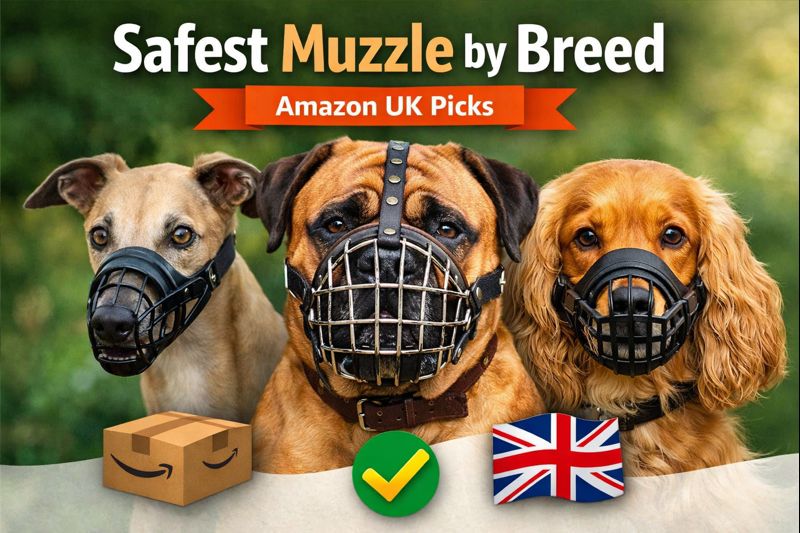
Safest Muzzle by Breed (Amazon UK Picks)
Safest Muzzle for Greyhound
Recommended: Deep, lightweight basket muzzle
Why: Lets your Greyhound pant fully and fits their long, narrow nose.
Safest Muzzle for Bullmastiff
Recommended: Reinforced basket muzzle
Why: Strong for their powerful jaw, but still safe for breathing.
Safest Muzzle for Cocker Spaniel
Recommended: Lightweight, adjustable basket muzzle
Why: Comfortable, breathable, and gentle on sensitive skin.
How to Measure Your Dog Correctly
Correct measurement is the key to muzzle safety.
Step by step:
- Snout length: Measure from the tip of the nose to where the snout meets the forehead (the stop).
- Snout circumference: Measure around the widest part of the snout, with the mouth slightly open.
- Neck circumference: Measure just behind the ears, where the muzzle strap will sit.
- Depth check: Ensure the muzzle provides enough space for your dog to open its mouth and pant.
If your dog is between sizes, it is usually safest to choose the larger size for basket muzzles.
Check current muzzle sizes & prices on Amazon UK
Common Muzzle Fitting Mistakes
- Choosing by breed name only
- Using fabric muzzles for walks
- Picking muzzles that look “snug.”
- Forgetting panting space
- Not checking for rubbing afterthe first use
Always check the fit after the first 10–15 minutes your dog wears the muzzle.
When a Muzzle Is Not Safe
Never use a muzzle in these situations:
- During intense exercise
- In hot weather without airflow
- For long periods without supervision
- If your dog cannot pant freely
If you are unsure, remove the muzzle and check the fit and your dog’s comfort.
Final Verdict: What’s the Safest Muzzle?
Based on UK vet advice and each breed’s needs:
- Greyhound: Deep, lightweight basket muzzle
- Bullmastiff: Reinforced basket muzzle
- Cocker Spaniel: Lightweight, adjustable basket muzzle
In all three cases, the safest choice is a properly sized basket muzzle.
Check current prices and sizes on Amazon UK
Affiliate disclosure: As an Amazon Associate, I earn from qualifying purchases.