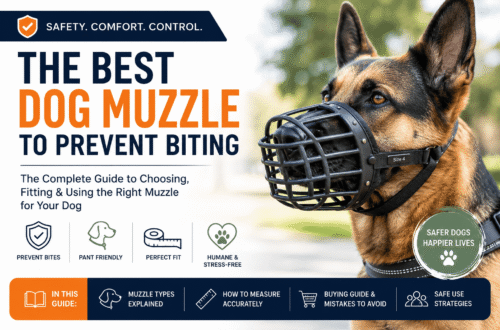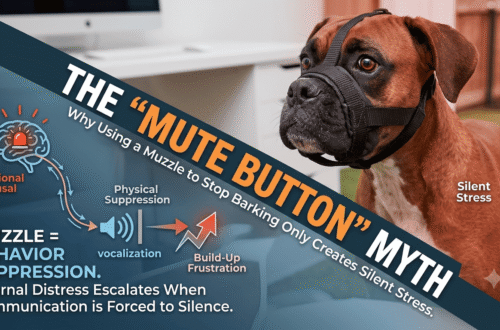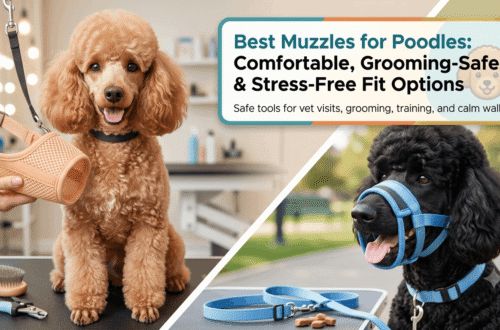
The safest muzzle for your dog is one that allows easy breathing, full panting, and real comfort. It’s not about how strong, tight, or stylish a muzzle looks — those factors matter far less than your dog’s ability to breathe and regulate body temperature.
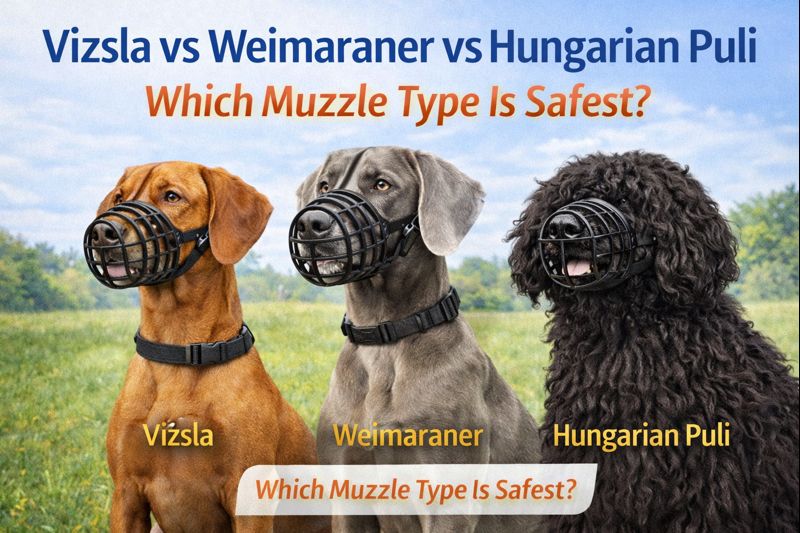
This is especially important for active and athletic breeds like the Vizsla, Weimaraner, and Hungarian Puli. In the UK, these dogs are often fitted with the wrong type of muzzle, which can lead to discomfort, overheating, or unsafe use.
In this easy-to-follow guide, you’ll learn:
- What actually makes a muzzle safe, not just strong
- Why your dog’s head shape and energy level matter
- Which muzzle styles work best for different breeds
- How to measure your dog correctly so the fit is right the first time
- Vet-aligned Amazon UK muzzle recommendations
This article is based on guidance from UK veterinarians and animal-welfare principles. It focuses on your dog’s safety, comfort, and well-being — not just restraint or control.
Why the Safest Muzzle Is More Important Than the Strongest
Many dog owners look for the strongest muzzle, especially for powerful or energetic dogs. But vets consistently stress that a muzzle must never interfere with breathing or panting.
Dogs cool their bodies mainly by panting. If a muzzle blocks airflow or stops the mouth from opening naturally, the dog can overheat very fast — even in cool weather. This can quickly become dangerous.
Muzzles that are poorly designed or wrongly fitted often cause:
- Restricted airflow and heat stress
- Painful pressure on the nose
- Rubbing, hair loss, or skin irritation
- Slipping or twisting when the dog moves
These risks are higher in active breeds like Vizslas and Weimaraners, and in thick-coated breeds such as the Hungarian Puli, where straps can shift under dense fur.
Strength still matters — but only after safety is assured.
The right muzzle should allow full panting, free breathing, and a secure, comfortable fit. A safe muzzle protects everyone without putting your dog at risk.
What Makes a Muzzle Safe? (Vet-Aligned Criteria)
Veterinary and animal-welfare guidance agrees on one core principle:
A muzzle must protect others without compromising the dog’s health or comfort.
A truly safe muzzle should meet all of the following criteria:
- ✅ Allows full panting and yawning
Dogs must be able to open their mouths naturally to cool themselves and reduce stress. - ✅ Does not press on the bridge of the nose
Pressure on the nose can cause pain, sores, and long-term injury. - ✅ Stays secure without twisting or slipping
A safe muzzle remains stable during walking, running, and normal movement. - ✅ Matches the dog’s jaw strength and size
The muzzle must be strong enough for the individual dog without being restrictive. - ✅ Is appropriate for how long it’s worn
Some muzzles are only suitable for very short use, while others are designed for longer periods.
Key rule:
A muzzle should prevent biting without interfering with normal breathing, panting, or comfort.
Because of this, most tight fabric or nylon muzzles are not suitable for anything beyond very short, fully supervised situations, such as brief vet handling. They should never be used for walks, exercise, or extended wear.
Breed Head Shape & Muzzle Safety
Vizsla – Active, Lean, and Heat-Sensitive
Vizslas are highly athletic sporting dogs with a medium-long, narrow snout and very high energy levels. They heat up quickly during exercise and depend heavily on panting to regulate body temperature.
Main safety risk:
Restricted panting while the dog is moving.
Because of their head shape and activity level, Vizsla owners often struggle with muzzles that are:
- Too tight, limiting jaw movement
- Too shallow, preventing full panting
- Too heavy, causing discomfort and reduced airflow
Any of these issues can increase the risk of overheating, even on moderate walks.
Vet-Aligned Safety Priorities for Vizslas
A safe muzzle for a Vizsla should prioritise:
- ✅ Lightweight basket design
- ✅ Excellent airflow from all angles
- ✅ Secure fit without excess bulk or pressure
Vizslas perform best in breathable basket muzzles that allow the jaw to open freely while staying stable during walking, running, and normal activity. Strength is important — but airflow, fit, and weight are what keep this breed safe and comfortable.
Breed Head Shape & Muzzle Safety
Weimaraner – Long Snout and Strong Jaw
Weimaraners are large, muscular dogs with long snouts and powerful jaws. While they share a similar head shape to Vizslas, their greater strength adds extra safety requirements when choosing a muzzle.
Main safety risk:
Weak or shallow muzzles failing under pressure.
Soft fabric muzzles or lightly structured designs are unsafe for Weimaraners, especially on walks. These can bend, collapse, or shift out of position, which may restrict breathing or allow the dog to break free.
Vet-Aligned Safety Priorities for Weimaraners
A safe muzzle for a Weimaraner should include:
- ✅ Reinforced basket structure to withstand jaw strength
- ✅ Deep muzzle cup to allow full panting and jaw opening
- ✅ Multiple adjustable straps for stability and even pressure
A properly sized, reinforced basket muzzle offers the best balance of strength and airflow. It prevents biting without compromising breathing, making it the safest and most reliable option for this powerful breed.
Breed Head Shape & Muzzle Safety
Hungarian Puli – Narrow Snout with Heavy Coat
The Hungarian Puli presents a unique fitting challenge. While the snout itself is fairly narrow, the breed’s dense, corded coat can interfere with muzzle straps, making stability harder to achieve.
Main safety risk:
Straps slipping, twisting, or rubbing beneath the coat.
Because of the thick cords around the head and neck, muzzles that lack adjustability often shift during movement. This can lead to discomfort, poor airflow alignment, and an unsafe fit.
Vet-Aligned Safety Priorities for Hungarian Pulis
A safe muzzle for a Puli should focus on fit and comfort:
- ✅ Highly adjustable basket muzzle to accommodate coat thickness
- ✅ Padded contact points to prevent rubbing and pressure sores
- ✅ Secure neck strap positioned correctly behind the ears for stability
For Hungarian Pulis, comfort and adjustability matter as much as safety. A well-fitted, adjustable basket muzzle reduces movement, protects the skin under the coat, and keeps the muzzle secure without restricting breathing or panting.
Muzzle Types Made Simple (Safety Guide)
Basket Muzzles — Safest and Most Recommended
Basket muzzles are widely considered the safest option for most dogs when fitted correctly.
- ✅ Allow full panting and yawning
- ✅ Let dogs drink water
- ✅ Provide maximum airflow
- ✅ Suitable for longer, supervised wear
Because they do not restrict breathing, basket muzzles are the vet-preferred choice for walks, training, and everyday management.
Reinforced Basket Muzzles
These are designed for large, strong, or powerful breeds.
- ✅ Stronger and more durable construction
- ✅ Better resistance to jaw pressure
- ✅ More secure for active or muscular dogs
To remain safe, reinforced basket muzzles must be properly sized and padded, with enough depth to allow full panting.
Soft or Fabric Muzzles — Limited Use Only
Soft, nylon, or fabric muzzles are not designed for regular use.
- ⚠️ Only safe for very short, fully supervised situations
- ⚠️ Restrict panting and airflow
- ❌ Not suitable for walks, exercise, or warm weather
These muzzles may be used briefly for tasks like vet handling, but they should never replace a basket muzzle for normal use.
Simple rule:
If a dog cannot pant freely, the muzzle is not safe, no matter how strong it looks.
🐶 Safest Muzzle for Vizsla
Recommended type: Lightweight basket muzzle
This style is light, airy, and lets panting and drinking — good for high-energy, heat-sensitive breeds like Vizslas.
🦴 Safest Muzzle for Weimaraner
Recommended type: Reinforced basket muzzle
Browse classic / reinforced basket muzzles on Amazon UKLook for stronger basket designs (thicker TPR or reinforced material) that resist jaw pressure and stay secure on walks. Popular options like the Baskerville Classic/Ultra let dogs pant and drink.
🐩 Safest Muzzle for Hungarian Puli
Recommended type: Adjustable basket muzzle
Choose muzzles with lots of adjustability and padded straps so the fit stays stable beneath a heavy, corded coat.
🐾 Quick Tip for All Breeds
- Always check sizing charts carefully — muzzle fit is more important than brand.
- Try to pick basket styles that allow full panting, yawning, and drinking (a key vet safety rule).
- For large dogs with powerful jaws, reinforced baskets with padding and multiple straps are usually best.
If you’d like, I can provide a shortlist of specific Amazon UK products for each breed above, including pros, cons, and size tips for each. Just let me know!
📏 How to Measure Your Dog Correctly
1. Snout Length
Measure from:
👉 The tip of the nose
to
👉 The “stop” (where the forehead meets the muzzle)
➡️ This tells you how long the muzzle cup needs to be.
2. Snout Circumference
Measure around the widest part of the muzzle while the dog’s mouth is:
👉 Slightly open (as if panting)
➡️ This ensures the muzzle is roomy enough for panting and yawning without being too loose.
3. Neck
Measure:
👉 Around the neck behind the ears
➡️ This helps pick muzzle straps that sit comfortably and won’t twist under a heavy coat.
4. Depth for Panting Space
Check that the muzzle:
👉 Has enough vertical room
for the dog to open its mouth and pant freely
➡️ Essential for heat regulation and comfort.
🛍️ Matching Your Measurements on Amazon UK
Once you have your dog’s measurements:
- Open the product page on Amazon UK
- Find the brand’s sizing chart
- Compare your dog’s length + circumference + neck size
- Pick the size where all measurements fit comfortably within the range
✔️ A well-fitted muzzle lets your dog pant, drink, and move comfortably — that’s the core of muzzle safety.
🐾 Tip
If your dog’s measurements are between sizes, go up a size — as long as the muzzle still stays secure and doesn’t shift. A muzzle that’s too tight can restrict breathing, but one that’s slightly roomier yet secure lets panting happen naturally.
Match your measurements on Amazon UKWhen a Muzzle Is NOT Safe
A muzzle should never be used in situations where it could put a dog’s health at risk. It is not safe to use a muzzle:
- ❌ During intense exercise
Running, long play sessions, or high-energy training increase body heat and require full panting. - ❌ In hot weather without proper airflow
Warm temperatures plus restricted airflow can lead to rapid overheating. - ❌ If panting is restricted
If the dog cannot open its mouth comfortably, the muzzle is unsafe — regardless of type or strength. - ❌ When the dog is left unattended
Muzzles should always be used under supervision so fit, comfort, and breathing can be monitored.
Bottom line:
If a muzzle limits breathing, panting, or temperature control, it should not be used. Safety always comes before strength or control.
🏁 Final Verdict
For Vizslas, Weimaraners, and Hungarian Pulis, the safest muzzle choice — when fitted correctly — is a basket-style muzzle that allows breathing, panting, and drinking while preventing biting.
Breed-Aligned Recommendations
Before buying, make sure you:
✅ Measure your dog’s snout length, circumference, and neck
✅ Match those measurements to the sizing chart
✅ Ensure the muzzle allows full panting and jaw movement
Affiliate disclosure: As an Amazon Associate, I earn from qualifying purchases.