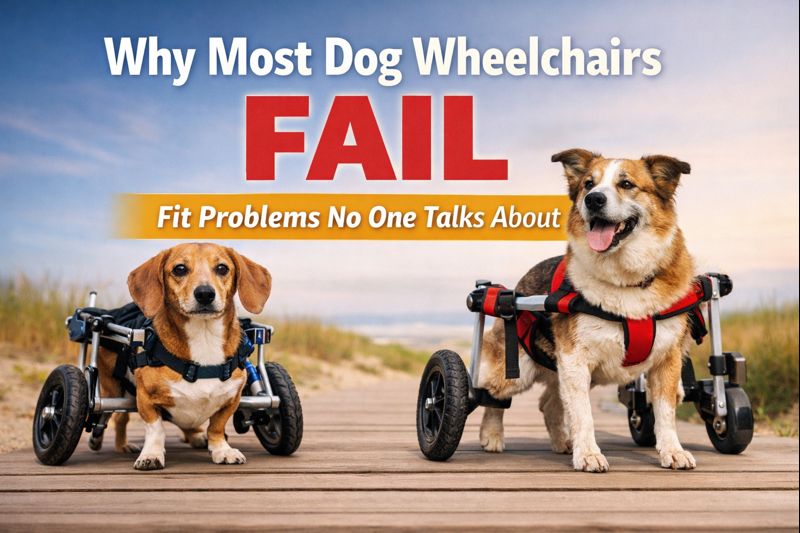
When dog owners say, “The wheelchair didn’t work for my dog,” it often feels discouraging. Many people feel sad or frustrated, especially when they just want to help their dog move and feel better.
But here’s what most vets and dog rehab experts agree on:
Most wheelchairs don’t fail because they’re made poorly. They fail because they don’t fit the dog properly.
In fact, most dog wheelchairs that are given up on could have worked if they had been sized, adjusted, and set up correctly.
This guide will show you the main fit problems nobody warns you about, how to avoid these mistakes, and how to pick the right mobility tools for your dog—whether they’re healing from an injury, have arthritis, or can’t use their legs.
Why the Fit of a Dog Wheelchair Matters Most
A dog wheelchair isn’t just an accessory or a piece of clothing. It’s a medical device that helps your dog move and live better.
If the wheelchair doesn’t fit right, it can:
- Put pressure on the wrong spots
- Pull on the spine or shoulders
- Cause sores or pain
- Make your dog anxious or unwilling to move
But if the wheelchair fits properly, it can:
- Help your dog be independent
- Boost their mood
- Lessen pain
- Support recovery
- Improve their quality of life
It all comes down to getting the fit and adjustments right.
The #1 Mistake: Treating Dog Wheelchairs Like Coats or Harnesses
Many people think choosing a dog wheelchair is like picking out a coat or harness:
“My dog wears a large, so I bought a large wheelchair.”
That’s where things go wrong.
Dog wheelchairs need exact measurements, such as:
- Chest width
- Shoulder height
- Spine length
- Hip height
- How the dog’s weight is balanced
Even being off by 1–2 cm can put pressure in the wrong spot and make moving painful or unsafe.
Hidden Fit Problem #1: Incorrect Weight Distribution
What goes wrong
A poorly fitted wheelchair can:
- Put too much weight on the front legs
- Lift the dog too much, not allowing natural movement
What this causes
- Tired or strained shoulders
- Sore front legs
- Dogs refusing to move after just a few minutes
- Dogs lying down instead of walking
Vet insight:
A wheelchair should help your dog move, not do all the work—unless your dog cannot move their legs at all.
Hidden Fit Problem #2: Chest & Shoulder Misalignment
This problem is common, but people rarely talk about it.
Common mistakes
- Chest rings too tight – makes it hard for the dog to breathe
- Chest rings too loose – the frame slides to the side
- Shoulders touching the frame – causes rubbing, sores, and stress
Dogs most at risk
- German Shepherds
- Labradors
- Boxers
- Greyhounds
- Other deep-chested large breeds
If the chest support is off, even the best wheelchair won’t work for your dog.
Hidden Fit Problem #3: Frame Length Is Almost Always Wrong
Most fixed-frame wheelchairs are made for “average” spine lengths for each dog size. But every dog is different.
What goes wrong
- Frame too short – hips are pushed back
- Frame too long – back legs are dragged awkwardly
This can make dogs:
- Walk stiffly
- Hop like a bunny
- Freeze or refuse to move
Having an adjustable frame length is essential, especially for dogs that are healing or changing shape during recovery.
Hidden Fit Problem #4: Height & Ground Clearance Errors
Common mistakes
- Wheels set too high – your dog’s paws barely touch the ground
- Wheels set too low – your dog’s paws drag on the ground
This can lead to
- Muscle loss
- Skin injuries
- No benefit from rehabilitation
Important:
Most dogs in recovery need their paws to touch the ground a little—full suspension is usually not best.
Hidden Fit Problem #5: Breed & Condition Mismatch
There’s no such thing as a “universal” dog wheelchair.
Examples
- Dogs with IVDD need lightweight, very adjustable frames
- Older dogs need extra comfort and support
- Big dogs need strong frames with perfect balance
“One-size-fits-most” wheelchairs usually don’t work for these special needs.
Why Cheap Dog Wheelchairs Fail More Often (But Not Always)
This isn’t about blaming people for choosing cheaper options.
Budget wheelchairs fail more often because they usually have:
- Limited ways to adjust the fit
- Frames that can’t be resized
- Basic, less supportive slings
- Little or no fitting help or instructions
That said, some budget wheelchairs with adjustable parts can work well—if you measure and fit them carefully.
The real problem is not price. It’s not being able to control the fit.
Signs Your Dog’s Wheelchair Doesn’t Fit Right
Stop using the wheelchair and check the fit if you notice:
- Your dog stops moving after the initial excitement
- Heavy panting or signs of stress
- The frame tilts to one side
- Red marks or sores
- Limping or stiffness after using the wheelchair
A good fit should make your dog feel more confident, not scared or uncomfortable.
Adjustable vs Fixed Dog Wheelchairs (Side-by-Side Comparison)
| Feature |
Editor’s Choice Adjustable Dog Wheelchair |
Best Value Fixed Dog Wheelchair |
|---|---|---|
| Frame length | Adjustable | Fixed |
| Height adjustment | Yes | Limited or none |
| Weight distribution | Tunable | Preset |
| Recovery-friendly | Excellent | Poor |
| Long-term value | High | Low |
| Risk of abandonment | Low | High |
| Best for | Rehab, IVDD, seniors | Temporary or budget use |
| Browse Adjustable Dog Wheelchairs | Browse Fixed / Basic Dog Wheelchairs |
Adjustable Dog Wheelchair
- Frame length: Adjustable
- Height adjustment: Yes
- Weight distribution: Tunable
- Recovery-friendly: Excellent
- Long-term value: High
- Risk of abandonment: Low
- Best for: Rehab, IVDD, seniors
Fixed / Basic Dog Wheelchair
- Frame length: Fixed
- Height adjustment: Limited or none
- Weight distribution: Preset
- Recovery-friendly: Poor
- Long-term value: Low
- Risk of abandonment: High
- Best for: Temporary or budget use
How to Measure Your Dog for a Wheelchair (Made Simple)
Always measure your dog as they are right now—not from old vet records.
- Weigh your dog today
- Measure chest width and chest girth
- Measure hip height (ground to hip joint)
- Measure spine length (shoulder to base of tail)
- Decide if your dog needs their paws to touch the ground or be lifted
If you’re not sure, go with an adjustable wheelchair to make fitting easier and safer.
Dog Mobility Solutions: What to Use at Each Stage
Dog Wheelchairs (Main Support)
Best for:- Paralysis
- Very weak back legs
- Ongoing or permanent mobility loss
- Rear support wheelchairs
- Full-support dog wheelchairs
Support Harnesses (Some Mobility)
Best for:- Dogs who can still walk a bit
- Helping with stairs or bathroom breaks
- Early stages of recovery
- Rear lift harnesses
- Full-body support harnesses
Rehabilitation Aids (Recovery & Strength)
Best for:- Physical therapy
- Building muscle again
- Helping your dog feel confident
- Balance slings
- Rehab boots
- Non-slip mats
Vet Tips: How to Prevent Wheelchair Problems
- Pick a wheelchair you can adjust instead of just going for a big brand name
- Check and adjust the fit every week
- Begin with short, gentle sessions
- Combine the wheelchair with gentle rehab exercises
- Never force your dog to move if they’re uncomfortable
A well-fitted wheelchair should help your dog feel proud and comfortable—not stressed out.
Final Verdict: Why Most Dog Wheelchairs Fail
Most dog wheelchairs don’t fail because:
- Dogs are lazy
- Owners made mistakes
- Wheelchairs are useless
They fail because the fit wasn’t right.
When the fit is correct, wheelchairs can:
- Give dogs back their independence
- Boost mental health
- Improve and extend quality of life
🐕🦽 Ready to Choose the Right Support?
Adjustable Dog Wheelchairs
Designed for proper fit and long-term comfort. Best for dogs in recovery, seniors, and dogs with changing mobility needs.
Browse adjustable dog wheelchairs designed for proper fitDog Mobility Support Options
Explore wheelchairs, support harnesses, and rehabilitation aids to help dogs at every stage of mobility loss or recovery.
Explore full dog mobility support options