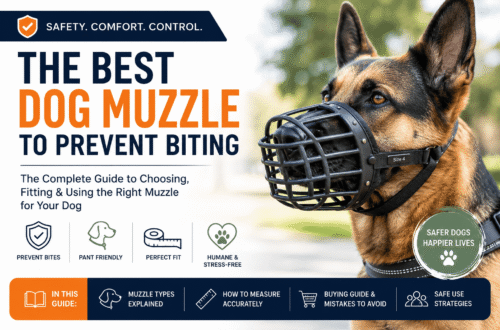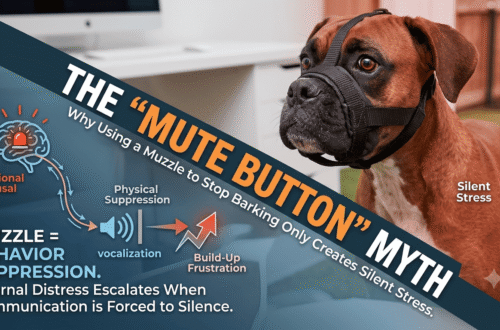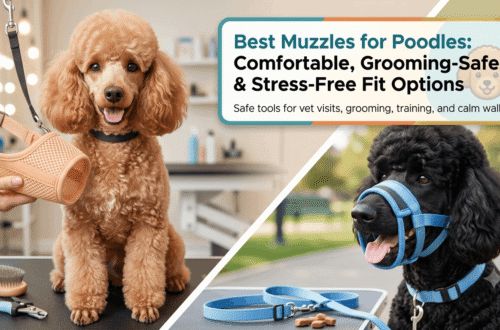
When picking a muzzle for your dog, safety should always come first. A good muzzle should never block breathing, stop normal panting, or cause pain or injury.
This is especially important for dogs with long, narrow snouts like Salukis, Bedlington Terriers, and Ibizan Hounds. Their head shapes are very different from most common breeds, which makes finding a safe muzzle more challenging.
These breeds are often given the wrong type of muzzle because:
- Their snouts are longer and slimmer than most dogs
- Their head shape doesn’t match standard muzzle designs
- Most shop-bought muzzles are made for short or wide noses
As a result, many dogs end up with muzzles that restrict breathing, rub the nose, slip off during movement, or become dangerous in warm weather.
This guide explains which muzzle types are safest, why safety matters more than strength, and how to choose the right muzzle for each breed, following dog welfare principles.
What Makes a Muzzle Safe? (Simple Criteria)
According to UK vets and animal welfare groups, a safe muzzle must:
- ✅ Allow full panting and yawning
- ✅ Avoid pressure on the bridge of the nose
- ✅ Stay in place without twisting or slipping
- ✅ Match the dog’s jaw strength
- ✅ Be suitable for the length of time it is worn
Key rule: A muzzle should prevent biting, but never make breathing difficult.
This is why tight fabric or nylon muzzles are only suitable for very short, closely supervised use.
Breed Head Shape & Muzzle Safety
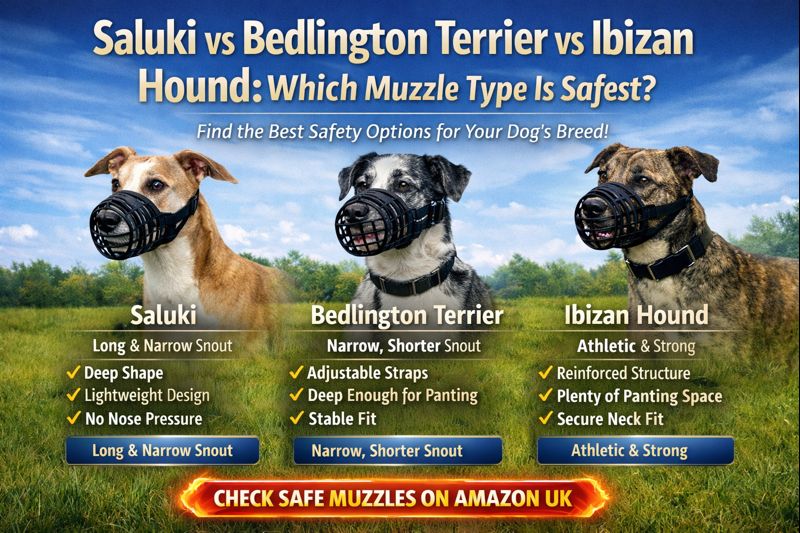
Saluki – Long Snout, Sensitive Skin
- Snout: Very long and very narrow
- Jaw strength: Light to moderate
- Skin: Sensitive, thin coat
- Main risk: Poor airflow if muzzle is too shallow
Vet safety priorities:
✔ Deep muzzle shape
✔ Lightweight design
✔ No pressure on the nose
Bedlington Terrier – Narrow, Shorter Snout
- Snout: Narrow and shorter than sighthounds
- Jaw strength: Moderate
- Main risk: Twisting or rubbing on the nose
Vet safety priorities:
✔ Adjustable straps
✔ Deep enough for panting
✔ Stable, non-twisting fit
Ibizan Hound – Athletic and Strong
- Snout: Long and narrow
- Jaw strength: Strong
- Activity level: Very high
- Main risk: Weak muzzles breaking or slipping
Vet safety priorities:
✔ Reinforced structure
✔ Plenty of panting space
✔ Secure neck fit
Muzzle Types Made Simple (Safety Guide)
Basket Muzzles — Safest and Most Recommended
- Allow normal panting and drinking
- Excellent airflow
- Safe for longer wear when fitted correctly
Soft or Fabric Muzzles — Short, Supervised Use Only
- Only safe for very brief situations
- Restrict panting
- Not safe for walks or warm weather
Reinforced Basket Muzzles
- Best for strong or very active dogs
- Should be padded and well-fitted
- Heavier, but much safer than soft muzzles
Safest Muzzle by Breed (Quick Guide)
Saluki: Lightweight, deep basket muzzle
Bedlington Terrier: Adjustable basket muzzle
Ibizan Hound: Reinforced basket muzzle
Final Verdict
Vets and welfare groups agree: the safest option for these breeds is a properly sized basket muzzle.
- Saluki: Lightweight, deep basket
- Bedlington Terrier: Adjustable basket
- Ibizan Hound: Reinforced basket
Affiliate disclosure: As an Amazon Associate, I earn from qualifying purchases.