Introduction
When people think of muzzles, they might picture a dangerous or mean dog. But a muzzle is just a tool. Its purpose depends on how and why it’s used.
Muzzles can be a smart and considerate choice in many situations, such as at the vet, during grooming, training, or in unfamiliar places. They aren’t just for dogs with problems—sometimes even the friendliest dog needs a muzzle.
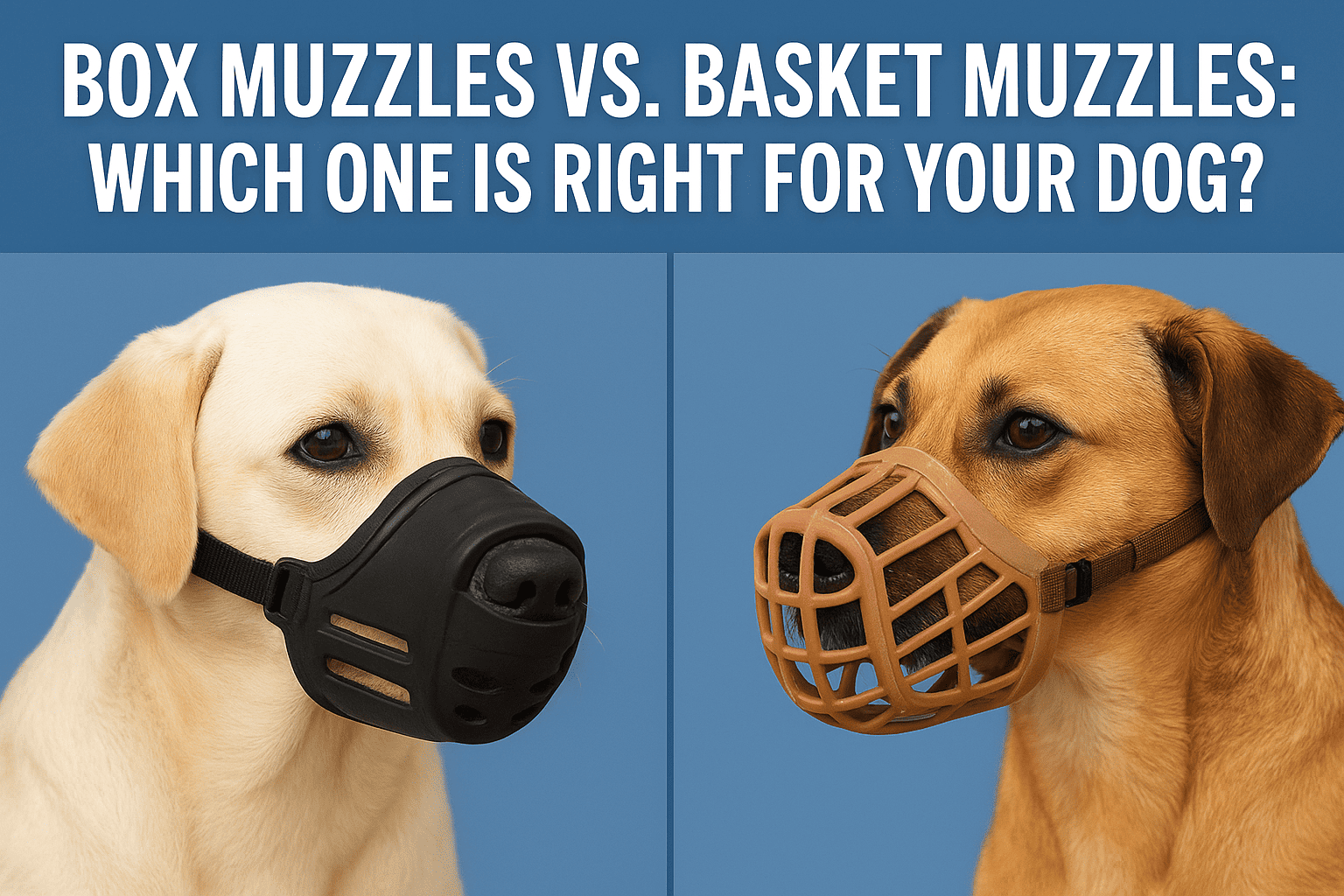
There are many types of muzzles. Two common ones are box muzzles and basket muzzles. Both stop biting or chewing, but they differ in appearance, comfort, and usage.
This post explains the key differences between box and basket muzzles, allowing you to choose the right one for your dog.
Understanding the Basics: What Are Box and Basket Muzzles?
Not all muzzles are the same. Understanding the differences between types helps you select the most suitable one for your dog. Box muzzles and basket muzzles are two of the most common kinds. Both stop dogs from biting, but they work in different ways and are best for different situations.
What Is a Box Muzzle?
A box muzzle fits tightly around a dog’s snout and is fully enclosed, giving it a box-like shape. It is usually solid and keeps the dog from opening its mouth much.
Design and Structure
Box muzzles are typically made from:
- Plastic – lightweight, inexpensive, and easy to clean
- Leather – more durable and secure, often used in professional or working-dog settings
- Reinforced fabric or nylon – padded for some comfort, but still restrictive
Because a box muzzle is so enclosed, the dog can’t bite, bark, eat, or drink. It is also hard for the dog to pant. Since dogs cool off by panting, this can be dangerous in warm weather or during exercise.
When Is It Used?
Box muzzles are best for short, controlled times when a dog needs to be kept very safe. Examples include:
- Vet visits, especially if your dog is nervous or reactive
- Grooming, when sharp tools are close to your dog’s face
- Emergencies, when stress is high and biting is more likely
Box muzzles keep dogs safe, but should not be used during exercise or for long periods. If used too long, they can cause overheating, stress, and trouble breathing.
What Is a Basket Muzzle?
A basket muzzle works differently from a box muzzle. It has an open, cage-like shape that does not fully cover the snout. This allows the dog to move its mouth more, but still prevents biting.
Design and Structure
Basket muzzles come in various shapes and materials, including:
- Rubber or silicone – soft and bendy, good for daily use
- Plastic – cheap and light, but not as strong
- Metal – very strong, often used for big or strong dogs
The best thing about basket muzzles is that they allow air to pass through and are easy for dogs to wear. Dogs can pant, drink, and sometimes even get treats while wearing one. This makes them great for active dogs.
When Is It Used?
Basket muzzles are good for times when your dog needs to wear a muzzle for longer, such as:
- Daily walks or hikes
- Behavioral training sessions (like reducing reactivity to other dogs)
- Public outings, where safety and control are a concern
- Socialization, especially for dogs adjusting to new environments or people
Since dogs can pant and drink with a basket muzzle, it is much kinder and more comfortable for long-term use. It works best if you help your dog get used to it with treats and positive reinforcement, such as praise.
Box muzzles are best suited for short, high-risk situations. Basket muzzles are ideal for daily walks, training, or outings in public. The right choice depends on your dog’s needs and the situation. We’ll examine this further in the next section.
Key Differences Between Box and Basket Muzzles
Now that you know what box and basket muzzles are, let’s compare them. Each one has good and bad points. The best choice depends on your dog, the situation, and the duration of use.
Here’s a breakdown of the key differences:
| Feature | Box Muzzle | Basket Muzzle |
| Design | Fully enclosed around the snout | Open, cage-style structure |
| Airflow | Limited ventilation — restricts breathing and cooling | Excellent airflow — allows for proper breathing and cooling |
| Panting/Drinking | Not allowed — restricts mouth movement entirely | Allowed — can pant, drink, and even take treats |
| Protection Level | Very high — completely prevents biting | Moderate — blocks biting but may allow nibbling |
| Comfort for Long Wear | Uncomfortable for long periods — suitable only short-term | More comfortable for extended wear |
| Use Case | Grooming, vet visits, emergencies where safety is critical | Walks, training, public outings, socialization |
Detailed Comparison
1. Restriction vs. Freedom
Box muzzles give you total control by keeping your dog’s mouth closed. They are best when there is a high risk of biting. However, because dogs can’t pant with them, they can become too hot or stressed if worn for too long.
Basket muzzles balance safety with freedom. Dogs can pant, drink, and even take treats. This makes them much better for training and spending time outside.
2. Comfort and Wear Time
Box muzzles should only be used for short times—just a few minutes. If a dog wears one for too long, it can be uncomfortable and make it hard to breathe.
Basket muzzles are designed to be worn for an extended period. They work well for daily walks, vet visits, or dog classes. Because they allow air to circulate, they are also safer when it’s hot.
3. Training and Socialization
If you want to train your dog in public, a basket muzzle is the best choice. You can give treats for good behavior, and your dog can explore more naturally. This helps lower fear and stress.
Box muzzles are best for safety in short, controlled times. Basket muzzles are better for daily use, training, and comfort over longer periods.
When to Use a Box Muzzle
Box muzzles are made to keep dogs as safe as possible, but they are very limiting. They should only be used for short periods in certain situations. If used too long or during exercise, they can cause overheating, stress, or even harm.
Here’s when a box muzzle is the right tool:
Ideal Situations for a Box Muzzle
1. Veterinary Visits
If your dog gets scared or upset at the vet, a box muzzle can help keep everyone safe. Veterinarians might use one for tasks such as administering shots, cleaning wounds, or trimming nails.
2. Grooming Sessions
Some dogs become stressed by clippers, scissors, or prolonged handling. If your dog might bite, a box muzzle can be helpful during grooming, especially when working around sensitive areas like the paws or ears.
3. Emergencies or High-Stress Events
In a stressful situation—like a car accident, injury, or rescue—even the friendliest dog might bite out of fear or pain. A box muzzle can be a safe, short-term way to protect everyone during transport or care.
4. Handling Aggression in Controlled Environments
If a dog has bitten before or shows aggression, a box muzzle may be used in very controlled settings, such as during behavioral tests. It should only be done with a pro watching and never for long periods.
Important Safety Tips for Box Muzzle Use
- Keep sessions short. A box muzzle should only be worn for brief periods.
- Never use during walks or exercise. Dogs can’t pant or drink with most box muzzles, which can lead to overheating and distress.
- Monitor closely. Watch for signs of discomfort, labored breathing, or panic.
- Ensure a proper fit. A box muzzle that’s too tight can cause chafing or restrict breathing; too loose, and it may slip off or be ineffective.
- Desensitize beforehand. Introduce the muzzle at home with treats and praise so your dog doesn’t associate it with fear or punishment.
When to Use a Basket Muzzle
Basket muzzles are made for comfort and daily use. Their open design allows dogs to pant, drink, and take treats, making them a good choice for extended wear.
If you want a kind and safe way to help your dog behave in public or during training, a basket muzzle is often the best pick.
Ideal Situations for a Basket Muzzle
1. Behavioral Training
Basket muzzles are very helpful for behavior or reactivity training. If your dog is learning to stay calm on walks, control impulses, or handle fears, a basket muzzle lets you:
- Your dog can safely be around things that cause stress.
- You have to give treats as rewards.
- Owners and trainers to feel more relaxed
The muzzle keeps everyone safe while still allowing your dog to learn and participate in activities.
2. Socialization in Public
Dogs who are nervous around new people, other dogs, or crowds can benefit from a basket muzzle when learning to socialize. It lets them:
- Explore new places safely.
- Get used to new things in a positive way.
- Feel better with treats and kind words.
This helps your dog feel braver while still staying safe.
3. Walks, Outdoor Activities, and Travel
If your dog picks up trash, chews things they shouldn’t, or sometimes acts out on walks, a basket muzzle is a safe way to help. Because dogs can still pant and drink, it’s great for:
- Daily walks
- Going to parks or pet-friendly stores
- Long trips in the car or on public transport
It’s extra helpful for dogs who love to chase things or get excited in busy places.
4. Vet and Groomer Acclimation
Some dogs do better with basket muzzles than box muzzles, especially if you take time to get them used to it. If your dog feels nervous or might snap at the vet or groomer, but doesn’t need their mouth fully closed, a basket muzzle is a more comfortable and easier option.
Benefits of a Basket Muzzle
- Allows panting and cooling (crucial for regulating body temperature)
- Permits drinking and, in many designs, taking treats
- More comfortable for longer wear and extended outings
- Encourages positive reinforcement training
- Reduces fear and resistance when introduced gradually
Safety Tips for Using a Basket Muzzle
- Begin muzzle training early. Let your dog get used to the muzzle with treats and praise, well before using it outside the home.
- Pick a muzzle that fits well. It should be tight enough not to slip off, but loose enough for your dog to pant and move its mouth.
- Watch how long your dog wears the muzzle. Basket muzzles are more comfy, but you still need to look for signs of tiredness, stress, or overheating—especially when it’s hot.
- Don’t use the muzzle as punishment. Always make it a positive experience—never put it on when you’re upset or as a form of punishment for your dog.
- Check for rubbing or sores, especially near the nose and behind the ears. Padding or fleece can help prevent these.
How to Choose the Right Muzzle for Your Dog
Choosing the right muzzle isn’t just about safety or comfort—it’s about what works best for your dog’s needs and lifestyle. The wrong fit or type can cause stress or even harm, so it’s important to pick carefully.
Here’s a step-by-step guide to help you choose the right muzzle:
1. Assess Your Dog’s Needs and Temperament
First, figure out why your dog needs a muzzle. This will help you select the type and style that best suits your needs.
Ask yourself:
- Does your dog need a muzzle for quick, stressful situations, such as a vet visit or grooming? Then a box muzzle might be best.
- Is your dog being trained in public or learning to manage reactivity? Then a basket muzzle is usually better.
- Does your dog try to eat things off the ground on walks? A basket muzzle can help stop this.
- Is your dog likely to bite, even in safe places? Then you may need a snug box or metal basket muzzle, but always get help from a professional.
2. Consider Activity Level and Duration of Wear
- Short times (under 10–15 minutes): A box muzzle is okay.
- For longer wear (such as walks, training, or travel), use a basket muzzle that allows air to pass through.
- Exercise or hot weather: Only use muzzles that let your dog pant and drink. Never block airflow during activity.
3. Choose the Right Material
The material of the muzzle affects both comfort and durability.
- Rubber or Silicone: Soft and bendy, gentle on your dog’s face—good for sensitive dogs or training.
- Plastic: Lightweight and inexpensive, but not as strong if your dog is large or determined.
- Leather: Strong and classic; often used for working dogs, but needs more care.
- Metal (with rubber coating): Very tough and best suited for large or strong dogs—make sure it has padding for added comfort.
4. Measure for a Proper Fit
A muzzle needs to fit well to keep your dog safe and comfortable. Always check the brand’s measuring guide, but in general:
- Measure your dog’s snout from the tip of the nose to just below the eyes.
- Measure around the widest part of the snout, usually just in front of the eyes.
- Make sure there’s space for panting. Your dog should be able to open its mouth a little—especially with basket muzzles.
Pro Tip: If possible, try the muzzle on your dog before purchasing it. If not, pick one with a return policy so you can exchange it if the fit is wrong.
5. Seek Professional Input
If you’re unsure which muzzle to choose, consult your:
- Veterinarian – ask them if your dog has breathing problems or has had trauma before.
- A dog trainer or behaviorist can suggest the best muzzle style for your training goals and your dog’s specific behavior.
- Groomer – they may have advice on which muzzle is safest for grooming.
Safety and Comfort Tips for Muzzle Training
Teaching your dog to wear a muzzle correctly is just as important as selecting the right one. If a dog isn’t trained to accept the muzzle, it might get scared, stressed, or refuse to wear it—even if the muzzle is comfortable.
The good news is that, with the right training, most dogs can learn to wear a muzzle calmly. Here are some key tips for safe, stress-free muzzle training.
1. Introduce the Muzzle Gradually
Take your time—muzzle training should be slow, patient, and use plenty of rewards.
Step-by-step introduction:
- Let your dog sniff the muzzle, then give treats and praise.
- Try the “treat through the muzzle” trick: put a treat inside so your dog has to put its nose in to get it.
- Make the muzzle a positive experience—use it during meals, playtime, or cuddling.
- Let your dog wear the muzzle for just a few seconds at first, then slowly increase the time.
Pro tip: Make muzzle time fun, not stressful. Keep sessions short and end on a positive note.
2. Never Use a Muzzle as Punishment
Never use a muzzle to punish your dog. This can make your dog scared and break the trust between you.
Instead, help your dog see the muzzle as a sign that something good is coming—such as a walk, a treat, or a fun activity.
3. Monitor for Signs of Discomfort or Distress
Even a well-fitted muzzle can cause problems if used the wrong way or for too long. Watch for:
- Lots of pawing at the muzzle
- Drooling or foaming
- Whining or making noises
- Hard or heavy breathing
- Looking panicked or staying very still
If you notice any of these signs, remove the muzzle immediately and reevaluate your training.
4. Watch for Rubbing, Chafing, or Skin Irritation
Check regularly for redness or sores around:
- The bridge of the nose
- Behind the ears
- Under the chin or jaw
Solutions:
- Pick muzzles with padding or add fleece for comfort.
- Ensure the straps are neither too tight nor twisted.
- Give your dog breaks if the muzzle is on for a long time.
5. Practice in Low-Stress Environments First
Begin muzzle training at home, where your dog feels most comfortable and safe. Wait until your dog is calm and accustomed to the muzzle indoors before using it in public or in stressful situations, such as the vet.
6. Use the Right Type for the Right Task
As covered earlier:
- Box muzzles = short-term only, never for exercise or hot weather.
- Basket muzzles = better for walks, training, and long wear
Never leave your dog unattended with a muzzle on, regardless of type.
Pros and Cons Summary
Choosing between a box muzzle and a basket muzzle depends on your dog’s needs, their level of activity, and what keeps them comfortable. Here’s a quick look at the pros and cons of each to help you decide.
Box Muzzle: Pros and Cons
Pros:
- Maximum Protection – The closed design fully stops your dog from biting, barking, or chewing. This makes it ideal for high-risk situations, such as vet visits, grooming, or emergencies.
- Ideal for Short-Term Use – Great for short periods when you need extra control, such as vet exams or grooming visits.
- Prevents Aggressive Behavior – Stops dogs from biting or snapping if they get stressed, scared, or uncomfortable.
Cons:
- Poor Ventilation – The closed design makes it difficult for air to flow, which can make your dog uncomfortable, especially in warm weather.
- No Panting or Drinking – Most box muzzles won’t let your dog pant or drink, so they can’t be used for long or during exercise.
- Uncomfortable for Long-Term Wear – Not made for long use. If worn too long, it can cause stress, discomfort, or make it hard to breathe.
- Not Ideal for Active Dogs – Box muzzles are too restrictive for walks or any time your dog needs to move around.
Basket Muzzle: Pros and Cons
Pros:
- Comfortable for Long Wear – The open, cage-like design lets air in and keeps your dog cool, so it’s much more comfortable for longer wear. Dogs can pant, drink, and even get treats.
- Allows for Natural Mouth Movement – Your dog can sniff, eat, and drink as usual. This makes basket muzzles great for walks, training, and meeting new people or dogs.
- Ideal for Training and Socialization – Basket muzzles are great for helping your dog behave in public or during training. You can give treats as rewards, which makes learning easier.
- Humane and Practical for Outdoor Use – The open, airy design makes basket muzzles a top choice for daily walks, hikes, or visits to pet-friendly places.
Cons:
- Less Bite Prevention – Basket muzzles stop full bites, but some nibbling, licking, or snapping can still happen, especially if the muzzle is too loose.
- Can Be Pushed Off – If the muzzle doesn’t fit well, some dogs can push or slip it off, making it useless.
- May Require Adjustment – Not all basket muzzles fit the same. You may need to try a few or make adjustments to find the right fit for your dog.
Quick Pros & Cons Recap
| Protection | Maximum bite prevention | Moderate — prevents full bites but allows some nibbling |
| Comfort for Long Wear | Uncomfortable for long periods | Comfortable for longer use, allows panting and drinking |
| Ventilation | Poor airflow, not suitable for exercise or warm weather | Excellent airflow, great for walks and active dogs |
| Suitability for Active Dogs | Not suitable for walks, exercise, or outdoor activities | Perfect for training, walks, and outdoor adventures |
| Training Use | Best for short-term, high-risk situations | Ideal for training and socialization |
Which One Is Right for Your Dog?
- Choose a box muzzle if your dog requires the most protection during short, high-risk situations, such as vet visits, grooming, or emergencies.
- Choose a basket muzzle if your dog needs comfort for extended periods, such as during walks, training, or outdoor activities. It’s also beneficial for dogs that need to pant, drink, or take treats during social interactions.
Both types of muzzles can be helpful when used correctly. The primary goal is always to keep your dog, others, and yourself safe while ensuring your dog feels comfortable and secure. With a little training and the right fit—whether you use a box muzzle for control or a basket muzzle for active use—you can make the experience positive for your dog.
Final Recommendation
Choosing the right muzzle for your dog isn’t just about safety—it’s also about keeping your dog comfortable, calm, and protected in any situation. Both box and basket muzzles have their uses. The best choice depends on how, when, and why you plan to use it.